
Building a successful business requires more than having a good idea. Strong characteristics of a successful business include a clear purpose, genuine customer demand, sound financial management, effective leadership, reliable operations, adaptability, and the ability to create value. At the same time, the entrepreneur behind the business needs a combination of skills and habits that support good decisions, responsible risk-taking, innovation, and long-term execution.
This relationship between business characteristics and entrepreneurial traits is important. A capable entrepreneur can still struggle with a weak business model, while a promising business can underperform when leadership, financial discipline, or customer understanding is poor.
This guide brings those ideas together into one practical resource.
You will learn:
- What makes a good business
- The characteristics of a successful business
- What entrepreneurship means
- The major types of entrepreneurs
- The characteristics of successful entrepreneurs
- The difference between an entrepreneur and a business owner
- Common small-business structures
- Major challenges facing small businesses
- How technology and AI can support business operations
- How to develop entrepreneurial skills
- How to evaluate a business idea
- What business indicators entrepreneurs should monitor
- How to build a stronger business from the ground up
Written by Mukthar Salam
Last updated: September 2026
What Makes a Good Business?

A good business solves a meaningful problem for a defined group of customers while creating enough value to support sustainable operations.
Profit matters, but profitability is only one part of the picture. A business also needs customers who want what it offers, a workable operating model, financial discipline, effective marketing, and the ability to respond when circumstances change.
The source material identifies several central characteristics, including problem-solving, scalability, technology adoption, customer demand, leadership, financial management, customer focus, adaptability, and marketing.
A useful way to think about a business is through five questions:
- What problem does it solve?
- Who experiences that problem?
- Why would customers pay for the solution?
- Can the business deliver the solution consistently?
- Can it remain financially sustainable as it grows?
If the answers are unclear, the business may need further validation before significant resources are invested.
1. Problem-Solving Ability
Customers generally do not purchase a product simply because it exists. They purchase because they want an outcome, convenience, improvement, experience, or solution.
For example:
- A delivery company solves a convenience and logistics problem.
- A digital marketing agency helps businesses reach potential customers.
- An accounting service helps businesses manage financial responsibilities.
- An e-commerce store makes products easier to discover and purchase.
- A software platform can reduce repetitive administrative work.
The source article similarly emphasizes identifying a clear problem, understanding customer pain points, and creating a solution that is accessible and effective.
How to test your business idea
Before launching, ask:
What problem am I solving?
Be specific. “I want to sell products online” is not a problem statement.
A stronger description might be:
“I want to make affordable kitchen equipment easier for busy households to purchase online.”
Then ask:
Who has this problem?
Define the customer by characteristics such as:
- Location
- Age or life stage
- Occupation
- Business size
- Purchasing behavior
- Budget
- Specific needs
Finally:
Why would customers choose my solution?
Your answer could involve:
- Better convenience
- Better service
- Lower total cost
- Higher quality
- Faster delivery
- Specialized expertise
- Better product selection
- Easier customer experience
A business becomes easier to market when its value proposition is clear.
2. Genuine Customer Demand
One of the recurring themes in the source material is the importance of understanding customers rather than building a business entirely around assumptions. Before investing heavily, determine whether people actually want your proposed product or service.
Simple ways to validate demand
You can:
- Interview potential customers.
- Study competitors.
- Examine customer complaints and reviews.
- Create a simple landing page.
- Test a small advertising campaign.
- Offer a limited version of the product.
- Pre-sell where appropriate.
- Run surveys.
- Test different offers.
- Study search behavior and customer questions.
The objective is not to prove that your idea is perfect.
The objective is to reduce uncertainty before committing substantial money and time.
3. Clear Value Proposition
A strong business gives customers a reason to choose it.
Your value proposition should explain:
Who you help + what you help them achieve + why your approach is useful.
For example:
“We help small online retailers automate repetitive customer-support tasks so they can respond faster without expanding their support team.”
This is more useful than:
“We provide innovative business solutions.”
The second statement sounds professional but tells customers very little.
A clear value proposition helps with:
- Website messaging
- Advertising
- Sales presentations
- Social media
- Email marketing
- Product positioning
- Customer acquisition
It also forces the entrepreneur to clarify what the business actually provides.
4. Customer Focus
A customer-focused business tries to understand what customers need, delivers the promised value, listens to feedback, and improves its products or services over time. The first source specifically identifies customer understanding, service, feedback, relationships, and retention as important elements of business success.
Customer focus includes more than being polite.
It means building systems around the customer journey.
Important customer-focused practices
Understand customer expectations
Find out what customers consider important before designing the experience.
Make purchasing easy
Reduce unnecessary steps, confusion, delays, and friction.
Communicate clearly
Tell customers what they are buying, what it costs, when they should expect delivery, and how support works.
Respond to complaints
A complaint can reveal a weakness in the product, process, or customer experience.
Collect feedback
Use reviews, surveys, support conversations, interviews, and customer behavior to identify recurring problems.
Improve continuously
Customer expectations change. Your business needs mechanisms for responding to those changes.
Customer focus should therefore become an operating principle rather than merely a marketing slogan.
5. Strong Leadership
Businesses need leadership because someone must establish direction, make decisions, allocate resources, solve problems, and coordinate people.
A strong business leader should be able to:
- Set priorities
- Explain objectives
- Make decisions using available evidence
- Accept responsibility
- Communicate expectations
- Delegate appropriately
- Learn from mistakes
- Adjust strategies when conditions change
Leadership becomes particularly important as a business grows.
An entrepreneur who handles everything personally may initially succeed through individual effort. But sustainable growth usually requires systems, delegation, documentation, and other people who can execute responsibilities effectively.
6. Financial Discipline
Revenue does not automatically mean financial health. A business can generate substantial sales while experiencing cash shortages because of high expenses, slow customer payments, excessive inventory, debt obligations, or poor financial planning.
The source article identifies budgeting, expense tracking, cash-flow management, forecasting, and separating personal and business finances as important financial practices.
Entrepreneurs should understand at least these numbers
Revenue
How much money the business generates from sales.
Gross profit
Revenue remaining after the direct costs associated with producing or delivering what was sold.
Operating expenses
Costs required to operate the business, such as software, salaries, rent, advertising, and professional services.
Net profit
The amount remaining after relevant expenses.
Cash flow
The movement of money into and out of the business.
Customer acquisition cost
An estimate of how much it costs to acquire a customer.
Customer lifetime value
An estimate of the economic value a customer generates over the relationship.
These measurements help entrepreneurs move beyond “sales are increasing” and understand whether the business is actually becoming healthier.
7. Adaptability
Markets change. Customer preferences change. Technology changes. Competitors change. Costs change. Regulations change. New distribution channels appear.
Adaptability does not mean changing direction every week. Instead, it means being willing to reconsider assumptions when reliable evidence shows that something is no longer working.
An adaptable business might:
- Change its pricing model.
- Improve an underperforming product.
- Enter a new customer segment.
- Adopt useful technology.
- Change its marketing channel.
- Reduce unnecessary expenses.
- Introduce a new service.
- Stop investing in an ineffective strategy.
Adaptability works best when combined with measurement. Without data and customer feedback, “adaptability” can become constant experimentation without direction.
8. Appropriate Use of Technology and AI
Technology can help businesses improve communication, marketing, customer service, financial management, inventory control, analytics, and other operations.
AI can also support tasks such as:
- Drafting content
- Summarizing information
- Customer-support assistance
- Data analysis
- Research
- Workflow automation
- Idea generation
- Internal knowledge retrieval
However, technology should solve a business problem rather than be adopted simply because it is fashionable.
Before purchasing a new tool, ask:
- What problem will this solve?
- How much time or money could it save?
- What will implementation require?
- Does it integrate with existing systems?
- What happens if the tool fails?
- Who will monitor its output?
- What customer or business data will it process?
Technology is valuable when it improves an identifiable business process.
9. Effective Marketing
Even a useful product needs a way to reach potential customers. However, effective marketing is not simply using every available channel.
A business should first identify:
- Its target customer
- The customer’s problem
- The business’s value proposition
- The customer’s buying journey
- The channels where potential customers can be reached
- The message appropriate to each channel
- The metrics used to evaluate performance
For example, a B2B consulting company may rely heavily on referrals, LinkedIn, search visibility, email, partnerships, and educational content.
A local cleaning company may depend more heavily on local search, referrals, reviews, community visibility, and direct inquiries.
The right marketing mix depends on the business model and customer.
10. Scalability and Systems
Scalability means increasing business activity without increasing costs and complexity at the same rate. But scalability does not mean every business needs to become a global technology company.
A local service business can also become more scalable by developing:
- Standard operating procedures
- Repeatable service packages
- Scheduling systems
- Automated reminders
- Staff training
- Centralized customer records
- Standard pricing
- Reliable suppliers
- Quality-control processes
The underlying principle is simple: Build systems that make good results repeatable.
What Is Entrepreneurship?
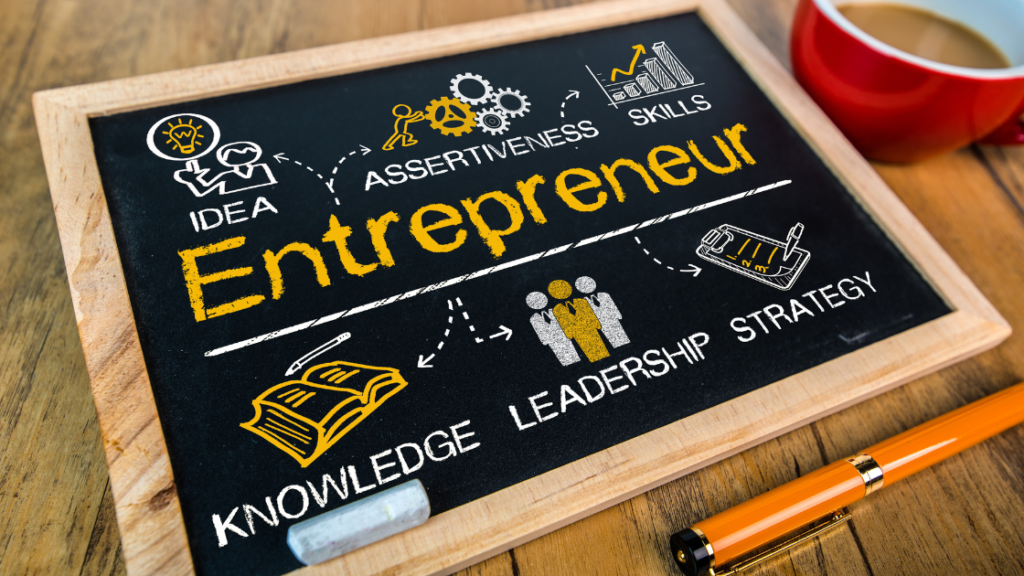
Entrepreneurship involves identifying opportunities, organizing resources, creating value, solving problems, and accepting the uncertainty involved in building or developing an enterprise. Entrepreneurship can therefore occur in many settings.
Someone can be an entrepreneur by:
- Starting a local business
- Building a technology company
- Developing a social enterprise
- Acquiring an existing company
- Creating a digital product
- Launching a specialized service
- Developing a new business inside an established organization
The business model may differ, but the entrepreneurial process often involves identifying an opportunity and turning resources into value.
The 10 Types of Entrepreneurship
These categories describe different approaches to building or developing businesses.
1. Small-Business Entrepreneurship
Small-business entrepreneurs generally build businesses serving local, regional, or specialized markets.
Examples include:
- Restaurants
- Retail stores
- Salons
- Consulting businesses
- Repair companies
- Bakeries
- Local service providers
The objective may be stable profitability rather than rapid global expansion.
2. Scalable Startup Entrepreneurship
Scalable startup entrepreneurs aim to create businesses capable of rapid expansion.
Technology companies, SaaS businesses, fintech platforms, and some e-commerce businesses can fit this model.
Scalability, innovation, investment, leadership, and risk management are particularly relevant to this approach.
3. Social Entrepreneurship
Social entrepreneurs seek to address social or environmental problems while developing financially sustainable organizations.
Examples may involve:
- Education
- Healthcare access
- Environmental conservation
- Poverty reduction
- Community development
- Clean energy
Financial sustainability remains important because an organization generally needs resources to continue delivering its intended impact.
4. Innovative Entrepreneurship
Innovative entrepreneurs focus on developing new products, technologies, services, or business models.
Innovation does not necessarily mean inventing something completely unprecedented.
It can also involve significantly improving an existing solution.
5. Hustler Entrepreneurship
Hustler entrepreneurship refers to entrepreneurs who often begin with limited resources and rely heavily on determination, networking, persistence, and reinvestment.
This approach emphasizes starting with available resources and gradually improving the business.
6. Serial Entrepreneurship
Serial entrepreneurs repeatedly start or acquire businesses.
They may eventually sell one venture, delegate its management, or move into another opportunity.
Experience from previous businesses can inform subsequent decisions.
7. Entrepreneurship
An intrapreneur develops entrepreneurial ideas while working inside an existing organization.
They might:
- Develop a new product
- Improve a process
- Identify a new market
- Introduce technology
- Create a new internal service
This means entrepreneurial behavior is not restricted to company founders.
8. Lifestyle Entrepreneurship
Lifestyle entrepreneurs design businesses around personal priorities such as flexibility, independence, location freedom, or work-life preferences.
Examples can include:
- Freelancers
- Consultants
- Content creators
- Coaches
- Digital marketers
- Photographers
The goal is not necessarily maximum scale.
9. Buyer Entrepreneurship
Buyer entrepreneurs acquire existing businesses rather than starting from zero.
They evaluate an established business, purchase it, and attempt to improve its operations, customer experience, financial performance, or growth opportunities.
This requires skills in:
- Financial analysis
- Negotiation
- Due diligence
- Leadership
- Operations
- Strategy
10. Imitator Entrepreneurship
Imitator entrepreneurs take existing concepts and improve or adapt them.
The important distinction is between legitimate adaptation and simply copying another company’s protected intellectual property, branding, or proprietary material.
An entrepreneur might improve:
- Customer experience
- Product quality
- Delivery
- Pricing
- Packaging
- Technology
- Service specialization
11 Characteristics of a Successful Entrepreneur
These traits should not be treated as a fixed personality test. Most can be developed through education, practice, feedback, and experience.
1. Vision
Vision gives the entrepreneur a direction.
It involves understanding what the business is trying to achieve and why.
A clear vision can help determine:
- Which opportunities to pursue
- Which customers to serve
- Which investments to make
- Which activities to stop
- Which capabilities the business needs
Vision without execution is only an idea, however. It must be translated into measurable objectives and actions.
2. Adaptability
Entrepreneurs operate under changing conditions.
Adaptability allows them to reconsider strategies when circumstances change.
A useful approach is:
Observe → Evaluate → Decide → Implement → Measure
This prevents adaptation from becoming a random reaction.
3. Resilience
Entrepreneurship involves setbacks. A product may underperform. Some customers may leave. An advertising campaign may fail. Some suppliers may create problems. A planned investment may not produce the expected return.
Resilience means responding to setbacks constructively.
4. Discipline
Business ideas do not produce results without execution.
Discipline helps entrepreneurs:
- Meet deadlines
- Track finances
- Follow processes
- Prioritize important work
- Follow up with customers
- Review performance
- Continue working when motivation is low
Consistency often matters more than occasional bursts of enthusiasm.
5. Creativity
Creativity helps entrepreneurs discover alternative solutions.
It can influence:
- Product development
- Marketing
- Branding
- Customer experience
- Operations
- Problem-solving
Creativity does not always mean creating something completely new. It can mean finding a better way to solve an existing problem.
6. Risk Management
Entrepreneurship involves risk, but effective entrepreneurship does not mean taking unnecessary risks.
Before making a major decision, consider:
- Potential upside
- Potential loss
- Probability of different outcomes
- Financial exposure
- Available alternatives
- Exit options
- Consequences if the assumption is wrong
This turns risk-taking into structured decision-making.
7. Leadership
Entrepreneurs eventually need other people.
Leadership involves creating direction, communicating expectations, developing employees, making difficult decisions, and accepting responsibility.
As a business grows, leadership becomes increasingly important because the entrepreneur can no longer personally perform every task.
8. Communication
Entrepreneurs communicate with:
- Customers
- Employees
- Suppliers
- Investors
- Partners
- Contractors
- Regulators
- Professional advisers
Strong communication involves both speaking and listening.
An entrepreneur who talks constantly but ignores customer or employee feedback may miss important information.
9. Financial Intelligence
Entrepreneurs do not necessarily need to become accountants, but they need sufficient financial knowledge to understand their business.
They should know:
- How revenue is generated
- Where money is being spent
- Which products are profitable
- How much cash is available
- What obligations are due
- How pricing affects margins
- What financial risks exist
10. Customer Focus
A business exists because it provides value to customers.
Customer-focused entrepreneurs therefore pay attention to:
- Customer needs
- Complaints
- Reviews
- Purchasing behavior
- Satisfaction
- Retention
- Repeat purchases
- Product feedback
Customer focus also means being willing to change an internal assumption when customer evidence contradicts it.
11. Continuous Learning
Entrepreneurship requires ongoing learning.
An entrepreneur may need to learn about:
- Finance
- Sales
- Marketing
- Technology
- Leadership
- Operations
- Industry developments
- Customer behavior
All these can be learned through reading, workshops, mentorship, practical projects, networking, and reflecting on failures to improve entrepreneurial capabilities.
Entrepreneur vs. Business Owner: What Is the Difference?
The terms are often used interchangeably, but the source material distinguishes between an operational focus and a more opportunity-oriented entrepreneurial approach.
A business owner may primarily focus on:
- Maintaining operations
- Serving existing customers
- Managing employees
- Protecting profitability
- Maintaining predictable performance
An entrepreneur may place greater emphasis on:
- Identifying new opportunities
- Innovation
- New products
- New markets
- Business-model experimentation
- Scalability
These are not mutually exclusive categories.
A business owner can be entrepreneurial, and an entrepreneur still needs strong operational management.
In fact, many businesses require both perspectives.
What Is a Small Business?
The definition of a small business varies according to the country, industry, and legal or regulatory framework.
This is important because there is no universal employee or revenue threshold that applies to every business everywhere.
For practical purposes, small businesses commonly have characteristics such as:
- Relatively small teams
- Limited organizational layers
- Focused customer segments
- Direct owner involvement
- Flexible operations
- Smaller financial resources than large corporations
However, a business should use the relevant definition provided by its local government, regulator, lender, tax authority, or industry body when legal classification matters.
Common Business Structures
Business structure determines how an enterprise is legally organized and can affect ownership, liability, taxation, administration, and fundraising.
The source article discusses four common structures.
Sole Proprietorship
A sole proprietorship is generally owned and operated by one person.
It can be relatively simple to establish, but depending on the jurisdiction, the owner may have personal liability for business obligations.
Common examples include:
- Freelancers
- Independent consultants
- Small online sellers
- Individual service providers
Partnership
A partnership involves two or more owners sharing responsibilities according to an agreed arrangement.
Potential benefits include:
- Shared resources
- Combined expertise
- Shared workload
Potential difficulties include:
- Disagreements
- Profit-sharing issues
- Liability considerations
- Decision-making conflicts
A formal partnership agreement is therefore important where applicable.
Limited Liability Company
An LLC is a legal structure available in some jurisdictions that can provide limited liability protection while offering certain management and tax flexibility.
However, LLC rules vary by jurisdiction.
Entrepreneurs should therefore check the laws applicable to their location rather than assuming that an LLC has identical treatment everywhere.
Corporation
A corporation is generally a separate legal entity from its owners.
It can be appropriate for businesses seeking particular forms of investment, ownership arrangements, or expansion, but it can also involve greater administrative and regulatory requirements.
The appropriate structure depends on:
- Location
- Industry
- Ownership
- Liability exposure
- Tax considerations
- Funding plans
- Growth objectives
Professional legal and tax advice may be appropriate before choosing a structure.
Major Challenges Facing Small Businesses
Several recurring challenges face small businesses, including limited capital, competition, visibility, technology adoption, and customer retention.
1. Limited Capital
A new business may have limited resources for:
- Equipment
- Inventory
- Staff
- Marketing
- Technology
- Professional services
- Working capital
A practical response is to prioritize essential expenses and validate demand before making large investments.
2. Competition
Digital platforms have made it easier for businesses to enter many markets.
This means entrepreneurs need a clear reason for customers to choose them.
Differentiation can come from:
- Specialization
- Service
- Product quality
- Convenience
- Expertise
- Customer experience
- Speed
- Geographic focus
- Business model
Competing purely on price can be difficult because another business may always be willing to charge less.
3. Lack of Visibility
A business cannot generate demand from customers who never discover it.
Visibility can come from:
- Search engines
- Social media
- Referrals
- Partnerships
- Content marketing
- Advertising
- Local discovery
- Community involvement
The important point is to connect visibility efforts to the target audience rather than attempting to be everywhere.
4. Technology Adoption
Some businesses struggle with technology because of cost, limited expertise, uncertainty, or tool overload.
A practical approach is to begin with the systems that address the biggest operational problems.
For example:
Problem: Customer inquiries are being missed.
Potential solution: Centralized customer-support or CRM system.
Problem: Customers forget appointments.
Potential solution: Automated reminders.
Problem: Financial records are difficult to track.
Potential solution: Appropriate accounting software.
Technology should follow the business problem—not the other way around.
5. Customer Retention
Businesses must continually earn customer trust.
Retention can be strengthened through:
- Reliable service
- Consistent quality
- Follow-up
- Customer support
- Feedback collection
- Loyalty initiatives
- Personalized communication
- Effective complaint resolution
Business Ideas to Consider in 2026

These should not be interpreted as guaranteed profitable opportunities. Their suitability depends on market demand, competition, skills, capital, location, execution, and the specific business model.
AI-Powered Services
Possible services include:
- AI workflow implementation
- Automation consulting
- AI-assisted customer support
- Data analysis
- AI training
- Business process automation
The opportunity depends on solving a specific customer problem rather than simply selling “AI services.”
E-Commerce
Possible models include:
- Niche online stores
- Product retail
- Print-on-demand
- Specialized product distribution
- Subscription commerce
Important considerations include supplier reliability, logistics, customer acquisition costs, returns, margins, and customer service.
Digital Marketing Services
Services can include:
- SEO
- Social media management
- Content marketing
- Email marketing
- Paid advertising
- Conversion optimization
Competition can be significant, so specialization can help.
Online Education and Coaching
Potential models include:
- Courses
- Tutoring
- Professional training
- Coaching
- Membership communities
- Educational digital products
Credibility, expertise, content quality, and customer outcomes are particularly important.
Local Services
Examples include:
- Cleaning
- Repairs
- Maintenance
- Laundry
- Beauty services
- Logistics
- Delivery
- Home services
Local businesses can compete through reliability, convenience, service quality, reputation, and strong local visibility.
How to Choose a Business Idea
Rather than asking only:
“What business is profitable?”
ask:
“Which problem can I solve for a specific group of customers with the resources and capabilities I can realistically access?”
Evaluate an idea using six dimensions:
| Factor | Key question |
| Problem | Does the business solve a meaningful problem? |
| Demand | Do enough people actually want the solution? |
| Competition | What alternatives already exist? |
| Capability | Can I deliver the promised value? |
| Economics | Can revenue reasonably exceed costs? |
| Scalability | Can the business grow without becoming unmanageable? |
You can score each area internally for planning purposes, but the scores should be based on evidence rather than optimism.
Business Indicators Every Entrepreneur Should Monitor
These are measurable indicators.
Revenue
Track total sales over time.
Compare:
- Monthly revenue
- Year-over-year revenue
- Revenue by product
- Revenue by customer segment
- Revenue by sales channel
Gross Margin
Gross margin helps show how much revenue remains after direct costs.
A business with increasing revenue but shrinking margins may need to examine pricing, supplier costs, discounts, or product mix.
Operating Expenses
Track major expenses separately rather than looking only at total spending.
Examples include:
- Payroll
- Advertising
- Software
- Rent
- Logistics
- Professional services
Cash Flow
Profit and cash are not identical.
A business can record sales while still experiencing a cash shortage.
Regular cash-flow monitoring helps identify upcoming funding requirements and payment pressures.
Customer Acquisition Cost
Estimate the cost of acquiring customers through different channels.
For example:
Customer Acquisition Cost = Marketing and Sales Costs ÷ Number of New Customers Acquired
The exact calculation can vary depending on which costs are included.
Customer Retention
Track whether customers return, renew, reorder, or remain subscribed.
Retention is especially important for businesses that depend on recurring purchases or subscriptions.
Conversion Rate
Measure how many people move from one stage of the customer journey to the next.
For example:
Conversion Rate = Conversions ÷ Relevant Visitors or Leads × 100
Always define what counts as a conversion before comparing results.
How to Start Building a Successful Business

Understanding business characteristics is useful, but execution is what turns an idea into an operating business.
Step 1: Identify a Real Problem
Start with a problem rather than a product.
Talk to potential customers.
Understand:
- What frustrates them
- What they currently use
- What they dislike about existing solutions
- What they would change
- Whether the problem is important enough to pay to solve
Step 2: Define Your Target Customer
Avoid trying to sell to everyone.
Define the group you intend to serve.
For example:
“Small Nigerian e-commerce businesses with fewer than 10 employees that need help automating customer inquiries.”
That is more actionable than:
“Businesses that need technology.”
Step 3: Research Existing Alternatives
Study competitors and substitutes.
Look at:
- Pricing
- Product features
- Customer reviews
- Complaints
- Positioning
- Delivery
- Customer support
- Marketing messages
The objective is not necessarily to eliminate competition.
It is to discover where customers remain underserved.
Step 4: Create a Minimum Viable Offer
Instead of building the biggest possible product, start with the smallest credible solution that can test your core assumption.
This could be:
- A basic service package
- A small product range
- A simple digital product
- A pilot program
- A limited geographic launch
The goal is learning.
Step 5: Test Customer Response
Measure what potential customers actually do.
Useful evidence includes:
- Purchases
- Pre-orders
- Qualified inquiries
- Trial registrations
- Repeat orders
- Referral activity
- Customer interviews
Be careful about treating compliments or social-media likes as proof of commercial demand.
Step 6: Establish Basic Financial Controls
Before scaling, understand:
- Startup costs
- Monthly operating costs
- Pricing
- Gross margin
- Expected sales volume
- Cash requirements
- Break-even considerations
Keep business and personal finances appropriately separated according to the structure and laws applicable to your business.
Step 7: Build Repeatable Processes
Document important activities.
Examples:
- Customer onboarding
- Sales follow-up
- Order processing
- Customer support
- Refunds
- Supplier management
- Content publishing
- Financial reporting
Processes make it easier to maintain quality as the business grows.
Step 8: Develop a Customer Acquisition System
Choose appropriate marketing channels.
Depending on the business, these could include:
- SEO
- Content
- Social media
- Partnerships
- Referrals
- Paid advertising
- Local marketing
Track results rather than assuming that visibility automatically produces sales.
Step 9: Review Performance Regularly
Set a recurring business review.
Ask:
- What is working?
- What is not working?
- Which products generate the strongest economics?
- Where are customers experiencing problems?
- Which expenses can be reduced?
- Which opportunities deserve further testing?
- What should we stop doing?
This creates a cycle of continuous improvement.
How to Develop Strong Entrepreneurial Skills
Entrepreneurial capabilities can be strengthened through deliberate practice.
Read Consistently
Study subjects that improve your business knowledge:
- Finance
- Marketing
- Leadership
- Sales
- Strategy
- Operations
- Technology
The goal is not to consume information endlessly.
Apply what you learn.
Set Weekly Objectives
Instead of maintaining a huge list of vague ambitions, choose a few specific priorities.
For example:
- Interview five potential customers.
- Complete a landing page.
- Contact ten qualified prospects.
- Review last month’s expenses.
- Test one new marketing message.
Weekly objectives turn entrepreneurial intentions into measurable activity.
Practice Decision-Making
When facing an important decision, write down:
- The decision
- Available information
- Key assumptions
- Potential outcomes
- Risks
- Alternatives
- What would change your mind
This creates a more deliberate decision-making process.
Learn Basic Finance
You should be able to interpret your basic financial reports.
If you do not understand what is happening with revenue, expenses, margins, and cash flow, consider taking a basic business-finance course or working with a qualified professional.
Network With Other Entrepreneurs
Networking can provide:
- Experience
- Partnerships
- Mentorship
- Referrals
- Market knowledge
- Different perspectives
The quality of the relationship matters more than the number of contacts.
Start Small Projects
A small project can provide practical experience in:
- Sales
- Customer service
- Marketing
- Budgeting
- Product development
- Operations
The source emphasizes practical projects as an effective way to develop entrepreneurial capabilities.
Learn From Failure
A failed experiment should produce information.
Ask:
- What assumption was wrong?
- What evidence did we ignore?
- What could have been tested more cheaply?
- Was the problem the product, market, price, marketing, or execution?
- What should we change next time?
This transforms setbacks into structured learning rather than simply labeling them as success or failure.
A Practical Business-and-Entrepreneur Framework

1. Problem
Identify a meaningful customer problem.
2. Customer
Define the people or organizations experiencing it.
3. Value
Create a solution customers consider worthwhile.
4. Validation
Test whether customers actually want it.
5. Economics
Determine whether the business model can support sustainable operations.
6. Execution
Build the processes necessary to deliver consistently.
7. Marketing
Create reliable ways to reach potential customers.
8. Customer Experience
Deliver the promised value and respond to problems.
9. Adaptation
Use evidence to improve the business.
10. Leadership
Build the people and culture required for continued execution.
11. Measurement
Monitor financial, operational, marketing, and customer indicators.
12. Learning
Continue developing the entrepreneur and the organization.
This framework connects the characteristics of the business with the characteristics of the person building it.
Common Mistakes Entrepreneurs Should Avoid
Building Before Validating
Entrepreneurs can spend months developing something customers never wanted.
Test demand as early as practical.
Trying to Serve Everyone
A broad target market can make positioning and marketing unnecessarily difficult.
Start with a clearly defined customer group.
Confusing Revenue With Profit
High sales do not automatically mean a healthy business.
Track costs and margins.
Ignoring Cash Flow
Profitability and cash availability are different issues.
Monitor both.
Buying Too Many Tools
Technology can create complexity instead of reducing it.
Adopt tools based on specific needs.
Ignoring Customer Complaints
Repeated complaints can reveal product or process problems.
Treat them as information.
Scaling Too Early
Growth can magnify weaknesses.
Fix important operational problems before aggressively increasing volume.
Depending on One Customer or Channel
Heavy dependence on one major customer, advertising platform, supplier, or sales channel creates concentration risk.
Where practical, build resilience into the business model.
Stopping Learning
Markets change continuously.
Entrepreneurs need to keep developing their skills and updating their assumptions.
Frequently Asked Questions
What are the most important characteristics of a successful business?
Important characteristics include solving a real customer problem, sufficient demand, clear value, customer focus, sound financial management, effective leadership, adaptability, appropriate technology use, effective marketing, and repeatable systems.
No single characteristic guarantees business success.
What are the main characteristics of a successful entrepreneur?
The source identifies eleven major traits: Vision, Adaptability, Resilience, Discipline, Creativity, Risk management, Leadership, Communication, Financial intelligence, Customer focus, Continuous learning.
These qualities can be developed rather than treated as fixed personality characteristics.
Are entrepreneurs born or made?
People may naturally have different strengths, but many entrepreneurial capabilities can be developed through education, practice, mentorship, experience, and deliberate improvement.
What is the difference between an entrepreneur and a business owner?
A business owner may primarily focus on operating and maintaining an established business, while an entrepreneur may place greater emphasis on opportunity recognition, innovation, experimentation, and growth.
What type of business should a beginner start?
There is no universally appropriate business for every beginner.
The choice should depend on: Skills, Experience, Available capital,
Customer demand, Location, Competition, Risk tolerance, desired lifestyle, Growth objectives.
A strong starting point is usually a problem you understand and a customer group you can reach.
How can I know whether a business idea is good?
Start by testing:
- Whether the problem exists
- How frequently it occurs
- Whether your economics can work
- How customers currently solve it
- Whether customers are willing to pay
- What competitors offer
- Whether you can deliver the solution effectively
Evidence from real customers is generally more useful than enthusiasm about an idea.
Can a small business owner become an entrepreneur?
Yes.
A small-business owner can develop entrepreneurial capabilities by identifying new opportunities, improving products, experimenting with new business models, building scalable systems, and continually learning.
Final Thoughts
The characteristics of a successful business and entrepreneur are closely connected, but they are not the same thing.
The most useful lesson from combining these two subjects is that business success never comes from one personality trait, one technology, or one business idea.
It comes from the interaction between the entrepreneur, the customer, the business model, the operating system, and the market.
A strong idea still needs disciplined execution. A talented entrepreneur still needs a viable market. Technology still needs a business purpose. Growth still needs financial control. And ambition still needs evidence.
For someone building a business in 2026, the practical objective is straightforward: identify a genuine problem, understand the customer, test the solution, build sound economics, develop repeatable systems, measure the results, and keep improving.
That approach provides a much stronger foundation for sustainable entrepreneurship than relying on business trends or generic claims about what will succeed.
About the Author
Mukthar Salam
He is the founder and author of MarketLiftAI, an independent online resource focused on practical AI, business, technology, and digital growth strategies.
Since 2023, Mukthar has written more than 500 articles covering a broad range of topics, including AI tools, business software, SaaS platforms, internet services, cybersecurity, digital marketing, cloud computing, business finance tools, and online business services.