
Generating website traffic is not the same as generating business. company can attract thousands of Website Visitors through Google, social media, LinkedIn, paid advertising, email marketing, referrals, content marketing, or industry communities and still produce relatively few qualified leads or customers. That is where a b2b lead generation strategy comes in.
The problem is often not a lack of traffic. It is a disconnected acquisition and conversion process. A visitor may arrive because they are researching a problem, comparing vendors, looking for pricing, evaluating a service, or simply trying to find information. If the website does not quickly communicate its value, answer important questions, establish credibility, and provide an appropriate next step, the visitor may leave without engaging.
This is particularly important in B2B markets. A B2B buyer may involve several stakeholders, evaluate competing providers, request a demonstration, compare pricing, assess implementation requirements, consult finance or procurement, and delay a decision until the business case is clear.
That means effective B2B lead generation is not simply about collecting email addresses or sending more cold messages. It is about building a connected system: Relevant audience → Website visitors → Engagement → Lead capture → Qualification → Sales opportunity → Customer → Retention and expansion
This guide brings together website conversion and B2B lead-generation principles into one practical framework.
Written by Mukthar Salam
Last reviewed: October 2026
Table of Contents
- What Is B2B Lead Generation?
- Why Website Visitors Are Not Automatically Leads
- B2B Lead Generation vs. Website Conversion
- The B2B Lead Generation Funnel
- Define Your Ideal Customer Profile
- Identify the People Involved in the Purchase
- Understand Buyer Intent
- Create a Clear B2B Value Proposition
- Build a Conversion-Focused Website
- Why Website Visitors Leave Without Converting
- Create Intent-Matched Content
- Build a B2B SEO Strategy
- Use Landing Pages to Convert Demand
- Create Lead Magnets That Attract Relevant Prospects
- Build a Lead-Nurturing System
- 15 B2B Lead Generation Channels
- Lead Qualification: From Contact to Opportunity
- MQL, SQL, and PQL Explained
- Lead Scoring
- Connect Marketing and Sales
- Build a Follow-Up Process
- Use CRM and Marketing Technology
- How AI Can Support B2B Lead Generation
- B2B Lead Generation and Compliance
- Measure the Full Funnel
- The B2B Lead Generation Dashboard
- Diagnose Funnel Problems
- Common B2B Lead Generation Mistakes
- The 90-Day B2B Lead Generation Plan
- B2B Lead Generation Checklist
- Frequently Asked Questions
- Conclusion
What Is B2B Lead Generation?
B2B lead generation is the process of identifying, attracting, engaging, qualifying, and developing potential business customers for a product or service. The potential customer could be:
- small business
- startup
- professional practice
- manufacturer
- retailer
- technology company
- service provider
- nonprofit
- government organization
- large enterprise
A B2B lead can enter your system through many different routes. For example:
- company finds your website through Google.
- An executive discovers your LinkedIn content.
- prospect attends your webinar.
- customer introduces you to another business.
- Buyer responds to an outbound email.
- Company requests pricing.
- Prospect books a demonstration.
- Someone starts a software trial.
- Procurement team requests a proposal.
These interactions do not represent the same level of commercial intent. Someone who downloads a beginner’s guide may simply be researching a problem. Someone who requests a proposal has usually demonstrated a more direct commercial interest.
This distinction is fundamental. A lead is not automatically an opportunity. A strong B2B lead-generation system therefore does not measure success simply by the number of contacts collected. It evaluates whether those contacts fit the business, have a relevant problem, demonstrate meaningful intent, and can realistically progress toward a commercial relationship.
Why Website Visitors Are Not Automatically Leads
A website visitor is simply someone who accesses your website. They may arrive through:
- Search engines
- Social media
- Paid advertising
- Referrals
- YouTube
- Industry publications
- Online communities
- Direct visits
- Blog links
- Partner websites
But visitors have different motivations.
- One person may be learning.
- Another may be comparing vendors.
- Some may be looking for pricing.
- Another may already know your company and be ready to contact sales.
- Another may have arrived accidentally.
Treating all of these people as identical is a mistake. The objective should not be to force every visitor into a sales conversation. Instead, the website should help the visitor take an appropriate next step. That could be:
- Article → Related guide
- Guide → Lead magnet
- Comparison → Product page
- Product page → Demo
- Pricing page → Sales inquiry
- Free tool → Assessment
- Case study → Consultation
This is the connection between website conversion and B2B lead generation. Your website is not simply a destination for traffic. It can function as part of your lead-generation system.
B2B Lead Generation vs. Website Conversion
These two concepts are closely related but not identical.
B2B lead generation
Focuses primarily on:
- Finding potential customers
- Attracting relevant audiences
- Creating interest
- Capturing leads
- Qualifying prospects
- Creating sales opportunities
Website conversion
Focuses on what happens after visitors arrive. It includes:
- Understanding visitor intent
- Communicating the offer
- Building trust
- Reducing friction
- Encouraging appropriate actions
- Capturing leads
- Supporting purchasing decisions
The two systems should therefore work together. Consider this example:
A company publishes an article about reducing operational costs.
- article attracts relevant search traffic.
- article links to a downloadable cost-reduction checklist.
- visitor downloads the checklist.
- Visitor enters an email-nurturing sequence.
- sequence provides additional educational content and a relevant case study.
- Prospect later visits the pricing page.
- They request a demonstration.
- Sales follows up.
- lead becomes an opportunity.
This is much more sophisticated than simply saying: “We need more website traffic.” The real objective is: Attract relevant traffic → create useful engagement → capture appropriate demand → qualify it → convert it into commercial opportunities.
The B2B Lead Generation Funnel
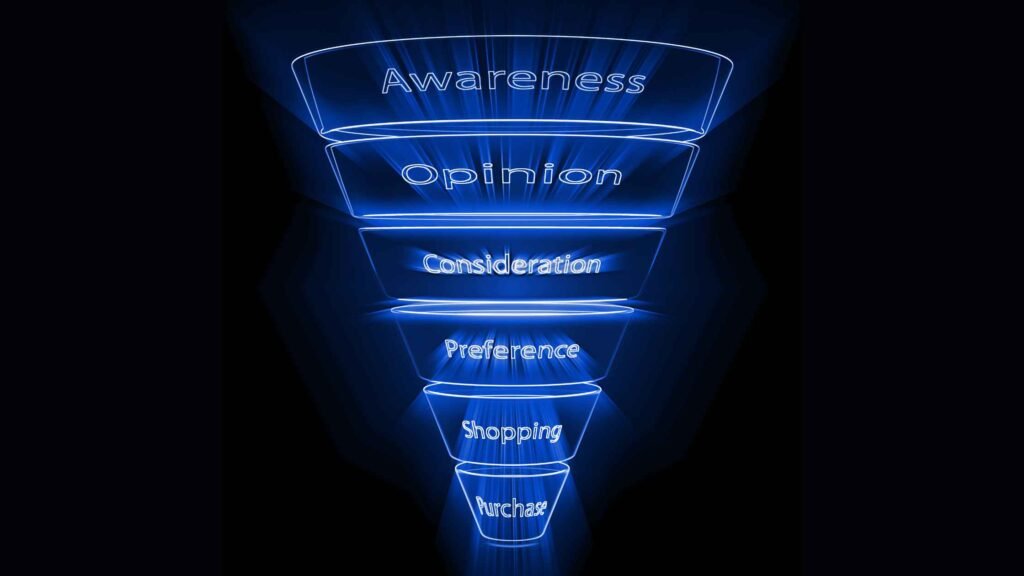
A practical B2B funnel can be represented as: Awareness → Engagement → Lead → Qualification → Opportunity → Customer
Stage 1: Awareness
The potential customer becomes aware of your business. Possible sources include:
- YouTube
- Industry publications
- Referrals
- Events
- Podcasts
- Advertising
- Partner channels
Stage 2: Engagement
The prospect interacts with your business. Examples include:
- Reading an article
- Watching a video
- Downloading a guide
- Subscribing to email
- Attending a webinar
- Using a free tool
- Viewing a product page
- Returning to the website
Stage 3: Lead
The prospect provides information or takes an action that allows the business to continue the relationship. Examples:
- Form submission
- Consultation request
- Demo request
- Free-trial registration
- Newsletter subscription
- Resource download
Stage 4: Qualification
The business evaluates whether the lead represents a meaningful potential customer. Consider:
- Company fit
- Need
- Authority
- Timing
- Commercial viability
- Use case
- Purchase intent
Stage 5: Opportunity
The prospect enters a genuine sales process. Examples:
- Discovery call
- Demonstration
- Proposal
- Consultation
- Trial
- Procurement review
Stage 6: Customer
The prospect becomes a customer. The process should then continue into:
- Onboarding
- Customer success
- Retention
- Expansion
- Referrals
This final stage matters because lead generation should not be disconnected from customer outcomes. A business that produces large numbers of leads but struggles to retain customers may need to examine its targeting, positioning, sales process, offer, or customer experience.
Define Your Ideal Customer Profile
Before selecting B2B lead-generation channels, define who you actually want to attract. This is your Ideal Customer Profile, or ICP.
An ICP describes the type of organization most closely aligned with your product, service, business model, and ability to deliver value. Your ICP may include:
- Industry
- Company size
- Revenue range
- Geography
- Number of employees
- Business model
- Growth stage
- Technology environment
- Common problems
- Regulatory environment
- Buying triggers
- Typical decision-makers
Compare these two approaches:
Broad target: Small businesses.
More useful ICP: Growing professional-services companies with 50–250 employees that have a sales team but rely heavily on manual prospecting and reporting.
The second definition gives marketing and sales more information to work with. It can influence:
- Content topics
- SEO research
- Advertising
- Prospecting
- Lead scoring
- Sales messaging
- Landing pages
- Email campaigns
- Partnership selection
ICP Is Not the Same as a Buyer Persona
The ICP describes the organization. The buyer persona describes the individual involved in the buying process. For example:
ICP: Mid-sized professional-services companies. Possible buyer personas:
- CEO
- Operations Director
- Finance Director
- IT Manager
- Sales Director
- Department Manager
- Procurement professional
Each person may evaluate the same product differently. The CEO may focus on growth. Finance may focus on cost and return. IT may focus on security and integration. Operations may focus on efficiency. Effective B2B messaging should account for these differences.
Identify the People Involved in the Purchase
B2B purchases often involve multiple stakeholders. Depending on the organization, these may include:
- Economic buyer
- Decision-maker
- End user
- Technical evaluator
- Procurement
- Finance
- Department head
- Internal influencer
Your content should answer the questions each relevant stakeholder is likely to ask. For example:
| Stakeholder | Possible concern |
| CEO | Business growth |
| Finance | Cost and return |
| Operations | Efficiency |
| IT | Security and integration |
| User | Ease of use |
| Procurement | Commercial terms |
| Manager | Implementation |
This does not mean creating separate websites for every stakeholder. It means recognizing that a B2B purchase may require multiple forms of evidence before a decision is made.
Understand Buyer Intent
Intent describes what the prospect is trying to accomplish. A useful framework is: Informational → Commercial → Transactional
Informational Intent
The prospect wants to understand a problem. Examples:
- What is CRM software?
- How does customer retention work?
- How can a business reduce inventory costs?
- What is marketing automation?
Useful content includes:
- Guides
- Tutorials
- Research
- Educational articles
- Checklists
- Videos
The objective is education.
Commercial Investigation
The prospect is evaluating potential solutions. Examples:
- Best CRM for small businesses
- CRM software comparison
- Marketing automation platforms
- Accounting software for agencies
Useful content includes:
- Comparison guides
- Product reviews
- Buying guides
- Case studies
- ROI information
- Implementation guides
The objective is decision support.
Transactional Intent
The prospect is moving toward action. Examples:
- Request pricing
- Book a demo
- Start a trial
- Contact sales
- Schedule a consultation
These visitors need a direct path to the appropriate action.
The Key Principle
Do not make every visitor behave like a buyer. Match the experience to the visitor’s intent.
Create a Clear B2B Value Proposition
A potential customer needs a reason to pay attention.
A useful value proposition communicates: Who you help + what problem you solve + what outcome you help create + why your approach is relevant. A weak statement might be: We provide digital marketing services.
A more informative version might be: We help B2B manufacturers generate qualified sales opportunities through search-driven content and targeted outreach. The second statement communicates:
- Audience
- Problem
- Service
- Outcome
- Method
Your website should make this information easy to understand. A visitor should not need to read five pages before understanding what the business does.
Build a Conversion-Focused Website
A B2B website can function as:
- Marketing channel
- Lead-generation system
- Sales-support resource
- Educational resource
- Product catalog
- Service presentation
- Customer-support center
- Booking system
- Brand-building platform
Its structure should reflect the business objective. A consulting company may prioritize qualified inquiries. A SaaS company may prioritize demonstrations or trials. An e-commerce business may prioritize product discovery and checkout. A professional service may prioritize consultation bookings. The website should therefore be designed around the outcome you want the visitor to achieve.
The Five Characteristics of a Conversion-Focused Website
- Clear: Visitors understand what you offer.
- Relevant: Information matches their needs and intent.
- Credible: Claims are supported by appropriate evidence.
- Usable: Navigation and interactions are straightforward.
- Action-oriented: Visitors have an appropriate next step.
These five characteristics provide a useful diagnostic framework for evaluating important pages.
Why Website Visitors Leave Without Converting
A visitor may leave even when the underlying product or service is useful. Possible reasons include:
- The offer is unclear.
- The value proposition is weak.
- The website is difficult to navigate.
- Pricing is difficult to find.
- Important questions are unanswered.
- The visitor does not trust the business.
- The CTA is unclear.
- page loads slowly.
- Mobile experience is poor.
- The content does not match search intent.
- The form is unnecessarily complicated.
- Checkout creates friction.
- Payment options are unsuitable.
- Delivery or implementation information is unclear.
- The visitor is simply not ready to purchase.
This leads to an important principle: Conversion is not controlled by a single button. It is the result of multiple elements working together.
Create Intent-Matched Content
Content should help the buyer move forward. A useful B2B content architecture can be divided into three broad stages.
Top-of-Funnel Content
Examples:
- Educational articles
- Beginner guides
- Definitions
- Research
- Videos
- Checklists
Purpose: Attract and educate.
Middle-of-Funnel Content
Examples:
- Comparisons
- Case studies
- Demonstrations
- Webinars
- Buying guides
- Detailed implementation resources
Purpose: Help prospects evaluate solutions.
Bottom-of-Funnel Content
Examples:
- Product pages
- Service pages
- Pricing pages
- Demo pages
- Consultation pages
- Trial pages
Purpose: Facilitate action.
A visitor researching a general problem may not be ready for a sales call. A visitor searching for pricing should not have to read an extensive beginner guide before finding the price.
The content should become increasingly decision-oriented as the visitor moves closer to purchase.
Build a B2B SEO Strategy
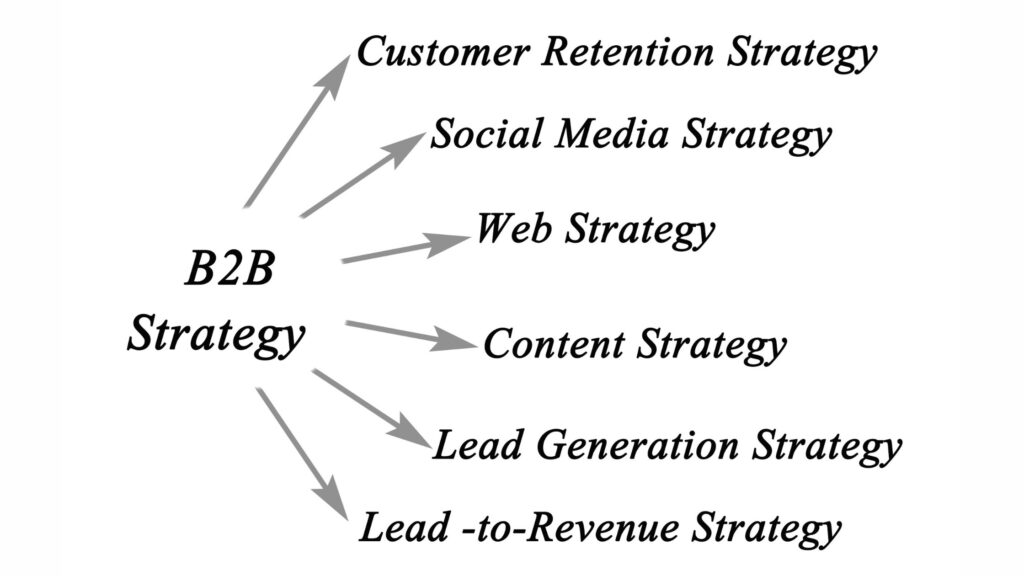
SEO can attract potential customers who are actively researching problems and solutions. But B2B SEO should not be treated as a traffic-generation exercise alone. The objective is to attract relevant searchers who have a meaningful relationship with your offer.
Start With Search Intent
Classify important topics according to:
- Informational intent
- Commercial investigation
- Transactional intent
Then create content for each stage.
Build Topic Clusters
Instead of producing dozens of unrelated articles, build depth around important business problems. For example, a website focused on customer acquisition might build a cluster around:
- B2B lead generation
- Website conversion
- Landing pages
- Content marketing
- Email nurturing
- Sales funnels
- Customer retention
- Analytics
Internal links can connect these resources. This helps visitors discover related information while creating a clearer content architecture.
Use Internal Links Contextually
Internal links should help the reader. For example, an article about B2B lead generation might naturally link to:
- Email marketing
- Customer retention
- Content marketing
- Website visitors
- Business development
- Conversion optimization
The question should always be: Would this link help the reader understand something or take a useful next step? If the answer is yes, the link is likely appropriate.
Measure SEO Beyond Traffic
A page receiving 500 highly relevant visitors who generate qualified opportunities may have more commercial value than a page receiving 10,000 visitors with little business relevance.
SEO should therefore be connected to: Search visibility → Relevant visitors → Engagement → Leads → Opportunities → Revenue
Use Landing Pages to Convert Demand
Landing pages should be built around a clear objective. Possible objectives include:
- Lead generation
- Product promotion
- Webinar registration
- Consultation booking
- Free trial
- Download
- Campaign response
A useful landing page may contain:
- Clear headline
- Supporting subheadline
- Problem explanation
- Solution explanation
- Benefits
- Relevant visuals
- Evidence
- Objection handling
- FAQs
- Clear CTA
Maintain Message Consistency
Suppose an advertisement promises: 20% Off Business Software
The landing page should immediately reinforce that offer. Sending the visitor to a generic homepage and forcing them to search for the promotion creates unnecessary friction.
The experience should be consistent across: Advertisement → Landing page → Offer → Checkout or inquiry
Create Lead Magnets That Attract Relevant Prospects
Not every visitor is ready to buy. A lead magnet creates a way to continue the relationship with people who need more time. Possible formats include:
- E-books
- Templates
- Checklists
- Worksheets
- Calculators
- Research reports
- Assessment tools
- Industry benchmarks
- Email courses
- Webinars
The most important principle is relevance. If your company sells inventory software, a generic motivational PDF may attract subscribers but produce weak commercial relevance.
A more appropriate resource could be: Inventory Management Audit Checklist for Growing Retailers. The closer the lead magnet is to the problem your business solves, the more useful the resulting leads are likely to be.
Build a Lead-Nurturing System
A realistic B2B journey may look like: Visit → Download → Learn → Compare → Validate → Purchase. A simple nurturing sequence could be:
Email 1: Deliver Value
Provide the resource requested.
Email 2: Educate
Explain a relevant problem.
Email 3: Demonstrate
Provide an example or case study.
Email 4: Address Objections
Answer common concerns.
Email 5: Explain the Solution
Show how the product or service addresses the problem.
Email 6: Invite Action
Provide an appropriate next step. The sequence should be useful rather than relentlessly promotional.
15 B2B Lead Generation Channels

There is no universal channel mix. The appropriate combination depends on:
- Audience
- Sales cycle
- Industry
- Resources
- Budget
- Buying behavior
- Expertise
- Measurement capability
Here are major channels to consider.
1. Search Engine Optimization
Build visibility around customer problems, evaluation topics, and commercial searches.
2. Content Marketing
Create:
- Long-form guides
- Case studies
- Research
- Comparisons
- Templates
- Checklists
- White papers
- Videos
- Webinars
The objective should be useful expertise rather than publishing volume for its own sake.
3. LinkedIn
Potential formats include:
- Educational posts
- Industry analysis
- Expert commentary
- Original research
- Customer stories
- Short videos
- Practical frameworks
A useful content sequence is: Teach → Analyze → Demonstrate → Prove → Invite.
4. Targeted Outbound Email
Effective outreach should communicate:
- Why the recipient was selected
- What problem may be relevant
- Why that problem matters
- What useful outcome you can provide
- What next step is appropriate
Avoid confusing message volume with lead quality.
5. Referral Marketing
Potential approaches include:
- Customer introductions
- Referral programs
- Partner referrals
- Customer advocacy
- Testimonials
- Case studies
Referral requests are often more natural after the customer has experienced meaningful value.
6. Strategic Partnerships
Partner with organizations that serve complementary audiences. Examples include:
- Web designers + SEO agencies
- Accountants + business consultants
- CRM consultants + IT providers
- Cybersecurity firms + managed IT providers
Potential activities include:
- Joint webinars
- Referral agreements
- Co-created content
- Bundled services
- Events
7. Webinars
A useful webinar can follow: Problem → Evidence → Framework → Demonstration → Questions → Next step. The event should provide value even to people who do not immediately purchase.
8. Case Studies
Case studies can provide evidence through: Customer → Problem → Strategy → Implementation → Result. Use specific evidence where reliable data is available.
9. Lead Magnets
Build resources around problems directly connected to your offer.
10. Free Tools and Calculators
Examples include:
- ROI calculators
- Cost estimators
- Website graders
- SEO tools
- Savings calculators
- Business assessments
The tool should provide value before demanding excessive information.
11. Email Marketing
Segment prospects according to:
- Industry
- Company size
- Role
- Product interest
- Buying stage
- Previous interaction
- Customer status
12. Industry Events
Potential channels include:
- Conferences
- Trade shows
- Business associations
- Industry exhibitions
- Professional networking events
The process should be: Meet → Understand → Connect → Follow up → Provide value → Develop relationship.
13. Online Communities
Participate in relevant professional communities by answering questions and sharing expertise. Do not treat every community as an advertising channel.
14. Video Marketing
Useful formats include:
- Product demonstrations
- Tutorials
- Expert interviews
- Customer stories
- FAQ videos
- Industry analysis
- Training
15. AI-Assisted Lead Generation
AI can support:
- Prospect research
- Account summaries
- Lead prioritization
- Email drafting
- Meeting summaries
- CRM updates
- Content ideation
- Qualification
- Workflow automation
AI should augment the system rather than replace customer understanding.
Lead Qualification: From Contact to Opportunity

Lead qualification prevents sales teams from treating every contact as equally valuable. A practical framework is:
Fit
Does the company match your ICP?
Need
Does the organization have a problem your solution can address?
Authority
Are you communicating with someone who can influence or make the decision?
Timing
Is there a realistic buying timeframe?
Commercial Viability
Does the opportunity make economic sense for both sides?
Intent
Has the prospect demonstrated meaningful interest? The exact criteria should be adapted to your business model.
MQL, SQL and PQL Explained
Marketing Qualified Lead
An MQL meets the organization’s criteria for meaningful marketing engagement and potential sales development. There is no universal MQL definition. A company might consider:
- Relevant company
- Relevant role
- Multiple meaningful interactions
- Appropriate content engagement
Sales Qualified Lead
An SQL meets the agreed criteria for direct sales engagement. Potential criteria include:
- Identified business need
- Appropriate company fit
- Relevant decision-maker
- Defined timeframe
- Clear interest
Product Qualified Lead
A PQL is particularly relevant to SaaS businesses. The prospect demonstrates purchase-related behavior through product usage, such as:
- Free trial
- Freemium account
- Product demonstration
- Product engagement
Definitions should be established internally rather than assumed to be universal.
Lead Scoring
Lead scoring can help prioritize sales activity. Possible scoring inputs include:
- ICP fit
- Job role
- Company size
- Pricing-page activity
- Demo request
- Product usage
- Webinar attendance
- High-value content engagement
However, a score is not automatically evidence of purchase intent. The scoring model should be validated against actual outcomes. Ask: Do high-scoring leads actually produce better opportunities? If not, revise the model.
Connect Marketing and Sales
One of the most common weaknesses in B2B lead generation is the gap between marketing and sales. Marketing may report: We generated 1,000 leads. Sales may respond: Very few of them were relevant.
The solution is to define the handoff. For example: Marketing lead → Qualification → Sales-qualified lead → Opportunity → Customer. Marketing and sales should agree on:
- What constitutes a qualified lead
- When ownership transfers
- How quickly sales should respond
- What information accompanies the lead
- How rejected leads are handled
- How dormant opportunities are recycled
Without these definitions, lead volume can become a misleading performance measure.
Build a Follow-Up Process
A lead-generation system does not end when someone submits a form. Create workflows for:
- New inquiries
- Demo requests
- Pricing requests
- Webinar attendees
- High-intent downloads
- Trial users
- Sales proposals
- Dormant opportunities
A structured process reduces the chance that valuable opportunities disappear simply because follow-up was delayed or forgotten. You can also explore more in this Follow-Up Process guide.
Use CRM and Marketing Technology
Technology should support the process rather than define it.
CRM
A CRM can help manage:
- Contacts
- Accounts
- Activities
- Opportunities
- Sales stages
- Follow-ups
- Reporting
Email Marketing Platforms
Useful for:
- Segmentation
- Lead nurturing
- Automated sequences
- Newsletters
- Campaign measurement
Analytics
Use analytics to understand:
- Acquisition sources
- Landing pages
- Visitor behavior
- Conversions
- Funnel movement
Scheduling Tools
Scheduling tools can reduce friction between a prospect and the sales team.
SEO Platforms
Useful for:
- Keyword research
- Search visibility
- Competitor research
- Technical auditing
- Content planning
AI Tools
Potential applications include:
- Research
- Drafting
- Summarization
- Prospect prioritization
- Content ideation
- CRM assistance
- Workflow support
Human review remains important for customer-facing communication and important factual claims.
How AI Can Support B2B Lead Generation
AI can improve many parts of a B2B lead-generation workflow. Potential applications include:
- Account research
- Prospect research
- Contact summarization
- Lead scoring
- Email drafting
- Meeting summaries
- CRM assistance
- Content ideation
- Lead qualification
- Routine website questions
- Customer-service support
- Next-action recommendations
However, AI should not be treated as a substitute for strategy. Before deploying an AI workflow, ask:
- What problem is it solving?
- What data will it use?
- How will accuracy be checked?
- Who reviews its output?
- What information should not be exposed?
- How will performance be measured?
Appropriate Areas for Greater Human Oversight
Use additional review for:
- Pricing negotiations
- Contract discussions
- Strategic accounts
- Sensitive customer communication
- Legal or compliance claims
- High-value proposals
- Final purchasing recommendations
The objective should be: Automation for appropriate routine work + human judgment for complex or high-impact decisions.
B2B Lead Generation and Compliance
B2B lead generation can involve personal information and direct marketing. Requirements vary according to:
- Country
- Communication channel
- Audience
- Legal relationship
- Type of message
- Applicable privacy and marketing rules
Businesses should therefore:
- Identify applicable laws in target markets.
- Determine whether communications are marketing or service-related.
- Establish an appropriate lawful basis where required.
- Obtain consent where required.
- Maintain appropriate records.
- Provide appropriate opt-out mechanisms.
- Honor objections and unsubscribe requests.
- Review third-party or purchased contact data carefully.
- Configure marketing platforms appropriately.
International campaigns require particular care because rules that apply in one jurisdiction may not apply in another. Compliance should be considered when the lead-generation system is designed rather than treated as an afterthought.
Measure the Full Funnel
Traffic is useful, but traffic alone cannot tell you whether your B2B lead-generation system is working. A more useful model is: Visitors → Leads → MQLs → SQLs → Opportunities → Customers → Revenue. Track the movement between stages. Important metrics may include:
- Website visitors
- Lead conversion rate
- MQL volume
- SQL volume
- Opportunity rate
- Win rate
- Cost per lead
- Cost per qualified lead
- Customer acquisition cost
- Pipeline generated
- Revenue generated
- Sales-cycle length
- Customer lifetime value
Website Conversion Metrics
For website performance, also consider:
- Traffic source
- Landing pages
- Form submissions
- Conversion events
- Micro-conversions
- Product-page activity
- Trial starts
- Demo requests
- Checkout activity
- Revenue per visitor
Micro-Conversions Matter
A visitor may:
- Watch a product video
- Download a guide
- Subscribe to email
- Use a calculator
- Book a call
- Start a trial
- View pricing
- Add a product to a cart
These actions can help identify where visitors are progressing and where they are getting stuck.
The B2B Lead Generation Dashboard
A practical monthly dashboard should answer seven questions.
Acquisition
How many relevant businesses reached us?
Conversion
How many became leads?
Qualification
How many leads were qualified?
Sales
How many became opportunities?
Revenue
How much revenue was generated?
Efficiency
What did it cost to generate that revenue?
Quality
Which channels generated the most commercially valuable customers?
This produces a much more useful management question than: How many leads did marketing generate? A stronger question is: Which activities generated qualified opportunities and sustainable customer value?
Diagnose Funnel Problems
One of the most useful parts of measurement is identifying the bottleneck. Consider these patterns.
High traffic + low leads
Investigate:
- Value proposition
- Landing pages
- CTAs
- Lead magnets
- Forms
- Trust
- Intent alignment
The problem may be conversion rather than traffic.
High leads + low qualification
Investigate:
- Audience targeting
- ICP definition
- Lead magnets
- Content topics
- Qualification criteria
You may be attracting people who are not appropriate prospects.
High qualified leads + low opportunities
Investigate:
- Sales handoff
- Response time
- Follow-up
- Sales process
- Offer clarity
High opportunities + low wins
Investigate:
- Positioning
- Pricing
- Competitive factors
- Sales execution
- Product-market fit
- Customer objections
This diagnostic approach is more useful than automatically increasing marketing spend.
Common B2B Lead Generation Mistakes
1. Targeting Everyone
If everyone is your customer, your messaging usually becomes generic. Define your ICP.
2. Measuring Traffic Instead of Business Outcomes
Large traffic numbers do not automatically produce revenue. Track the full funnel.
3. Buying Large Contact Lists
Purchased lists may contain outdated, irrelevant, or low-quality contacts and may create compliance problems.
4. Sending Generic Outreach
Mass messages that lack context give recipients little reason to respond. Research the account and make the message relevant.
5. Ignoring Follow-Up
A qualified lead has little value if nobody follows up consistently.
6. Treating Every Lead as Sales-Ready
A person downloading a general guide may not want a sales call. Respect the buying stage.
7. Creating Content Without a Conversion Path
Every important content asset should have a logical next step.
8. Automating Too Early
Automation can amplify a flawed process. Define the workflow before automating it.
9. Over-Relying on AI
AI can increase speed without automatically increasing accuracy, relevance, or trust.
10. Ignoring Data Quality
Poor CRM data can damage:
- Segmentation
- Lead scoring
- Personalization
- Reporting
- Automation
Data quality should therefore be part of the operating process.
11. Trying to Sell on Every Page
Some visitors need education. Others need comparison information. Others need support. Not every page should behave like a sales page.
12. Ignoring the Post-Purchase Experience
The acquisition process should connect with:
- Onboarding
- Customer success
- Retention
- Expansion
- Referrals
A customer relationship does not end at the first transaction.
The 90-Day B2B Lead Generation Plan

You do not need to launch every channel simultaneously. A focused 90-day process can establish the foundation.
Days 1–30: Foundation
Week 1: Define the Audience
Document:
- ICP
- Buyer personas
- Target industries
- Company size
- Geography
- Common problems
- Buying triggers
Week 2: Research the Market
Research:
- Customer questions
- Competitors
- Search behavior
- Buying triggers
- Common objections
- Existing content gaps
Week 3: Audit the Website and Funnel
Review:
- Homepage
- Service pages
- Product pages
- Landing pages
- CTAs
- Forms
- Pricing
- Mobile experience
- Website performance
- Lead-capture process
- Existing conversion paths
Week 4: Build Measurement
Define:
- Conversion events
- Lead stages
- Qualification criteria
- Sales handoff
- Key KPIs
- Reporting process
Days 31–60: Acquisition
Focus on a limited number of channels. For example:
- Publish high-value SEO content.
- Build one strong lead magnet.
- Improve important landing pages.
- Establish a LinkedIn publishing routine.
- Launch targeted outbound outreach.
- Develop a referral process.
- Create a webinar or educational event.
Do not launch ten channels simultaneously. You need enough focus to determine what is actually working.
Days 61–90: Optimization
Analyze:
- Lead volume
- Lead quality
- Conversion rate
- Sales acceptance
- Meetings
- Opportunities
- Revenue
- Cost
Then identify the largest bottleneck. For example:
- High traffic + low leads → Improve conversion paths.
- High leads + low qualification → Improve targeting.
- High qualified leads + low opportunities → Improve sales handoff and follow-up.
- High opportunities + low wins → Investigate offer, positioning, pricing, sales execution, or competitive factors.
This turns optimization into a repeatable process rather than guesswork.
B2B Lead Generation Checklist
Use this checklist when evaluating your system.
Strategy
- Is the ICP clearly defined?
- Are buyer roles understood?
- Are customer problems documented?
- Is the value proposition specific?
- Are buying triggers known?
Website
- Can visitors understand the offer quickly?
- Is navigation straightforward?
- Are important pages easy to find?
- Is the website mobile-friendly?
- Does it perform well?
- Are CTAs clear?
- Are forms reasonable?
Content
- Are important customer questions answered?
- Are educational and commercial topics covered?
- Does content match buyer intent?
- Are internal links useful?
- Does important content lead toward an appropriate next step?
Lead Capture
- Are landing pages focused?
- Are forms simple enough?
- Is the lead-capture offer relevant to the target audience?
- Are relevant lead magnets available?
Qualification
- Are MQL and SQL definitions documented?
- Is lead qualification based on meaningful criteria?
- Is lead scoring validated?
- Are high-intent actions identified?
Sales
- Is there a clear marketing-to-sales handoff?
- Is follow-up structured?
- Are response expectations defined?
- Are dormant opportunities recycled?
Technology
- Is the CRM maintained?
- Is data accurate?
- Are automation workflows documented?
- Is AI being used for clearly defined problems?
Measurement
- Are conversions tracked?
- Are qualified leads measured?
- Are traffic sources tracked?
- Are opportunities measured?
- Is revenue connected to acquisition channels?
- Are bottlenecks reviewed regularly?
Customer Experience
- Is onboarding clear?
- Can customers obtain support?
- Are customers encouraged to provide feedback?
- Is retention connected to acquisition strategy?
Frequently Asked Questions
What is B2B lead generation?
B2B lead generation is the process of identifying, attracting, engaging, qualifying, and developing potential business customers. It can include SEO, content marketing, outbound email, LinkedIn, referrals, partnerships, webinars, events, lead magnets, communities, and other channels.
How can I generate B2B leads without paid advertising?
Potential channels include:
- SEO
- Content marketing
- Referrals
- Partnerships
- Email marketing
- Webinars
- Networking
- Industry communities
- Case studies
- Free tools
Organic channels can take time to develop and should not be presented as instant replacements for paid acquisition.
How do I turn website visitors into B2B leads?
Start by understanding visitor intent. Then:
- Define your target audience.
- Create a clear value proposition.
- Match content to visitor intent.
- Build relevant landing pages.
- Provide useful lead magnets.
- Use clear CTAs.
- Build trust.
- Simplify forms.
- Nurture visitors who are not ready to buy.
- Measure and improve the conversion journey.
Is SEO better than paid advertising for B2B lead generation?
SEO and paid advertising serve different purposes. SEO can build search visibility over time. Paid advertising can provide faster exposure when campaigns are appropriately targeted. The appropriate mix depends on factors such as:
- Budget
- Search demand
- Competition
- Sales cycle
- Margins
- Audience
- Business objectives
How long does B2B lead generation take?
There is no universal timeframe. Results can vary according to:
- Industry
- Competition
- Audience
- Offer
- Sales cycle
- Domain authority
- Channel
- Content quality
- Sales execution
SEO and content programs may take time to build momentum, while targeted outbound activity can generate conversations sooner but requires ongoing prospecting.
How should I qualify a B2B lead?
Evaluate:
- Company fit
- Need
- Authority
- Timing
- Commercial viability
- Purchase intent
Adapt the exact criteria to your sales model.
What is an MQL?
An MQL, or Marketing Qualified Lead, is a prospect that meets an organization’s agreed criteria for meaningful marketing engagement and potential sales development. There is no universal definition.
What is an SQL?
An SQL, or Sales Qualified Lead, is a prospect that meets the organization’s criteria for direct sales engagement. Marketing and sales should agree on the definition.
What is a PQL?
A Product Qualified Lead is a prospect whose interaction with a product provides evidence of potential purchase intent. PQLs are particularly relevant to SaaS businesses using free trials or freemium products.
Can AI automate B2B lead generation?
AI can assist with:
- Prospect research
- Account research
- Lead scoring
- Content drafting
- Email drafting
- CRM updates
- Qualification
- Personalization
- Meeting summaries
- Workflow automation
However, effective B2B lead generation still requires human judgment, accurate data, customer understanding, and strategic positioning.
How can AI help convert website visitors?
AI can support:
- Routine questions
- Product recommendations
- Lead qualification
- Relevant personalization
- Customer support
- Feedback analysis
- Sales assistance
- Appropriate follow-up
Human oversight is particularly important where inaccurate information could affect customers, finances, privacy, legal matters, or other high-impact decisions.
What metrics should I track?
Start with:
- Qualified leads
- Lead-to-opportunity conversion
- Opportunity-to-customer conversion
- Customer acquisition cost
- Pipeline generated
- Revenue generated
- Sales-cycle length
- Customer lifetime value
Website traffic and engagement metrics provide useful context, but they should not replace commercial metrics.
Conclusion
A successful B2B lead generation strategy is not built around a single marketing channel. It is a connected system. Start with the customer. Define your Ideal Customer Profile. Understand the people involved in the buying process. Research their problems, questions, objections, and buying intent. Create useful content that helps them make progress.
Use SEO, LinkedIn, email, referrals, partnerships, webinars, events, communities, and other channels where they make sense for your audience. Then make sure your website can convert the attention those channels create.
The goal is not to force all of them through the same journey. The goal is to create the right next step for the right visitor at the right stage. That means connecting: Relevant traffic → Engagement → Lead capture → Nurturing → Qualification → Sales → Customer → Retention
AI can strengthen parts of this system, particularly research, prioritization, personalization, content assistance, CRM workflows, and routine interactions. But technology should support a sound process rather than compensate for an unclear strategy.
Track the movement from first interaction to qualified opportunity to customer and revenue. That is the difference between simply generating activity and building a repeatable B2B lead generation system.
About the Author
Mukthar Salam
He is the founder and author of MarketLiftAI. Mukthar is passionate about Business and Technology, since 2023 he has written over 100 articles covering AI Tools, Business Software, SaaS Platforms, Internet Services, Cybersecurity, Digital Marketing, Cloud Computing, Business Finance Tools and Online Business Services. Over the past 3 years. Mukthar has been building, analyzing, and Maintaining Websites for over 3 years and also shares his wealth of knowledge and experience on MarketLiftAI.