

Content marketing is the practice of creating and distributing valuable, relevant, and useful content to attract a specific audience, build trust, generate leads, and ultimately encourage profitable customer action. Rather than constantly asking people to buy, businesses use useful content to demonstrate expertise and become a trusted resource.
The way businesses attract customers has changed dramatically. People no longer want to be interrupted by advertisements every time they browse the internet. Instead, they increasingly look for useful information, practical solutions, product comparisons, tutorials, reviews, explanations, and stories that help them make better decisions.
This is where content marketing becomes powerful.
Whether you are a beginner, freelancer, creator, startup founder, marketer, or established business owner, learning content marketing can help you build a sustainable way to attract and nurture potential customers.
The good news is that you do not need a massive marketing budget to get started. You need a clear audience, a well-defined problem to solve, a consistent publishing process, and a willingness to improve based on evidence.
This comprehensive guide explains what content marketing is, how it works, why it matters, the different types and formats you can use, how it connects with SEO and social media, and how to build a practical strategy from scratch.
Most importantly, the core section provides a 13-step framework for implementing content marketing in 2026.
What Is Content Marketing?

Content marketing is a marketing approach that involves consistently creating, publishing, and distributing useful content for a clearly defined audience with the goal of attracting attention, building relationships, generating leads, converting customers, and encouraging retention. The word “valuable” is important.
Creating content simply because you need something to publish is not enough. Effective content should serve a purpose for both the audience and the business.
For example, imagine that you sell accounting software to small businesses. Instead of publishing endless posts saying, “Buy our accounting software,” you could create articles explaining how to create a business budget, videos showing how to track expenses, downloadable templates for cash-flow management, and case studies showing how businesses improved their financial processes.
The content answers real questions before the customer ever becomes ready to buy. That is the fundamental idea behind content marketing.
It is not limited to blogging. It can include:
- Blog posts
- Videos
- Social media posts
- Email newsletters
- Podcasts
- E-books
- Case studies
- Webinars
- Infographics
- Guides
- Tutorials
- Research reports
- User-generated content
- Interactive experiences
The objective is to create a valuable relationship between the business and its audience.
When people repeatedly find your content useful, they can begin to recognize your brand as a reliable source of information.
How Content Marketing Works
The content marketing process usually follows a journey from attracting attention to generating a business result.
A simple model looks like this:
Audience problem → Useful content → Attention → Trust → Engagement → Lead → Customer → Retention
Assume someone searches Google for “How to Start an Online Store.”
They discover your article explaining the process. They read it and find it useful. You then offer them a free e-commerce checklist. They provide their email address to download it.
Now they have become a lead.
Over the following weeks, you send useful educational emails, product comparisons, tutorials, and case studies. Eventually, they decide that your product or service is the right solution.
The original article did not necessarily produce an immediate sale. Instead, it started a relationship.
This long-term approach is one of the biggest strengths of content marketing.
Rather than paying for every single click, you can create assets that continue attracting people over time.
The Content Marketing Funnel
The content marketing funnel describes the stages a potential customer may move through before and after purchasing from a business.
The four basic stages are awareness, consideration, conversion, and retention.
Awareness
At the awareness stage, people recognize that they have a problem, question, need, or opportunity.
They may not know your brand yet.
Content at this stage should educate and attract attention rather than aggressively sell.
Examples include:
- Beginner guides
- Educational blog posts
- Social media videos
- Infographics
- Podcasts
- How-to articles
- Industry reports
- Educational YouTube videos
For example, someone interested in starting affiliate marketing might search for “what is affiliate marketing?”
A detailed educational article can introduce the topic and introduce the reader to your brand.
The goal is to become useful before becoming promotional.
Consideration
At the consideration stage, the audience understands its problem and begins researching possible solutions.
They may search for:
- Best tools
- Product comparisons
- Reviews
- Tutorials
- Alternatives
- Pricing information
- Case studies
- Features
- Benefits
This is where content can become more specific.
For example, a person researching accounting software may compare several solutions.
A company could publish an article such as “Cloud Accounting Software vs. Spreadsheet Accounting” or create a detailed comparison video.
The goal is to help the audience evaluate options while demonstrating why your solution deserves consideration.
Conversion
The conversion stage is where the prospect takes an important business action.
This could mean:
- Buying a product
- Booking a consultation
- Requesting a quote
- Starting a free trial
- Registering for a webinar
- Subscribing to a paid service
Content at this stage should reduce uncertainty.
Useful formats include:
- Product demonstrations
- Customer testimonials
- Case studies
- Comparison pages
- Pricing guides
- Product FAQs
- Implementation guides
- Free trials
Strong calls to action are particularly important here.
Retention
Many marketers focus heavily on acquisition and forget what happens after the sale.
Retention content helps customers get more value from what they purchased.
Examples include:
- Tutorials
- Onboarding emails
- Product guides
- Customer newsletters
- Troubleshooting articles
- Advanced training
- Community content
Effective content marketing does not stop when someone becomes a customer.
A satisfied customer may purchase again, recommend your business, leave a positive review, or introduce your brand to another potential customer.
Why Is Content Marketing Important?
People are surrounded by marketing messages.
Advertisements appear on search engines, websites, social platforms, mobile apps, streaming services, and countless other channels.
Because consumers have so many choices, trust has become extremely important.
Content marketing allows businesses to earn attention instead of simply buying it.
Useful article can answer a question.Video can demonstrate a product. A case study can reduce doubt. An email can nurture a relationship. A social media post can start a conversation.
Together, these assets can create a marketing ecosystem.
Another reason content marketing matters is that good content can continue working after publication.
Useful article may generate organic traffic months or years after it was originally published. A tutorial video can continue attracting viewers. An email sequence can nurture leads automatically.
This creates the potential for compounding returns.
However, content is not automatically effective just because it exists. It needs a clear audience, purpose, quality standard, distribution plan, and measurement system.
What Are the Benefits of Content Marketing?
A well-executed content marketing program can produce several benefits.
1. Builds Brand Awareness
Consistently publishing useful information helps more people discover your business.
2. Builds Trust
Educational content demonstrates knowledge and expertise.
3. Supports Lead Generation
Useful resources can encourage visitors to join your email list or request information.
4. Supports SEO
High-quality content can target relevant search queries and attract organic traffic.
5. Educates Customers
Content can answer questions before a prospect speaks to your sales team.
6. Supports Sales
Sales teams can use articles, case studies, guides, and videos to overcome objections.
7. Strengthens Customer Relationships
Useful post-purchase content can improve customer experience.
8. Creates Long-Term Assets
Unlike some advertisements that stop producing results when spending stops, certain content assets can continue attracting attention.
9. Supports Multiple Channels
One strong piece of content can become an article, video, email, infographic, social post, and podcast episode.
10. Can Be Cost-Effective
Although quality content requires time and resources, it can become increasingly efficient as a library of useful assets develops.
Who Is a Content Marketer?
A content marketer is a professional who plans, creates, distributes, and measures content designed to achieve marketing and business objectives.
Depending on the organization, the role can involve:
- Research
- Writing
- Editing
- SEO
- Social media
- Email marketing
- Analytics
- Content planning
- Audience research
- Strategy development
- Content distribution
A content marketer does not necessarily have to write every piece of content personally.
In larger organizations, a content marketer may work with writers, designers, video producers, SEO specialists, social media managers, and subject-matter experts.But in a small business, one person may perform many of these responsibilities.
Copywriting Roles for Content Marketers
Copywriting and content marketing overlap, but they are not identical.
Content marketing often focuses on educating, attracting, and nurturing an audience. Copywriting focuses heavily on persuasive communication designed to encourage action.
A content marketer may therefore need copywriting skills.
Important copywriting responsibilities can include:
Headlines
A headline needs to communicate value and encourage the audience to continue reading.
Calls to Action
A CTA tells readers what to do next.
Examples include:
- Download the guide
- Start your free trial
- Book a consultation
- Subscribe to the newsletter
- Learn more
Landing Page Copy
They need clear messaging that explains the problem, solution, benefits, evidence, and next step.
Email Copy
Emails need to attract attention, provide value, and encourage an appropriate action.
Social Media Copy
Short-form content requires concise messaging and strong hooks.
Product Messaging
Content marketers may also help explain product benefits in a way that makes sense to the target audience.
Types and Formats of Content Marketing
There are many ways to execute content marketing. The best format depends on the audience, subject, resources, and marketing goal.
Blog Content
Blogging remains one of the most flexible formats. Businesses can use articles to answer questions, explain products, target search queries, demonstrate expertise, and generate leads. Strong blog content should be useful rather than created solely to satisfy a publishing schedule.
Video Content
It can demonstrate products, explain complex topics, tell stories, and build familiarity.
Popular formats include:
- Tutorials
- Product demonstrations
- Interviews
- Educational videos
- Short-form videos
- Explainer videos
- Webinars
Social Media Content
It allows businesses to distribute ideas quickly and interact directly with audiences. Effective social media content should be adapted to each platform rather than copied everywhere without modification.
Email Content
It allows businesses to communicate directly with subscribers.
Email content marketing can include:
- Newsletters
- Educational sequences
- Product announcements
- Promotions
- Case studies
- Personalized recommendations
Podcast Content
They are useful for long-form conversations, interviews, education, and storytelling. And they can also help businesses develop authority within a niche.
Ebooks and Whitepapers
Ebooks and whitepapers can provide deeper education than short articles. They can also be used as lead magnets.
Case Studies
They demonstrate how a product or service helped a real customer. And they are particularly useful during the consideration and conversion stages.
User-Generated Content
User-generated content comes from customers or community members.
Examples include:
- Reviews
- Testimonials
- Social posts
- Customer videos
- Photos
- Community discussions
This type of content can provide social proof by showing real experiences.
Content Marketing and SEO
They both work extremely well together.
SEO helps people discover content through search engines, while useful content gives search engines something valuable to present to users.
A successful SEO approach is not simply about repeatedly inserting keywords.
It requires understanding what users are trying to accomplish and creating content that satisfies that need.
How SEO Supports Content Marketing
SEO can help your content:
- Reach people searching for relevant topics
- Generate organic traffic
- Build topical authority
- Support discoverability
- Attract high-intent visitors
- Create long-term traffic opportunities
A strong SEO content strategy therefore begins with audience needs rather than keyword volume alone.
Keyword Research
Keyword research involves identifying the words and phrases people use when searching for information, products, services, and solutions.
For example, a business selling accounting software might research:
- Accounting software for small businesses
- How to track business expenses
- Best accounting software
- Small business bookkeeping
- How to create an invoice
The goal is to understand the language and questions used by potential customers.
Search Intent
Search intent refers to the underlying reason behind a search.
Someone searching “best email marketing software” is researching solutions.
Anybody seeking “what is email marketing” is generally looking for an explanation.
Someone searching “Mailchimp pricing” may be much closer to a purchasing decision.
Understanding intent helps you create the appropriate type of content.
On-Page SEO
This SEO involves optimizing elements on the page.
It’s can include:
- Title
- Headings
- Meta description
- URL
- Content structure
- Images
- Internal links
- Readability
- Relevant terminology
The goal should be to make content understandable to both users and search engines.
Internal Linking
This connects related pages on your website.
For example, an article about content marketing could link to related resources about SEO, email marketing, keyword research, social media marketing, and content calendars.
Good internal linking helps users discover more information while giving search engines additional context about your site’s content relationships.
Helpful, People-First Content
The strongest SEO content should be created for people first.
Ask:
- Does this answer the question?
- Is the information clear?
- Does it provide original value?
- Is it easy to navigate?
- Does it demonstrate expertise?
- Does it solve a real problem?
Search optimization should support usefulness rather than replace it.
Social Media and Content Marketing
Social media can amplify the reach of your content.
Publishing an excellent article does not guarantee that your audience will find it.
Social platforms can help you distribute ideas, engage communities, gather feedback, and bring visitors back to your website.
Choosing the Right Social Media Platform
You do not need to be active everywhere.
Consider:
- Where your audience spends time
- What content format works best
- Your available resources
- Your industry
- Your business goals
A professional B2B company may prioritize LinkedIn, while a visual consumer brand may focus heavily on Instagram, TikTok, Pinterest, or YouTube.
Creating Platform-Specific Content
Do not simply copy the same post onto every platform.
Instead, adapt the idea.
A long blog article could become:
- A short TikTok video
- One LinkedIn carousel
- An Instagram post
- A YouTube video
- An email
- A quote graphic
- One discussion question
The underlying idea remains the same, but the presentation changes.
Building Community
Social media should not be treated only as a broadcasting channel.
Respond to comments. Ask questions. Listen to complaints. Participate in discussions.
Community engagement can reveal new content opportunities because customers frequently tell you what they want to know.
How to Build a Content Marketing Strategy
A successful content marketing strategy begins before you publish anything.
Define Your Goals
Start with business objectives.
Your goals might include:
- Increasing organic traffic
- Generating leads
- Increasing sales
- Improving brand awareness
- Building an email list
- Supporting customer retention
A goal such as “publish more content” is not enough.
A better objective might be “generate 500 qualified organic visitors per month from high-intent search topics.”
Identify Your Target Audience
You must understand who your target audience is when developing content.
Consider:
- Age
- Industry
- Job role
- Problems
- Goals
- Questions
- Buying behavior
- Preferred content formats
The more clearly you understand the audience, the easier it becomes to create useful content.
Create Buyer Personas
A buyer persona is a simplified portrayal of an ideal consumer.
For example:
- Name: Small Business Sarah
- Business: Online retail store
- Challenge: Struggles to generate consistent sales
- Goal: Increase online revenue
- Content preference: Short videos, practical guides, case studies
A persona helps your team visualize who the content is intended to help.
Conduct Keyword and Topic Research
Identify topics that intersect three areas:
What your audience wants + what your business can help with + what people are searching for
This intersection provides strong content opportunities.
Analyze Your Competitors
Study competing websites and channels.
Look for:
- Topics they cover
- Content formats they use
- Questions they answer
- Topics they ignore
- Their strongest pages
- Engagement patterns
Do not copy competitors.
Instead, identify opportunities to provide something more useful, more current, more detailed, or more practical.
Choose Your Content Channels
Select channels based on audience behavior and your resources.
Possible channels include:
- Website
- Search engines
- YouTube
- TikTok
- Podcasts
Develop a Content Calendar
A content calendar organizes what you will publish, where you will publish it, and when.
A simple calendar can include:
The calendar should create consistency without turning content creation into a mechanical process.
Create a Content Distribution Plan
Creating content is only half the job.
Your content distribution plan should explain how each piece reaches its intended audience.
Distribution could include:
- Organic search
- Social media
- Communities
- Partnerships
- Influencers
- Direct outreach
- Paid promotion
Establish Your Content KPIs
Your content marketing KPIs should connect content activity with business outcomes.
Depending on your goals, you might track:
- Organic traffic
- Leads
- Email subscribers
- Engagement
- Conversion rate
- Revenue
- Customer acquisition cost
Content Marketing: Step-by-Step Guide on How to Do It
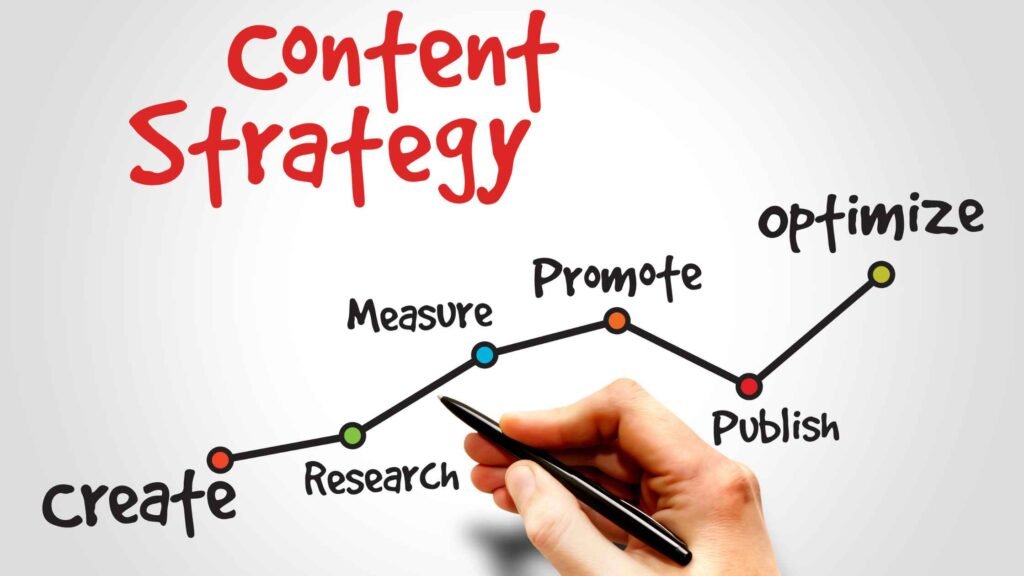
If you are wondering exactly how to start content marketing, follow the framework below.
Step 1: Define Your Content Marketing Goals
Before creating content, determine what you want it to accomplish.
Possible goals include:
- Increase website traffic
- Generate leads
- Build brand authority
- Increase sales
- Grow an email list
- Educate customers
- Improve retention
A clear goal influences every decision that follows.
For example, content designed for awareness will look different from content designed to generate product demonstrations.
Write down one primary objective for your campaign.
Then define a measurable target.
Instead of saying:
“We want more traffic.”
Say:
“We want to increase qualified organic traffic by 30% within six months.”
This gives you something measurable.
Step 2: Understand Your Target Audience
The second step in content marketing is understanding your audience deeply. Do not presume you understand what people want. Research them.
Look at:
- Customer interviews
- Reviews
- Reddit discussions
- Social media comments
- Support questions
- Sales calls
- Search queries
- Competitor comments
- Surveys
Look for recurring problems. If ten customers ask similar questions, that is a potential content opportunity.
The best content often comes from real customer problems rather than brainstorming sessions.
Step 3: Find Problems Your Audience Wants to Solve
People search for solutions to problems. Your job is to identify those problems.
Create a list of:
Problems → Questions → Desired outcomes → Content ideas
For example:
Problem: Small business owners struggle with inconsistent leads.
Questions:
- How do I get more leads?
- Which way can I generate leads without expensive advertising?
- How do I create a lead-generation system?
Desired outcome: A consistent flow of qualified prospects.
Potential content:
- Beginner’s lead-generation guide
- Lead-generation checklist
- Beginner’s Lead magnet ideas
- Lead-generation case study
This approach ensures that your content is connected to actual demand.
Step 4: Research Keywords and Topics
Now combine audience research with search research.
Build a list of relevant topics.
Group them into categories.
For example, a digital marketing website might have:
SEO
- Keyword research
- On-page SEO
- Technical SEO
Content
- Content creation
- Beginner’s Content strategy
- Content promotion
- Email list building
- Beginner’s Email copywriting
- Email automation
Topic grouping makes it easier to develop a comprehensive content library.
Do not chase every keyword you discover.
Select themes that are relevant to your audience and business.
Step 5: Choose Your Content Formats
The fifth step is selecting the appropriate format.
Ask:
What is the greatest way to explain this idea?
- Some topics are perfect for written guides.
- Others are better demonstrated through video.
- A complicated process might benefit from an infographic.
- An expert discussion could become a podcast.
- A customer success story could become a case study.
- Do not choose formats simply because they are popular.
- Choose them because they fit the subject and audience.
Step 6: Create a Content Calendar
Your calendar turns ideas into an organized publishing system.
Plan:
- Topic
- Format
- Author
- Publication date
- Target audience
- Primary goal
- Target keyword
- Distribution channels
- CTA
- Update date
Avoid creating a calendar that is so ambitious you cannot maintain it.
Consistency is more valuable than an unsustainable publishing schedule.
A small business might publish one excellent article per week and repurpose it across several platforms.
That can be more effective than publishing seven weak articles.
Step 7: Create High-Quality Content
This is where execution matters.
Before publishing, ask:
Would my target audience genuinely find this useful?
Strong content should be:
- Accurate
- Relevant
- Clear
- Original
- Practical
- Well-structured
- Easy to read
- Actionable
Add examples.
- Use data where appropriate.
- Explain difficult concepts in simple language.
- Avoid unnecessary repetition.
- Do not create content merely to increase word count.
A 2,000-word article that completely solves a problem can be more valuable than a 7,000-word article filled with repetition.
Step 8: Optimize Your Content for Online Search Engines
Once the content is useful, optimize it.
Include relevant keywords naturally.
Improve:
- Title
- Headings
- Introduction
- URL
- Internal links
- Images
- Metadata
- Content structure
Make the article easy for search engines to understand.
But never sacrifice readability for optimization.
Keyword stuffing can make content unpleasant to read and may damage the quality of the page.
Step 9: Publish Your Content
Publishing should be treated as part of the strategy.
Before clicking publish, check:
- Spelling
- Grammar
- Links
- Images
- Formatting
- Mobile readability
- Page speed
- Calls to action
- Metadata
Also ensure that the content provides a clear next step.
A visitor should not reach the end of the article and wonder what to do next.
Step 10: Promote and Distribute Your Content
Do not assume that publishing means people will automatically discover your work.
This is where content promotion becomes important.
After publishing a blog post, you could:
- Share it on social media.
- Send it to your email list.
- Turn key points into short videos.
- Create social graphics.
- Mention it in related articles.
- Share useful insights with relevant communities.
- Reach out to people who may genuinely benefit from it.
Promotion should provide value rather than become spam.
Step 11: Repurpose Your Content
Content repurposing allows you to extend the value of an existing idea.
Imagine you publish a comprehensive article about email marketing.
You could turn it into:
- Five short videos
- One YouTube video
- A LinkedIn carousel
- An email newsletter
- Ten social posts
- An infographic
- A downloadable checklist
You do not need to create every idea from scratch.
One strong content asset can become the foundation for many pieces of content.
Step 12: Measure Your Results
You cannot improve what you do not measure.
Review performance regularly.
Ask:
- Which pages attract traffic?
- What exact topics generate leads?
- Which videos receive engagement?
- What exact emails receive clicks?
- Which content produces sales?
- What exact channels perform best?
Look beyond vanity metrics.
A post with 100,000 views may be less valuable than a post with 5,000 views that generates 100 qualified leads.
Step 13: Improve Your Strategy
The final step is continuous improvement.
Your first strategy will not be perfect.
Use your data to identify:
- What worked
- Which failed
- What should be updated
- Which should be expanded
- What should be discontinued
Successful content marketing is not a one-time project.
It is a cycle:
Research → Create → Publish → Distribute → Measure → Improve → Repeat
Content Marketing Tips and Tricks
Focus on Audience Problems
Start with problems, not products.
Ask what your audience struggles with and create content that helps.
Prioritize Quality Over Quantity
Publishing more content does not automatically create better results.
One excellent resource can outperform dozens of mediocre posts.
Use Original Insights
Add your own experience, analysis, examples, data, frameworks, and opinions.
Originality makes content more useful and memorable.
Build Topical Authority
Cover important subjects comprehensively.
Instead of writing one article about SEO, create a connected collection covering keyword research, on-page optimization, technical concepts, content optimization, internal linking, and measurement.
Repurpose Successful Content
If a topic performs well, do not abandon it after one publication.
Turn it into different formats.
Create Evergreen Content
Evergreen content remains useful for a long time.
Examples include:
- Beginner guides
- Tutorials
- Definitions
- Checklists
- Frameworks
Update them when information changes.
Combine SEO With Social Distribution
SEO can help visitors find your content via search.
Social media can help you distribute it immediately.
Combining both can create a stronger distribution system.
Use Storytelling
Facts can educate, but stories can make information memorable.
Use customer experiences, mistakes, transformations, challenges, and lessons.
Add Strong Calls to Action
Every major piece of content should have a logical next step.
The CTA could be:
- Read another article
- Download a resource
- Subscribe
- Contact the company
- Try the product
Update Older Content
Your older articles may contain valuable information that can be improved.
Update:
- Statistics
- Examples
- Screenshots
- Broken links
- Outdated recommendations
- Titles
- Internal links
Updating successful content can sometimes be more efficient than constantly creating new content.
Build an Email List
Do not depend entirely on search engines or social media algorithms.
An email list gives you a direct communication channel with your audience.
Use AI Responsibly Without Sacrificing Originality
AI can assist with brainstorming, outlining, research organization, editing, repurposing, and workflow automation.
However, simply generating generic AI text and publishing it without meaningful review can produce content that lacks originality and real expertise.
Use AI as a helper, not a substitute for judgment.
How to Assess Engagement and Why It Matters
Creating content marketing without measuring engagement is like running a business without checking sales.
You need evidence to understand whether your content is working.
Website Traffic
Traffic shows how many people are visiting your content.
However, traffic alone does not prove success.
A page receiving thousands of visitors may generate no leads.
Time on Page
Time on page can provide clues about whether visitors are consuming your content.
It should not be treated as a perfect measurement because different content types naturally require different amounts of time.
Engagement Rate
Engagement can include actions such as:
- Clicks
- Shares
- Comments
- Saves
- Video interactions
- Email clicks
Social Shares
Shares can indicate that people found content useful or interesting enough to distribute to others.
Comments
Comments can provide valuable qualitative feedback.
Read what people are saying.
Their questions can become future content ideas.
Email Engagement
Important email metrics can include:
- Opens
- Clicks
- Replies
- Unsubscribes
- Conversions
Leads
Track how many qualified leads your content generates.
This is often more meaningful than simple traffic.
Conversions
A conversion could be a:
- Purchase
- Booking
- Signup
- Download
- Trial
- Consultation request
Customer Acquisition Cost
Customer acquisition cost helps you understand how much it costs to acquire customers.
This can help you compare content marketing with other acquisition channels.
Return on Investment
ROI evaluates the financial value produced relative to the resources invested.
This becomes particularly important when presenting marketing results to business owners or executives.
How to Create Your Content
The actual content production process can be organized into a simple workflow.
1. Research
Understand the audience, topic, competition, and search intent.
2. Create an Outline
Break the topic into logical sections.
3. Write the First Draft
Focus on communicating the ideas rather than making every sentence perfect.
4. Edit
Remove repetition, improve clarity, and strengthen weak sections.
5. Add Evidence and Examples
Examples make abstract ideas easier to understand.
6. Optimize
Improve SEO elements, structure, headings, links, and readability.
7. Add Visuals
Use screenshots, diagrams, graphics, charts, or videos where they genuinely improve understanding.
8. Add a CTA
Give the reader a relevant next action.
9. Publish
Review everything before making the content public.
10. Promote
Distribute the content across relevant channels.
11. Measure
Monitor performance.
12. Update
Improve the content as new information becomes available.
This repeatable content creation strategy makes it easier to produce consistently without having to start from scratch every time.
Perfect Examples of Content Marketing

One of the easiest ways to understand content marketing is to examine how different businesses can apply it.
Example 1: A SaaS Company
A software company could create:
- Beginner tutorials
- Product guides
- Comparison articles
- Case studies
- Webinars
- Product videos
- Email education sequences
The strategy educates potential customers while demonstrating the product’s usefulness.
Example 2: An Ecommerce Business
An ecommerce store selling kitchen products could publish:
- Cooking guides
- Product tutorials
- Recipe videos
- Product comparison articles
- Customer reviews
- User-generated videos
The content helps potential customers understand how the products solve everyday problems.
Example 3: A Financial Website
A finance website could create:
- Budgeting guides
- Investment education
- Financial calculators
- Case studies
- Email newsletters
- Downloadable templates
The objective is to become a trusted educational resource.
Example 4: A Marketing Consultant
A consultant could publish:
- SEO guides
- Case studies
- LinkedIn posts
- YouTube tutorials
- Marketing templates
- Client success stories
This demonstrates expertise and generates potential consulting leads.
Example 5: A Personal Brand
A creator could document:
- Lessons learned
- Tutorials
- Mistakes
- Industry opinions
- Behind-the-scenes content
- Educational videos
Personal brands can use content to develop familiarity and trust with their audience.
The lesson from these examples is simple: successful content marketing begins with audience needs and connects those needs with a useful business solution.
Content Marketing ROI
Content marketing ROI measures the financial return generated by content relative to the investment made in producing and distributing it.
A simplified formula is:
ROI = (Revenue Generated − Marketing Investment) ÷ Marketing Investment × 100
For example, suppose a business invests $5,000 into content production and distribution and eventually attributes $15,000 in revenue to that content.
The calculation would be:
($15,000 − $5,000) ÷ $5,000 × 100 = 200%
However, measuring ROI can be more complicated than simply looking at direct sales.
Content may influence customers at several points in the buying journey.
For example:
- A customer discovers your business through a blog article.
- They watch a product video.
- And they subscribe to your email list.
- They read a case study.
- And they eventually purchase.
Which piece deserves credit?
This is why marketers should consider multiple attribution models and supporting metrics.
Track:
- Traffic
- Leads
- Sales
- Conversion rate
- Customer lifetime value
- Acquisition cost
- Assisted conversions
- Revenue
The most valuable content marketing metrics are the ones connected to your actual business objectives.
Platforms That Offer Content Marketing Certification

Certification can be useful for people who want to demonstrate structured learning, especially beginners building a marketing career.
Some platforms and organizations that have offered relevant marketing education or certifications include:
HubSpot Academy
HubSpot Academy provides training in inbound marketing, content, email, sales, and related disciplines.
Semrush Academy
Semrush provides educational resources and courses covering SEO, digital marketing, content, and search-related topics.
Coursera
Coursera offers marketing-related courses and professional learning programs from universities and organizations.
LinkedIn Learning
LinkedIn Learning provides courses covering content marketing, SEO, copywriting, social media, analytics, and broader marketing skills.
Google Skillshop
Google’s learning ecosystem provides training in several areas of digital marketing and advertising.
Before enrolling, check the current course syllabus, certification requirements, pricing, and whether the credential matches your career objective.
A certificate can strengthen your résumé, but practical ability matters more.
Employers and clients ultimately want evidence that you can:
- Research audiences
- Create useful content
- Understand SEO
- Develop strategies
- Analyze performance
- Generate business results
Therefore, consider building a portfolio alongside certifications.
Conclusion
Content marketing has become one of the most useful ways for businesses, creators, and entrepreneurs to attract attention, educate audiences, build trust, and generate long-term business opportunities. But successful content marketing is not simply about publishing blog posts every week.
You need to understand your audience, identify their problems, research relevant topics, select the right formats, create useful content, optimize it, publish consistently, promote it, measure performance, and improve your strategy.
Over time, those individual pieces can become a valuable library that attracts visitors, builds authority, generates leads, supports sales, and strengthens customer relationships.
The future of content marketing isn’t just about creating more content. It is about producing better, more useful, more trustworthy, more original, and more audience-focused content.
If you consistently help people solve real problems, you give them a reason to discover your brand, remember your brand, trust your brand, and eventually do business with you.
That is the real power of content marketing in 2026.
Frequently Asked Questions
What is content marketing?
Content marketing is a marketing approach based on creating and distributing useful, relevant content to attract, educate, engage, and convert a specific audience.
The content may include articles, videos, emails, podcasts, social posts, ebooks, case studies, and other formats.
How does content marketing work?
It works by connecting audience needs with useful content.
A person discovers content, consumes it, develops trust in the brand, takes an action, and may eventually become a customer.
After the purchase, content can also support onboarding, education, retention, and advocacy.
What are the 4 categories of content marketing?
There is no single universal classification, but four commonly discussed categories are:
- Written content
- Video content
- Audio content
- Visual or interactive content
These categories can contain many formats, including blogs, videos, podcasts, infographics, ebooks, and webinars.
Is content marketing still effective in 2026?
Yes. However, effectiveness depends heavily on execution.
Publishing generic content is unlikely to create strong results by itself.
Businesses need useful, audience-focused, original, well-distributed content supported by strong measurement and continuous improvement.
How do beginners start content marketing?
Content marketing for beginners should start with a narrow audience and a clear problem.
Choose a topic you understand, identify the questions your audience asks, create useful content, publish consistently, distribute it through relevant channels, and measure the results.
You do not need to start on every platform.
Start with one or two channels and become good at them.
How much does content marketing cost?
There is no universal price.
Costs depend on:
- Content volume
- Writers
- Designers
- Video production
- Software
- SEO
- Distribution
- Advertising
- Internal staff
A small business can begin with a modest budget by focusing on a few high-value content assets.
Larger organizations may spend significantly more on teams, technology, research, video, and distribution.
What is the difference between content marketing and digital marketing?
Digital marketing is the broader category.
It can include:
- SEO
- Paid advertising
- Email marketing
- Social media marketing
- Affiliate marketing
- Content marketing
- Influencer marketing
Content marketing is therefore one component of the broader digital marketing ecosystem.
What distinguishes content marketing from SEO?
SEO focuses on improving visibility in search engines.
Content marketing focuses on creating and distributing useful content to attract and engage an audience.
They overlap significantly.
SEO can help people discover your content, while valuable content gives your SEO strategy something meaningful to rank.
How long does content marketing take to produce results?
Results vary.
Some content can generate engagement immediately, especially when distributed through social media or email.
SEO-focused content may take longer to build meaningful organic visibility.
Factors include:
- Competition
- Website authority
- Content quality
- Search demand
- Distribution
- Consistency
- Industry
Therefore, businesses should generally approach content marketing as a long-term strategy rather than expecting every article to produce immediate sales.
Can AI be used for content marketing?
Yes.
AI can assist with:
- Brainstorming
- Research organization
- Outlining
- Editing
- Summarization
- Repurposing
- Content workflows
- Idea generation
However, human oversight remains important.
AI-generated content should be reviewed for accuracy, originality, usefulness, tone, and relevance.
The goal should be to use AI to improve productivity while preserving human expertise and authentic insight.
What skills does a content marketer need?
Important skills include:
- Writing
- Editing
- Research
- SEO
- Audience analysis
- Storytelling
- Strategy
- Social media
- Analytics
- Copywriting
- Project management
A content marketer does not need to be an expert at everything on day one.
These skills can be developed progressively.
Is content marketing profitable?
It can be. Businesses can use content to generate traffic, leads, sales, customer loyalty, and brand authority.
Profitability depends on the relationship between content investment and business outcomes.
The strongest programs focus not only on producing content but on creating content that attracts the right audience and contributes to measurable business goals.
What are the most important content marketing trends in 2026?
The major areas marketers should pay attention to include:
- Short-form video
- AI-assisted workflows
- First-party audience data
- Search diversification
- Community building
- Original research
- Personalization
- Content repurposing
- Stronger emphasis on expertise and trust
- Multi-channel distribution
However, marketers should avoid chasing every trend.
A trend is valuable only when it helps your audience and supports your business objectives.
What is the best content marketing strategy for small businesses?
Content marketing for small businesses should focus on a narrow audience and specific problems.
Instead of trying to compete with large companies for every topic, identify areas where you can demonstrate practical expertise.
Create a small library of excellent content, optimize it for search, distribute it through social media and email, and continually improve your best-performing pieces.


Pingback: How to Do Digital Marketing the Right Way - MarketLiftAI
Pingback: How to Do Digital Marketing the Right Way - MarketLiftAI