
Getting Website Visitors to your website is only the beginning of online business growth. A website can receive hundreds, thousands, or even millions of visits and still generate disappointing sales if those visitors do not understand the offer, trust the business, or know what to do next.
This is why traffic and revenue should never be treated as the same thing. A business may invest in search engine optimization, social media, paid advertising, email marketing, content marketing, influencer campaigns, or referrals to attract Website Visitors. But if the website experience is confusing, slow, difficult to navigate, or poorly aligned with visitor intent, much of that investment can be wasted.
The real opportunity begins when a person lands on your website. These questions determine whether Website Visitors remain passive traffic or become valuable leads and customers.
However, successful businesses need to think beyond simply increasing traffic. The stronger approach is to attract the right audience, understand why those people arrive, provide an excellent user experience, remove conversion barriers, build trust, and create a structured path from first visit to purchase.
This guide explains how to do exactly that. You will learn what a website is, what Website Visitors are, how visitor intent works, why people leave without converting, how to improve website performance, how to capture leads, how to nurture prospects, and how to build a conversion system that turns more visitors into paying customers.
What Is a Website?
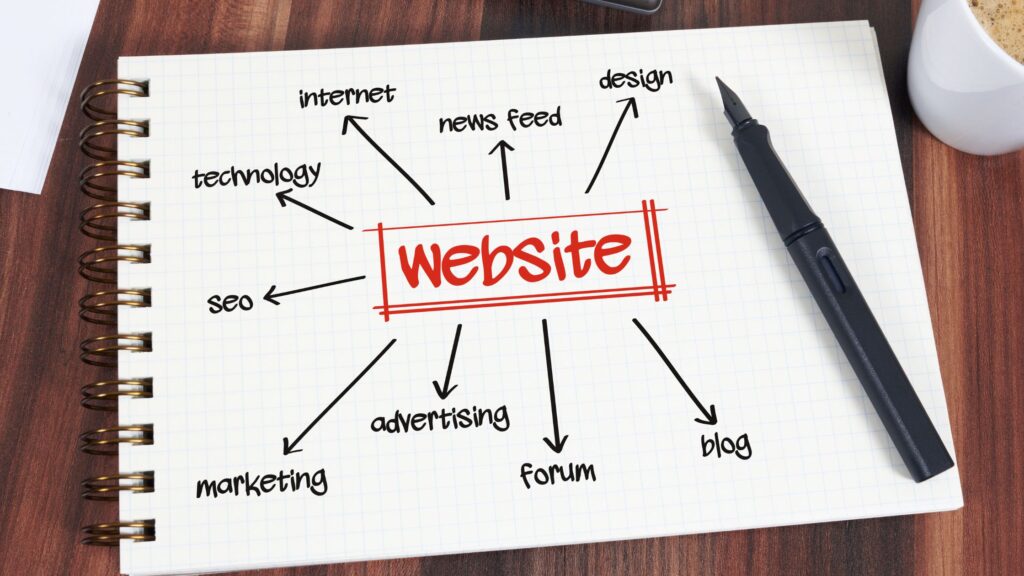
A website is a collection of connected web pages that exists on the internet and can be accessed through a domain name. Businesses, organizations, professionals, creators, and individuals use websites to provide information, communicate with audiences, promote products and services, generate leads, and facilitate transactions.
For businesses, however, a website should be more than an online brochure.
Your website can function as a:
- Marketing channel
- Sales channel
- Lead-generation system
- Product catalog
- E-commerce store
- Customer support resource
- Educational platform
- Brand-building asset
- Appointment-booking system
- Communication channel
When someone discovers your business through Google, social media, advertising, email, or another website, the website often becomes the place where their initial impression is formed.
That makes the website’s quality extremely important.
The Purpose of a Business Website
A successful business website should have a clear purpose.
That purpose could be to:
- Sell products.
- Generate leads.
- Book consultations.
- Collect email subscribers.
- Educate prospects.
- Showcase a portfolio.
- Encourage software trials.
- Generate phone calls.
- Build brand authority.
- Provide customer support.
The specific objective depends on the business model.
An e-commerce store may desire visitors to buy things. A marketing agency may want visitors to book consultations. A SaaS company may want visitors to start free trials. A consultant may want visitors to submit an inquiry form.
The important thing is that the website should be designed around a measurable business outcome.
Website Should Guide Visitors
One of the biggest mistakes businesses make is building websites around what the company wants to say instead of what the customer needs to know.
A customer does not visit your website simply because information is available.
They usually arrive with a question, a problem, a desire, a concern, or a goal.
Your website should help them move from:
Problem → Information → Trust → Evaluation → Action
The better your website supports that journey, the greater your opportunity to convert Website Visitors into customers.
Who Are Website Visitors?
Website Visitors are people who arrive at and interact with a website through a browser or internet-connected device.
They may discover your website through:
- Google and other search engines
- Social media
- Paid advertisements
- Email campaigns
- Referral websites
- Online directories
- YouTube
- Direct URL entry
- Links in articles
- Influencer recommendations
- Online communities
- Word-of-mouth recommendations
However, a visitor is not automatically a prospect.
Someone may visit your website accidentally. Another person may be researching a problem. Someone else may be comparing competitors. Another visitor may already be ready to buy.
This difference is extremely important.
Not All Visitors Have the Same Intent
Imagine an online store selling laptops.
One person searches:
“What is a laptop?”
That person is probably in the early research stage.
Another searches:
“Best laptop for graphic design.”
That person has a more specific requirement.
Another searches:
“Buy MacBook Pro 16-inch online.”
That person has much stronger purchase intent.
All three are Website Visitors, but they are at different stages of the buying journey.
Trying to sell aggressively to every visitor can therefore reduce conversions.
Instead, businesses should create experiences that match the visitor’s level of awareness and intent.
The Five Major Types of Website Visitors
Understanding visitor categories can help you create more relevant content, offers, and calls to action.
1. First-Time Visitors
First-time visitors have little or no previous experience with your business.
They are likely asking:
- Who are you?
- What do you offer?
- Can I trust you?
- Is this relevant to me?
- Why should I choose you?
First impressions are particularly important for this group.
Your homepage, headline, navigation, social proof, and value proposition should quickly communicate credibility and relevance.
2. Returning Visitors
Returning visitors have previously interacted with your website.
They may return because they:
- Want additional information.
- Are comparing alternatives.
- Are considering a purchase.
- Want to check pricing.
- Need to contact your company.
- Have become interested in another product.
Returning visitors already know something about your brand, so your strategy can focus more heavily on moving them toward a decision.
3. Informational Visitors
Informational visitors are looking for knowledge rather than immediately looking to purchase.
They might search for:
- Tutorials
- Definitions
- Guides
- Reviews
- Comparisons
- Strategies
- Research
- Answers to specific questions
These visitors can become customers later if you provide useful information and create opportunities to stay connected.
A high-quality article, downloadable guide, newsletter, or free resource can turn an informational visitor into a lead.
4. Commercial Visitors
Commercial visitors are evaluating potential solutions.
They may be comparing:
- Prices
- Features
- Providers
- Reviews
- Alternatives
- Packages
- Benefits
These people are often closer to purchasing.
Detailed product pages, comparison content, testimonials, demonstrations, case studies, FAQs, and transparent pricing can help them make a decision.
5. Transactional Visitors
Transactional visitors have a strong intention to complete an action.
They may be ready to:
- Buy a product
- Book a service
- Start a subscription
- Schedule a consultation
- Request a quote
- Register for an event
For these visitors, unnecessary friction can be especially damaging.
The checkout process, contact form, booking system, payment options, and calls to action should be simple and reliable.
Understanding Visitor Intent
Website visitors’ intent describes the reason someone arrives at your website.
Understanding intent is one of the foundations of effective conversion strategy because people behave differently depending on what they want.
There are three broad forms of search intent.
Informational Intent
People with informational intent want answers.
Examples include:
- “How does email marketing work?”
- “What is customer retention?”
- “How do I create a website?”
- “How can I increase online sales?”
These visitors may not be ready to buy.
Your goal should be to educate them while introducing your expertise and giving them an appropriate next step.
That next step might be:
- Read another article.
- Download a guide.
- Join your email list.
- Watch a tutorial.
- Take a free assessment.
Navigational Intent
Navigational visitors are trying to find a particular website, page, or brand.
For example, someone may search for a company by name.
These visitors generally already know what they are looking for.
Make sure important pages are easy to find and that your brand experience is consistent.
Transactional Intent
Transactional visitors want to take action.
Examples include searches such as:
- “Buy wireless earbuds online”
- “Book digital marketing consultation”
- “Best accounting software pricing”
- “Order office furniture”
These visitors need a clear path to conversion.
Understanding intent allows businesses to avoid presenting the wrong message at the wrong moment.
Why Website Visitors Do Not Automatically Become Customers
Website visitors you receive as traffic are not the same as demand.
Someone can visit your website without being interested enough to buy.
Even qualified prospects may leave without converting because of uncertainty, confusion, poor design, slow performance, weak messaging, or a complicated buying process.
Common reasons include:
- The offer is unclear.
- The website is difficult to use.
- The price is confusing.
- There is insufficient trust.
- The visitor cannot find answers.
- CTA is weak.
- The page loads slowly.
- The site does not work well on mobile.
- The checkout process is complicated.
- Content does not match visitor intent.
- The company provides no reason to act now.
- Website visitors are not ready to purchase.
This is why conversion should be treated as a complete system rather than a single button.
Website Visitors: How to Convert Them Into Customers

The process of turning Website Visitors into customers starts long before the checkout page.
You need to create a journey that makes the visitor feel understood, informed, confident, and motivated.
The following strategies can help.
1. Create a Strong First Impression
Your homepage and landing pages often have only a short amount of time to communicate your value.
When Website Visitors arrive, they should quickly understand:
- What makes your solution valuable.
- Who you help.
- What problem you solve.
- How your business does it.
- What they should do next.
Avoid unnecessary complexity. A strong first impression does not require extravagant animations or complicated design.
It requires clarity.
What Makes a Good First Impression?
Focus on:
- Clean visual design
- Strong headlines
- Readable typography
- Logical navigation
- Professional imagery
- Clear messaging
- Visible calls to action
- Mobile responsiveness
- Trust indicators
A professional appearance can increase confidence, but visual quality should always support usability rather than distract from it.
2. Make Your Value Proposition Extremely Clear
Your value proposition explains the primary reason someone should choose your business.
- A weak value proposition describes the company.
- A strong value proposition describes the outcome for the customer.
For example:
Weak:
“We provide digital marketing services.”
Stronger:
“We assist small businesses in creating qualified leads through search, content, and conversion-focused websites.”
The second statement communicates:
- What is being offered.
- Who is being served.
- What outcome is expected.
When Website Visitors understand your value proposition immediately, they can determine whether your offer is relevant to them.
Strong Value Proposition Should Answer Four Questions
- Who is this for?
- What problem does it solve?
- Why should I trust this company?
- What result does it provide?
Place your primary value proposition near the top of important pages.
Do not force visitors to scroll through several sections just to understand what you sell.
3. Match Your Content to Visitor Intent
A person searching for an educational guide should not immediately be confronted with aggressive sales messaging.
Similarly, someone searching for pricing should not be forced to read a 3,000-word introductory article before finding the cost.
Create content for each stage of the purchasing journey.
Top-of-Funnel Content
Examples include:
- Educational articles
- Beginner guides
- Videos
- Definitions
- Checklists
- Research
The goal is to attract and educate.
Middle-of-Funnel Content
Examples include:
- Comparisons
- Case studies
- Product demonstrations
- Webinars
- Detailed guides
- Buying guides
The goal is to help prospects evaluate solutions.
Bottom-of-Funnel Content
Examples include:
- Pricing pages
- Product pages
- Service pages
- Free consultations
- Product trials
- Checkout pages
The goal is to facilitate action.
Matching content to intent makes your website more useful and can improve conversion performance for your website visitors.
4. Use Clear Calls to Action
A call to action tells visitors what they should do next.
Without a clear CTA, people may simply read your content and leave.
Examples include:
- Get Started
- Buy Now
- Request a Quote
- Book a Consultation
- Start Your Free Trial
- Download the Guide
- Join the Newsletter
- Contact Our Team
Make CTAs Specific
Compare:
“Submit”
with:
“Get My Free Marketing Audit”
The second CTA communicates what the user receives.
A strong CTA should answer the question:
“What happens if I click this?”
The more clearly you communicate the outcome, the easier it becomes for people to act.
Do Not Overload Visitors With CTAs
Having too many competing actions can create decision fatigue.
If the primary purpose of a page is to generate consultation bookings, make that action prominent.
Secondary actions can exist, but they should not overpower the main goal.
Build Trust Before Asking for the Sale
Trust is essential because Website visitors are taking a risk whenever they buy from an unfamiliar business.
They may wonder:
- Will this product work?
- Is this company legitimate?
- Will I receive what I paid for?
- What happens if something goes wrong?
- Is my payment information secure?
- Can I get support?
Your website should answer these questions proactively.
Use Customer Testimonials
Testimonials show that other people have had positive experiences.
Good testimonials are specific.
Instead of:
“Great service!”
A stronger testimonial explains:
- What problem the customer had.
- Which solution they purchased.
- What result they experienced.
Use Case Studies
Case studies demonstrate your ability to produce outcomes.
A useful case study can show:
Problem → Strategy → Implementation → Result
This gives prospects evidence rather than simply asking them to trust your claims.
Display Relevant Trust Signals
Depending on your business, trust signals may include:
- Customer reviews
- Industry certifications
- Awards
- Partner logos
- Security information
- Guarantees
- Return policies
- Clear contact information
- Physical business information where relevant
Trust signals can remove uncertainty and help Website Visitors feel more comfortable taking action.
Create High-Converting Landing Pages
A landing page is a page designed around a specific campaign or conversion objective.
Examples include pages designed for:
- Advertising campaigns
- Lead magnets
- Product launches
- Webinar registrations
- Consultation requests
- Free trials
- Special offers
A landing page should have one primary objective.
Essential Landing Page Elements
A strong landing page often includes:
- Clear headline
- Supporting subheadline
- Explanation of the problem
- Description of the solution
- Benefits
- Social proof
- Relevant visuals
- Objection handling
- FAQ section
- Strong CTA
Keep the Message Consistent
If someone clicks an advertisement promising “20% off kitchen appliances,” the landing page should immediately reinforce that offer.
Do not send them to a generic homepage where they have to search for the promotion.
Message consistency reduces confusion and helps create a smoother experience.
7. Capture Leads Before Visitors Leave
Not every website visitor is ready to buy.
That does not mean the visit has no value.
A visitor who is not ready today may become a customer next month.
Lead capture allows you to continue the relationship.
Effective Lead Magnets
You can offer:
- E-books
- Templates
- Checklists
- Free reports
- Calculators
- Tutorials
- Coupons
- Product samples
- Free consultations
- Webinars
- Email courses
The resource should solve a meaningful problem.
Do not create a weak PDF simply to collect email addresses.
The best lead magnets provide immediate value and naturally connect to your paid offer.
Use Progressive Relationship Building
A visitor may first download a free guide.
Later, they may attend a webinar.
Then they may read a case study.
Eventually, they may book a consultation.
This gradual process can be much more effective than demanding a purchase immediately.
8. Improve Website Speed
Speed matters because people have limited patience online.
A slow website can create friction before the visitor even sees your offer.
Important performance improvements include:
- Compressing images
- Removing unnecessary scripts
- Improving hosting
- Using caching
- Optimizing code
- Reducing excessive plugins
- Improving server response times
- Using efficient media formats
- Do not focus only on desktop performance.
Mobile users may have slower connections or less powerful devices, making performance particularly important.
A fast website creates a better experience and removes one unnecessary reason for people to leave.
9. Make Your Website Mobile-Friendly
A website should work effectively across smartphones, tablets, laptops, and desktop computers.
Mobile optimization should include:
- Readable text
- Responsive layouts
- Easy-to-tap buttons
- Simple menus
- Fast loading
- Mobile-friendly forms
- Accessible navigation
- Properly sized images
Do not assume that a desktop version automatically creates a good mobile experience.
Test our website using actual mobile devices.
Ask:
- Can I read everything?
- Could I find the menu?
- Can I tap buttons easily?
- Could I complete checkout?
- Can I fill out forms without frustration?
- Could I contact the business quickly?
If the answer is no, mobile Website visitors are likely being lost.
10. Simplify Your Navigation
Navigation should help people find what they need without thinking too hard.
A complicated menu can make even a well-designed website feel difficult.
Important pages may include:
- Home
- About
- Products
- Services
- Pricing
- Blog
- Contact
- FAQ
The exact structure depends on your business.
The principle is simple:
Make important information easy to find.
Clear navigation improves usability and helps visitors move naturally toward conversion.
11. Simplify Forms
Forms are useful for lead generation, but excessive form fields create friction.
Ask for the information you genuinely need.
For example, a simple consultation form may only require:
- Name
- Phone number
- Business name
- Brief description of the requirement
You may not need to ask for ten additional details at the first interaction.
Use Multi-Step Forms When Appropriate
For complex applications, breaking a long form into multiple steps can make the process feel more manageable.
However, test the approach rather than assuming it will always perform better. The right form depends on your audience, offer, and conversion goal.
12. Make Pricing Transparent When Appropriate
Pricing uncertainty can prevent prospects from moving forward.
Whether you should display pricing depends on your business model.
For standardized products, transparent pricing is usually expected.
Also for highly customized services, you may need a quote or consultation.
If you cannot provide a fixed price, explain:
- What determines the price.
- Whether there are additional fees.
- What is included.
- How the quotation process works.
- What customers can expect.
Transparency reduces unnecessary uncertainty.
13. Answer Customer Questions Before They Ask
A good website anticipates objections.
Think about the questions customers repeatedly ask your sales team.
Then answer those questions on the website.
Common questions include:
- How does the product work?
- What payment methods are available?
- How much does it cost?
- Can I return the product?
- How long does delivery take?
- Is there a warranty?
- How long does implementation take?
- Who is this product for?
- What happens after purchase?
- Who is it not for?
An FAQ section can be useful, but important answers should also appear naturally throughout relevant pages.
14. Use Social Proof Strategically
Social proof reduces perceived risk.
People often look at what others have done before making decisions.
Useful social proof includes:
- Testimonials
- Reviews
- Ratings
- Customer stories
- Case studies
- User-generated content
- Number of customers, when accurate
- Media mentions
- Industry recognition
Use real evidence. Never manufacture reviews or make unsupported claims.
Credibility is more valuable than exaggerated marketing.
15. Offer Guarantees When Appropriate
A guarantee can reduce perceived risk.
Depending on the business, this might be:
- Money-back guarantee
- Free trial
- Satisfaction guarantee
- Product warranty
- Replacement policy
- Cancellation policy
A guarantee should be genuine and clearly explained.
Do not hide important conditions in confusing language.
The objective is to make customers feel safer, not trick them into purchasing.
16. Use Live Chat and Conversational Support
Some prospects simply need one question answered before buying.
Live chat can help remove that obstacle.
Useful chat questions include:
- “Which product is right for me?”
- “Do you deliver to my location?”
- “How long does implementation take?”
- “Can I speak to someone?”
- “What is included in this plan?”
If human support is unavailable, an AI-powered assistant can handle appropriate routine questions and direct complex issues to a human.
However, automation should improve the customer experience rather than make it harder to reach a person.
17. Personalize the Experience
Personalization can make a website more relevant.
Depending on the technology and privacy requirements of your business, personalization may include:
- Product recommendations
- Location-aware information
- Recently viewed products
- Personalized email campaigns
- Relevant content suggestions
- Returning visitor experiences
The objective is not to show visitors that you are tracking them. It is also to make their experience more useful.
When personalization genuinely helps customers find relevant products or information faster, it can contribute to better engagement.
18. Use Retargeting Carefully
Many people do not purchase during their first visit.
Retargeting can remind previous visitors about your business.
Potential channels include:
- Search advertising
- Social advertising
- Display campaigns
For example, someone who viewed a product but did not purchase could later receive a reminder about that product.
However, retargeting should be relevant and controlled. Showing the same advertisement repeatedly can become annoying.
Good retargeting considers:
- Frequency
- Timing
- Customer stage
- Previous actions
- Product availability
- Purchase status
19. Build an Email Nurturing System
Email can help turn Website visitors who are not ready to buy into future customers.
A simple sequence might look like this:
Email 1: Deliver Value
Provide the resource they requested.
Email 2: Educate
Explain a common problem related to your offer.
Email 3: Demonstrate
Share a case study or customer story.
Email 4: Address Objections
Answer common concerns.
Email 5: Present the Offer
Explain how your product or service resolves the issue.
Email 6: Encourage Action
Provide a clear next step.
The sequence should feel helpful rather than aggressive.
20. Create Content That Moves Visitors Forward
Content marketing should not exist only to generate page views.
Each important piece of content should have a purpose.
An article can:
- Attract search traffic.
- Answer questions.
- Demonstrate expertise.
- Introduce a product.
- Generate email subscribers.
- Direct readers to a relevant service.
- Support a buying decision.
At the end of an educational article, provide an appropriate next step.
For example:
- Article: How to Reduce Customer Churn
- Next step: Download a customer retention checklist.
This creates a natural progression from information to engagement.
21. Use Internal Linking Strategically
Internal links connect related pages on your website.
They help visitors discover additional information while also helping search engines understand your site’s structure.
For example, an article about lead generation could link to:
- Email marketing
- Landing page optimization
- Customer acquisition
- Conversion tracking
- Sales funnels
Internal links should be useful rather than excessive.
The objective is to help people find the next piece of information they need.
22. Improve Your Product Pages
For e-commerce websites, product pages are often where buying decisions happen.
A strong product page should answer:
- What is the product?
- Who is it for?
- What problem does it solve?
- How does it work?
- What does it include?
- How much does it cost?
- When will it arrive?
- Can I return it?
- What do other customers say?
Product Page Essentials
Use:
- High-quality images
- Clear product descriptions
- Benefits
- Specifications
- Reviews
- Delivery information
- Return policies
- FAQs
- Clear purchase buttons
Avoid descriptions copied directly from suppliers.
Original, useful product information creates a better experience and gives your site more value.
23. Improve Service Pages
Service businesses need to communicate outcomes clearly.
A service page should explain:
- The problem.
- Consequences of the problem.
- Your solution.
- How the service works.
- What customers receive.
- Why your company is qualified.
- Evidence of results.
- Pricing or quotation information.
- Frequently asked questions.
- The next step.
This structure helps website visitors understand the offer without requiring them to contact sales just to get basic information.
24. Create a Strong About Page
Your About page should not simply tell your life story.
It should help potential customers understand why your company exists and why they should trust you.
Explain:
- Your mission
- Your expertise
- Your experience
- Your approach
- Your values
- Your team
- Your relevant achievements
Most importantly, connect your story to the customer’s needs.
25. Improve Your Contact Page
Your contact page should make communication easy.
Provide appropriate options such as:
- Phone
- Contact form
- Booking calendar
- Live chat
- Business location, where relevant
- Social channels
Tell website visitors what happens after they contact you.
For example:
“Submit the form and our team will respond within one business day.”
Clear expectations reduce uncertainty.
26. Use Analytics to Understand Visitor Behavior
You cannot effectively improve a website if you do not understand how people use it.
Track meaningful metrics such as:
- Traffic sources
- Landing pages
- Conversion events
- Form submissions
- Purchases
- Engagement
- Exit behavior
- Device type
- Geographic distribution
- Returning versus new users
Analytics should help answer questions.
For example:
- Question: Why are people abandoning the checkout page?
- Possible investigation: Compare checkout completion rates by device and identify where users leave.
The objective is not to collect hundreds of numbers.
The objective is to make better decisions.
27. Track Micro-Conversions
Not every valuable action is a purchase.
A visitor may:
- Watch a product video.
- Download a guide.
- Subscribe to email.
- Add an item to cart.
- Start checkout.
- Book a call.
- Use a calculator.
- Click a phone number.
These are micro-conversions.
Tracking them helps you understand where people are progressing and where they are getting stuck.
A person who downloads three resources is behaving differently from someone who leaves after five seconds.
28. Conduct Conversion Funnel Analysis
Think about your website as a funnel.
For example:
- 10,000 visitors
- ↓
- 2,000 product-page visitors
- ↓
- 500 add-to-cart users
- ↓
- 250 checkout users
- ↓
- 150 purchases
The numbers reveal where opportunities exist.
If many people reach the product page but few add items to the cart, investigate the product page.
If they add items but abandon checkout, investigate checkout.
This is more effective than simply stating, “We need more traffic.”
29. Run A/B Tests
A/B testing compares two versions of an element to see which performs better.
You might test:
- Headlines
- CTA wording
- Images
- Page layouts
- Pricing presentation
- Forms
- Product descriptions
For example:
- Version A: “Get Started”
- Version B: “Get My Free Strategy”
If the second version produces a statistically reliable improvement, you may have evidence that the clearer benefit improves performance.
Avoid changing too many things simultaneously if you want to understand what caused the result.
30. Reduce Checkout Abandonment
For e-commerce businesses, checkout is one of the most important areas to optimize.
Common problems include:
- Unexpected fees
- Slow pages
- Limited payment methods
- Required account creation
- Complicated forms
- Lack of trust
- Unclear delivery information
- Technical errors
Create a Friction-Free Checkout
A strong checkout should:
- Clearly show the order.
- Display total costs.
- Provide delivery information.
- Offer appropriate payment options.
- Make corrections easy.
- Work well on mobile.
- Confirm the purchase clearly.
Every unnecessary obstacle is an opportunity for abandonment.
31. Give Visitors a Reason to Act
Sometimes people understand your offer but simply postpone the decision.
A legitimate reason to act can help.
Examples include:
- Limited-time discounts
- Seasonal offers
- Bonus resources
- Free shipping
- Limited appointment availability
- Product launch pricing
- Early-access opportunities
Urgency should be genuine. Fake countdown timers and artificial scarcity can damage trust.
32. Make Your Website Accessible
Accessibility is both a usability and inclusion consideration.
Consider:
- Readable typography
- Sufficient contrast
- Keyboard navigation
- Descriptive image alternatives
- Clear form labels
- Logical heading structure
- Captions for relevant videos
- Accessible interactive elements
A more accessible website can provide a better experience for a broader range of people.
33. Protect Customer Privacy
Website visitors want to know how their information is handled.
Your website should provide appropriate information about:
- Privacy practices
- Cookies
- Data collection
- Contact information
- Payment security
- Marketing communications
Follow applicable laws and regulations in the markets you serve.
Trust is not only about testimonials.
It is also about responsible handling of customer information.
34. Create a Clear Customer Journey
A visitor journey might look like this:
- Discovery: The person discovers your website.
- ↓
- Awareness: They understand the problem and your solution.
- ↓
- Consideration: They evaluate your offer.
- ↓
- Trust: They review evidence and reduce uncertainty.
- ↓
- Action: They purchase, book, subscribe, or contact you.
- ↓
- Retention: They receive a good post-purchase experience.
- ↓
- Advocacy: They recommend your business to others.
The website should support each stage.
Common Mistakes That Waste Website Visitors
Mistake 1: Focusing Only on Traffic
More traffic does not automatically mean more revenue.
Qualified website visitors combined with a strong conversion system are more valuable.
Mistake 2: Using Generic Messaging
Statements like “We provide quality solutions” are unclear.
Explain what you actually do and for whom.
Mistake 3: Hiding the CTA
Website visitors should not have to search for the next step.
Mistake 4: Ignoring Mobile Users
A website that works on desktop but fails on mobile is losing opportunities.
Mistake 5: Using Too Much Jargon
Customers may not understand industry terminology.
Use language they actually use.
Mistake 6: Making Unsupported Claims
Statements such as “number one” or “best in the industry” require evidence.
Specific proof is stronger.
Mistake 7: Forgetting Existing Visitors
Returning visitors can be valuable.
Create experiences that encourage them to continue their journey.
Mistake 8: Never Testing Anything
Assumptions are not the same as evidence.
Test important elements.
Mistake 9: Making Every Page About Selling
Education and trust are components of the sales process.
Not every visitor is ready to buy.
Mistake 10: Ignoring Post-Conversion Experience
The relationship does not end at purchase.
A good post-purchase experience can create repeat customers and referrals.
How to Turn Website Visitors Into Paying Customers

A reliable process can be summarized as follows:
Step 1: Attract the Right People
Use SEO, advertising, social media, referrals, email, partnerships, and content to attract people who actually need your solution.
Step 2: Understand Their Intent
Determine whether they are researching, comparing, or ready to buy.
Step 3: Deliver Relevant Information
Give them the information required for their stage of the journey.
Step 4: Establish Trust
Use real evidence, transparent policies, reviews, demonstrations, and case studies.
Step 5: Present a Relevant Offer
The offer should connect directly to the visitor’s problem.
Step 6: Make the Next Step Easy
Use a clear CTA.
Step 7: Capture Non-Buyers
Use lead magnets, email subscriptions, consultations, or other appropriate mechanisms.
Step 8: Nurture Prospects
Continue providing value after the first visit.
Step 9: Follow Up
Use appropriate email, remarketing, sales outreach, or notifications.
Step 10: Measure and Improve
Use data to identify weak points and continuously improve.
This framework turns conversion from a random outcome into a repeatable business process.
Practical Website Visitors Conversion Framework
A useful framework is:
Attract
Bring qualified people to your website.
Understand
Identify their needs, problems, and intent.
Engage
Provide useful and relevant information.
Convince
Build trust and demonstrate value.
Convert
Make the desired action easy.
Nurture
Continue communicating with people who are not yet ready.
Retain
Deliver an excellent customer experience.
Expand
Encourage repeat purchases, referrals, upgrades, and advocacy.
This framework recognizes that not every person will purchase immediately.
Website Visitors and the Role of SEO
Search engine optimization can help attract people who are actively searching for information, products, and services.
But SEO should not be treated purely as a website visitor-generation exercise.
The real objective is to attract relevant users who can potentially become customers.
Create Search-Focused Content
Develop content around genuine customer questions.
For example:
- How-to guides
- Product comparisons
- Buying guides
- Troubleshooting articles
- Industry research
- Definitions
- Case studies
Match Search Intent
A keyword may have thousands of searches but produce little commercial value if the audience has no interest in your product.
Prioritize relevance.
Build Topic Depth
Instead of creating dozens of disconnected articles, create useful topic clusters.
For example, a website about customer acquisition could cover:
- Lead generation
- Landing pages
- Conversion optimization
- Email nurturing
- Customer retention
- Sales funnels
- Analytics
Internal linking can connect these resources.
Website Visitors and Content Quality
Publishing content simply to target keywords is no longer a sustainable content strategy.
High-quality content should:
- Answer the actual question.
- Demonstrate expertise.
- Provide original insights.
- Include practical examples.
- Avoid unnecessary repetition.
- Be easy to navigate.
- Use accurate information.
- Help the reader make a decision.
Keyword usage should feel natural.
Repeating the exact phrase excessively can make an article harder to read and may create the appearance of manipulation.
The priority should always be usefulness.
Website Visitors and AI in 2026
Artificial intelligence is increasingly being used to improve website visitors’ experiences.
Businesses can use AI to:
- Answer common questions
- Recommend products
- Personalize content
- Analyze visitor behavior
- Summarize customer feedback
- Assist sales teams
- Generate content drafts
- Identify conversion opportunities
- Automate follow-up
- Support customer service
However, AI should not replace human judgment. A chatbot that gives incorrect information can damage trust.
The best approach is to combine automation with human oversight.
Website Visitors and Customer Experience
Customer experience begins before purchase. Every interaction matters.
Consider the visitor who:
- Clicks an advertisement.
- Lands on a slow page.
- Cannot find the advertised offer.
- Searches for pricing.
- Finds unclear information.
- Opens a chat.
- Receives an irrelevant automated response.
- Tries checkout.
- Encounters an error.
Even if the product is excellent, the experience has created enough friction to lose the sale.
Conversion optimization should therefore consider the entire customer journey rather than one page.
How to Build and Convert Website Visitors
A conversion-focused website should have five characteristics.
It Is Clear
Visitors immediately understand what the business offers.
It Is Relevant
Content matches visitor needs and intent.
It Is Credible
Evidence supports the company’s claims.
It Is Easy to Use
Navigation and interactions are straightforward.
It Is Action-Oriented
Website visitors always have an appropriate next step.
When these five characteristics work together, website Visitors** are more likely to move toward meaningful actions.
Metrics You Should Monitor
Do not measure success using traffic alone.
Monitor a combination of metrics.
Traffic
How many people arrive?
Engagement
How do they interact with the website?
Conversion Rate
What percentage complete the desired action?
Lead Conversion
How many visitors become leads?
Sales Conversion
How many leads become customers?
Average Order Value
How much does each customer spend?
Customer Acquisition Cost
How much does it cost to acquire a customer?
Revenue Per Visitor
How much revenue does each visitor generate on average?
Customer Lifetime Value
How much revenue does a customer generate over the relationship?
These metrics provide a more complete picture of business performance.
What Is a Good Website Conversion Rate?
There is no universal conversion rate that every website should target.
Conversion performance varies based on:
- Industry
- Business model
- Product price
- Traffic source
- Audience
- Device
- Geography
- Offer
- Customer intent
- Sales cycle
A better approach is to establish your current baseline and improve it.
For example, suppose 10,000 people visit your website and 200 complete the desired action.
Your conversion rate is:
200 ÷ 10,000 × 100 = 2%
If optimization increases conversions to 300 while traffic remains the same:
300 ÷ 10,000 × 100 = 3%
That is a substantial improvement without requiring additional traffic.
This demonstrates why conversion optimization can be powerful.
Traffic Quality Versus Traffic Quantity
Imagine two businesses.
Business A
- 100,000 visitors
- 0.5% conversion rate
- 500 conversions
Business B
- 20,000 visitors
- 5% conversion rate
- 1,000 conversions
Business B receives less traffic but generates twice as many conversions.
The lesson is simple:
Quality and intent matter.
Instead of asking only:
“How can we get more visitors?”
Ask:
“How can we attract more of the right people and give them a better reason to act?”
That question leads to stronger marketing decisions.
30-Day Plan to Improve Website Conversions
Week 1: Audit
Review:
- Homepage
- Product pages
- Service pages
- Landing pages
- Forms
- Checkout
- Mobile experience
- Speed
- Navigation
- CTAs
Identify the biggest problems.
Week 2: Improve Messaging
Rewrite:
- Headlines
- Value propositions
- Product benefits
- Service descriptions
- CTAs
- FAQs
Make the language customer-focused.
Week 3: Improve Trust and Conversion
Add or strengthen:
- Testimonials
- Reviews
- Case studies
- Guarantees
- Security information
- Clear policies
- Relevant FAQs
Simplify forms and checkout.
Week 4: Measure and Test
Choose a few important changes and measure their impact.
Track:
- Leads
- Purchases
- CTA clicks
- Form completion
- Checkout completion
- Revenue
Then continue improving.
Final Checklist for Converting Website Visitors
Before launching or redesigning a website, ask:
- Is the purpose of the website clear?
- Can visitors understand the offer immediately?
- Is the value proposition specific?
- Does the content match visitor intent?
- Is the website mobile-friendly?
- Does it load quickly?
- Is navigation simple?
- Are CTAs clear?
- Is pricing understandable?
- Are forms easy to complete?
- Is there a lead-capture strategy?
- Are customer questions answered?
- Is there an email nurturing system?
- Are testimonials authentic?
- Is the post-purchase experience strong?
- Are policies easy to find?
- Is checkout simple?
- Are analytics configured?
- Is customer feedback being collected?
- Are conversion events being tracked?
- Is retargeting used appropriately?
- Are pages regularly tested?
If several answers are “no,” your website probably has opportunities for improvement.
Conclusion
Attracting Website Visitors is an important part of building an online business, but traffic alone does not create sustainable revenue. The real opportunity is turning relevant visitors into leads, customers, repeat buyers, and advocates.
The most effective approach is not to pressure every person who lands on your website into buying immediately. Instead, understand why they arrived, identify what they need, provide useful information, establish credibility, remove uncertainty, and give them a clear next step.
Your website should make the customer journey easier. Start by improving the basics: create a strong first impression, communicate a compelling value proposition, optimize your pages for different visitor intents, strengthen trust signals, improve mobile usability, increase website speed, simplify forms and checkout, and create clear calls to action.
Measurement is equally important. Do not judge your website only by how many Website Visitors it receives. Monitor what those visitors actually do. Determine which pages attract qualified users, which pages generate leads, where people abandon the buying process, and which changes improve business outcomes.
A website with 10,000 highly relevant visitors and a strong conversion process can be more valuable than a website with 100,000 poorly targeted visitors and a weak customer journey.
Your traffic already represents an opportunity. The next step is making sure more of those Website Visitors receive the information, confidence, and experience they need to become paying customers.
Frequently Asked Questions About Website Visitors
What Are Website Visitors?
Website Visitors are people who access and interact with your website. They can arrive through search engines, social media, advertisements, email, referrals, direct visits, or other channels.
A visitor may be a potential customer, existing customer, researcher, competitor, or accidental user.
The goal of business websites is generally to attract relevant visitors and guide appropriate visitors toward valuable actions.
Why Are Website Visitors Important?
Website Visitors represent potential opportunities for leads, sales, subscriptions, bookings, and customer relationships.
However, traffic by itself does not guarantee revenue.
The quality of the audience, visitor intent, website experience, offer, trust, and conversion process all influence business results.
How Can I Convert Website Visitors into Customers?
Start by understanding visitor intent.
Then:
- Make your value proposition clear.
- Improve website usability.
- Build trust.
- Provide relevant content.
- Use compelling CTAs.
- Simplify purchasing.
- Capture leads.
- Nurture prospects.
- Follow up.
- Measure and optimize.
The process should be treated as a complete customer journey.
Why Do Website Visitors Leave Without Buying?
Visitors may leave because:
- The website is slow.
- They do not trust the business.
- The offer is unclear.
- They are not ready to buy.
- The site is difficult to navigate.
- Pricing is confusing.
- The product does not match their needs.
- There is insufficient information.
- The checkout process is complicated.
Identifying the specific reason is more useful than assuming all visitors leave for the same reason.
How Can I Increase the Number of Website Visitors?
You can attract more visitors through:
- SEO
- Content marketing
- Social media
- Paid advertising
- Email marketing
- Referral partnerships
- Influencer marketing
- Video content
- Online communities
However, focus on attracting qualified visitors rather than maximizing traffic regardless of quality.
Should I Focus on Traffic or Conversions?
You need both.
Traffic creates opportunities, while conversion turns opportunities into business results.
If your website already receives significant traffic but produces few leads or sales, improving conversion performance may provide a faster return than simply buying more traffic.
How Important Is Website Speed?
Website speed is important because slow experiences create friction.
A fast website improves usability and helps visitors access information and complete actions more easily.
Performance should be considered across mobile and desktop devices.
Should Every Website Have Live Chat?
Not necessarily.
Live chat is most useful when visitors frequently need assistance before taking action.
Businesses should evaluate whether chat solves a genuine customer problem.
For some companies, email, phone support, appointment booking, or a strong FAQ may be more appropriate.
How Can AI Help Convert Website Visitors?
AI can support conversion by answering questions, recommending products, assisting with lead qualification, personalizing experiences, and supporting customer service.
However, businesses should monitor AI-generated responses and ensure that automated systems do not create additional friction.
What Is the Most Important Conversion Strategy?
There is no single strategy that works for every business.
The strongest foundation is understanding your audience and removing obstacles between their problem and your solution.
Clear messaging, trust, relevance, usability, and a simple next step are consistently important.