

Introduction
In today’s fast-changing digital economy, having a strong business development strategy is no longer optional. Businesses in 2026 operate in a world shaped by artificial intelligence, automation, changing customer expectations, rising competition, and global digital transformation. Companies that fail to adapt often struggle to grow, attract customers, and maintain profitability.
A successful growth strategy helps organizations identify growth opportunities, build long-term partnerships, improve customer relationships, and increase revenue. Whether you run a startup, SME, agency, ecommerce store, or online business, your ability to create a clear business development strategy can determine whether your business survives or scales.
Many businesses fail because they rely solely on marketing or sales without developing a real expansion strategy. While marketing focuses on attracting attention and sales focuses on closing deals, business development combines strategy, partnerships, relationship building, customer acquisition, and market expansion.
In 2026, businesses must also embrace AI-driven tools, automation systems, customer data analytics, and omnichannel communication. Consumer behavior is evolving rapidly. Customers now expect personalized experiences, fast responses, transparency, and value-driven interactions.
For startups and SMEs, the competition is more intense than ever. Larger companies are investing heavily in AI, automation, and customer experience optimization. This implies that to compete effectively, smaller enterprises need a more strategic approach to business development.
This comprehensive guide will explain everything you need to know about creating a successful business development strategy in 2026. You will learn the meaning of business development, understand the business development process, discover key business development skills, and explore real-world examples from major companies.
By the end of this article, you will understand how to develop a business growth framework that helps your business grow consistently in today’s digital economy.
What Is Business Development?
Understanding the meaning of business development is the first step toward building an effective business development strategy.
Business development is the process of identifying opportunities to grow revenue, improve relationships, expand into new markets, and increase long-term profitability. A business development strategy includes planning, networking, partnership building, lead generation, customer retention, and market positioning.
In a nutshell, company development is about generating possibilities for sustainable growth.
Many people confuse sales, marketing, and business development. Although they work together, they are different.
Difference Between Sales, Marketing, and Business Development
Sales
Sales focus on converting prospects into paying customers. Sales teams work directly with leads to close deals and generate revenue.
Marketing
Marketing focuses on creating awareness, generating interest, and attracting potential customers through advertising, SEO, social media, content marketing, and branding.
Business Development
It connects sales and marketing while focusing on long-term growth opportunities. A business development strategy includes partnerships, expansion planning, customer relationship management, networking, and strategic decision-making.
An effective business development strategy ensures that all departments work together toward sustainable growth.
Why Business Development Is Important
A strong growth strategy helps businesses:
- Increase revenue
- Build strategic partnerships
- Improve brand visibility
- Identify new market opportunities
- Enhance customer relationships
- Improve competitive advantage
- Scale operations efficiently
- Support long-term business growth
Without a proper business development strategy, businesses often struggle to grow consistently.
Main Goals of Business Development
The main objectives of a business development strategy include:
- Generating qualified leads
- Building profitable relationships
- Increasing customer retention
- Expanding into new markets
- Improving revenue streams
- Strengthening brand positioning
- Creating sustainable growth systems
Investing in a smart business development strategy often enables businesses to achieve faster and more sustainable growth.
Key Aspects to Focus on in Business Development
To build a successful business development strategy in 2026, businesses must focus on several important areas.
Market Research
One of the most important parts of a business development strategy is market research. Businesses must understand customer needs, industry trends, competitor activities, and market opportunities.
A strong business development process begins with accurate market research.
Businesses should analyze:
- Customer behavior
- Market demand
- Competitor strategies
- Industry trends
- Pricing models
- Customer pain points
Using customer data and analytics helps businesses make smarter decisions.
Lead Generation
Lead generation is essential for any market expansion plan. Businesses need a consistent system to attract potential customers.
Effective lead generation methods include:
- SEO
- Content marketing
- Social media marketing
- Paid advertising
- Email marketing
- Referral marketing
- Networking
- Webinars
It should include both short and long-term generation systems.
Strategic Partnerships
Strategic partnerships help businesses expand faster. Collaborating with complementary businesses can increase visibility, revenue, and customer trust.
A strong business development strategy often includes:
- Affiliate partnerships
- Influencer collaborations
- Technology partnerships
- Distribution agreements
- Joint ventures
Partnerships can significantly improve a company’s business growth strategy.
Customer Retention
Many businesses focus only on customer acquisition. However, retaining existing customers is often more profitable.
A successful business development strategy should prioritize:
- Customer satisfaction
- Personalized experiences
- Loyalty programs
- Excellent customer support
- Regular communication
Customer retention improves lifetime customer value.
Brand Positioning
It influences how customers perceive your business.
A strong business development strategy helps businesses establish:
- Industry authority
- Brand credibility
- Unique selling points
- Customer trust
- Competitive differentiation
Strong branding supports long-term business growth.
Revenue Growth
Revenue generation is a major goal of every business development strategy.
Businesses should focus on:
- Diversifying revenue streams
- Increasing average order value
- Improving conversion rates
- Expanding market reach
- Launching new products or services
An effective business development strategy creates sustainable revenue systems.
Digital Transformation and AI
These are transforming modern business operations.
Businesses in 2026 must incorporate AI tools into their business development strategy.
AI can help with:
- Customer support automation
- Predictive analytics
- Lead scoring
- Market analysis
- Content personalization
- CRM automation
Companies that ignore AI risk are falling behind competitors.
Relationship Building
It remains one of the most valuable aspects of a successful business development strategy.
Strong professional relationships create:
- Referral opportunities
- Partnership opportunities
- Customer loyalty
- Brand trust
- Long-term revenue growth
Networking and communication remain essential business development skills.
How to Create an Effective Business Development Process
An organized business development process helps businesses achieve consistent results.
Identify Your Target Market
The first step in building a business development strategy is identifying your target audience.
Businesses should define:
- Ideal customer demographics
- Customer pain points
- Buying behavior
- Budget levels
- Industry segments
Understanding your audience improves marketing and sales performance.
Define Your Business Goals
Every business development strategy should include measurable goals.
Examples include:
- Revenue targets
- Customer acquisition goals
- Market expansion objectives
- Partnership growth
- Conversion rate improvements
Clear goals help businesses track progress effectively.
Analyze Competitors
Competitor analysis helps businesses identify opportunities and weaknesses.
Businesses should evaluate:
- Competitor pricing
- Marketing channels
- Customer engagement
- Product offerings
- Brand positioning
Competitive analysis strengthens your business development process.
Build a Lead Generation System
A successful business development strategy requires a consistent flow of leads.
Businesses should build systems using:
- SEO
- Email marketing
- LinkedIn outreach
- Paid ads
- Referral systems
- Content marketing
A predictable lead generation system supports long-term growth.
Create a Sales Funnel
A sales funnel guides potential customers through the buying journey.
Stages often include:
- Awareness
- Interest
- Consideration
- Decision
- Retention
A solid business growth plan synchronizes the sales and marketing funnels.
Develop Strategic Partnerships
Partnerships create additional growth opportunities.
Businesses should identify partners that share similar audiences.
Strategic collaborations can improve:
- Brand visibility
- Customer acquisition
- Product distribution
- Revenue growth
Partnerships strengthen your overall business development strategy.
Track KPIs and Performance
Tracking data is essential in the modern business development process.
Important KPIs include:
- Customer acquisition cost
- Conversion rate
- Customer lifetime value
- Revenue growth
- Lead quality
- Retention rate
Performance tracking helps businesses optimize their business development strategy.
Optimize and Scale
Businesses should continuously optimize operations based on data.
Optimization areas include:
- Marketing campaigns
- Sales funnels
- Customer experience
- Lead generation
- Automation systems
Scaling successful systems helps businesses grow faster.
Must-Have Skills for Successful Business Development
To build and execute a successful Revenue Growth Strategy, professionals need a combination of technical, communication, and leadership abilities. In today’s highly competitive market, businesses need experts who can identify opportunities, build relationships, and drive long-term growth.
Whether you are a startup founder, marketer, sales executive, or agency owner, developing the right business development skills can help you improve performance and achieve sustainable growth.
Communication Skills
Communication is one of the most important business development skills. Strong communication helps businesses build trust, explain value clearly, and maintain professional relationships.
Business development professionals must communicate effectively with:
- Customers
- Investors
- Business partners
- Team members
- Vendors
- Stakeholders
Good communication improves every market expansion plan by strengthening collaboration and customer engagement.
Negotiation Skills
Negotiation plays a major role in business growth. Professionals who negotiate effectively can secure better deals, partnerships, pricing agreements, and contracts.
Strong negotiation skills help businesses:
- Increase profitability
- Reduce costs
- Improve partnerships
- Close deals faster
- Resolve conflicts professionally
It’s essential in every business development process.
Sales Skills
Although sales and business development are different, sales knowledge remains extremely important.
Sales skills help professionals:
- Understand customer behavior
- Handle objections
- Improve conversion rates
- Build trust with clients
- Increase revenue
A strong business growth framework often depends on a company’s ability to convert leads into paying customers.
Data Analysis
Modern businesses rely heavily on data-driven decision-making.
Data analysis helps businesses understand:
- Customer behavior
- Website traffic
- Marketing performance
- Sales trends
- Conversion rates
- Market opportunities
Companies that use analytics effectively can optimize their business development strategy.
Networking
It creates valuable growth opportunities.
Building relationships with industry professionals, customers, and investors can lead to:
- Strategic partnerships
- Referral opportunities
- Collaborations
- Brand exposure
- Revenue growth
Networking remains one of the most valuable business development skills in 2026.
Emotional Intelligence
Emotional intelligence helps professionals understand customer emotions, improve communication, and build stronger relationships.
Businesses with emotionally intelligent teams often experience:
- Better customer satisfaction
- Improved teamwork
- Stronger partnerships
- Better conflict resolution
Relationship management is a critical part of every business development strategy.
Strategic Thinking
Strategic thinking allows businesses to plan long-term growth and identify future opportunities.
Professionals must understand:
- Industry trends
- Market positioning
- Competitor behavior
- Revenue opportunities
Risk management
A smart business development strategy always involves long-term planning.
AI and Digital Skills
AI and automation are transforming the business world rapidly.
Businesses in 2026 need professionals who understand:
- AI tools
- CRM software
- Marketing automation
- SEO
- Social media analytics
- Data visualization
- Automation systems
Companies that embrace digital transformation often gain a stronger competitive advantage.
Problem-Solving Skills
Every business faces challenges. Problem-solving helps companies respond quickly and improve operations.
Strong problem-solving skills help businesses:
- Improve efficiency
- Resolve customer issues
- Identify growth opportunities
- Reduce operational challenges
Problem-solving strengthens the entire business development process.
CRM Knowledge
Customer relationship management tools help businesses organize customer data, improve communication, and automate workflows.
Popular tools include:
- HubSpot
- Salesforce
- LinkedIn Sales Navigator
- Google Analytics
These tools improve customer management and support a successful business development strategy.
How to Make a Proper Business Development Strategy in 2026
Creating a powerful business development strategy in 2026 requires planning, adaptability, data analysis, and continuous optimization. Businesses must combine technology, customer experience, partnerships, and strategic marketing to remain competitive.
Below is a step-by-step guide to developing a business strategy that supports long-term growth.
Step 1: Set Clear Revenue Goals
Every business development strategy should begin with clear financial objectives.
Businesses should define:
- Monthly revenue goals
- Quarterly sales targets
- Annual growth projections
- Profit margins
- Customer acquisition goals
Clear targets help businesses measure progress and improve accountability.
Without measurable goals, it becomes difficult to evaluate success.
Step 2: Define Your Ideal Customers
Understanding your ideal customer is essential.
Businesses should identify:
- Customer demographics
- Interests
- Buying behavior
- Pain points
- Budget levels
- Preferred communication channels
Customer-focused planning improves marketing effectiveness and sales performance.
A customer-centric business development strategy creates better engagement and retention.
Step 3: Use AI and Automation
AI tools are transforming business operations in 2026.
Businesses can automate:
- Email marketing
- Customer support
- Lead scoring
- Appointment scheduling
- CRM updates
- Reporting systems
Automation improves efficiency and reduces manual work.
Businesses that integrate AI into their business development strategy can scale faster and improve productivity.
Step 4: Build Omnichannel Marketing
Customers interact with brands across multiple platforms.
An omnichannel business development strategy should include:
- SEO
- Email marketing
- Social media
- Content marketing
- Paid advertising
- Video marketing
- Mobile marketing
Consistent messaging across platforms improves brand trust and customer engagement.
Step 5: Create Strategic Partnerships
Partnerships help businesses expand their reach and improve credibility.
Businesses should collaborate with:
- Influencers
- Affiliate marketers
- Technology providers
- Agencies
- Complementary brands
Strategic partnerships can accelerate business growth and customer acquisition.
Step 6: Improve Customer Experience
Customer experience directly affects customer retention and profitability.
Businesses should focus on:
- Fast customer support
- Personalized communication
- User-friendly websites
- Simple checkout processes
- Customer satisfaction programs
A customer-focused business development strategy creates stronger loyalty and long-term relationships.
Step 7: Use Data for Decision-Making
Modern businesses should rely on analytics instead of assumptions.
Important metrics include:
- Conversion rates
- Website traffic
- Customer acquisition cost
- Customer lifetime value
- Revenue growth
- Marketing ROI
Data-driven decisions improve business performance and reduce risk.
Step 8: Measure ROI and KPIs
Tracking ROI and KPIs helps businesses identify what works and what needs improvement.
Important KPIs include:
- Lead quality
- Sales growth
- Retention rates
- Cost per lead
- Customer satisfaction
- Revenue per customer
Measuring results strengthens a business development strategy over time.
Step 9: Scale What Works
Businesses should identify high-performing systems and scale them.
Scaling may involve:
- Increasing advertising budgets
- Hiring additional staff
- Expanding into new markets
- Launching new products
- Improving automation systems
Scaling successful strategies accelerates business growth.
Step 10: Continuously Adapt to Market Trends
Markets evolve rapidly.
Businesses must stay updated on:
- AI trends
- Customer behavior changes
- Industry developments
- Competitor strategies
- Technology innovations
A flexible business development strategy helps businesses remain competitive in changing markets.
Deep Strategic Thinking in Business Development
Most business development plans fail because they confuse activity with strategy.
Deep strategic thinking means: Choosing where not to compete, before deciding where to compete.
A strong strategy answers four questions:
1. Where is demand already proven?
You don’t build demand—you locate it.
- Existing search traffic
- Active buyers in marketplaces
- Competitor revenue concentration
- Industry pain points are already being paid for
2. Where is competition inefficient?
Look for markets where:
- Competitors are slow to respond
- Customer experience is weak
- Distribution is fragmented
- Pricing is inconsistent
3. Where do you have an advantage?
Your advantage may be:
- Geography (e.g., Nigeria → global exports)
- Speed of execution
- Lower cost structure
- Better sourcing or relationships
- Content or trust advantage
4. Where can you scale without linear effort?
Avoid strategies that require:
- One-on-one selling forever
- High manual workload per customer
- Constant custom negotiation
Focus on systems that scale:
- SEO funnels
- Partnerships
- Repeatable outbound sequences
- Marketplace distribution (e.g., Alibaba)
How to Prioritize Business Development Strategies
Most businesses fail because they try to execute too many channels at once.
Instead, prioritization should follow a 3-layer filter system:
Layer 1: Impact Potential
Ask: If this channel works, how big is the upside?
Rank channels:
- High impact: Partnerships, SEO, enterprise sales
- Medium impact: Paid ads, influencer marketing
- Low impact: Random social posting, inconsistent outreach
Layer 2: Speed to First Result
Ask: How fast can this generate revenue?
- Fast (0–30 days): Cold outreach, marketplaces, direct selling
- Medium (30–90 days): Paid ads, influencer collaborations
- Slow (90+ days): SEO, brand building, authority content
Layer 3: Sustainability
Ask: Does this compound over time?
- High sustainability: SEO, partnerships, brand authority
- Medium: Email marketing, retargeting
- Low: Cold outreach, paid ads (stop = stop results)
Final prioritization rule:
Start with fast, high-impact, then build slow plus compounding systems.
Trade-offs Between Business Development Channels
No channel is perfect. Every growth system has trade-offs.
1. Paid Advertising (Google, Meta, etc.)
Strengths:
- Immediate traffic
- Scalable with budget
- Highly measurable
Weaknesses:
- Stops when the budget stops
- Rising cost per acquisition (CAC)
- Requires constant optimization
Trade-off: You are renting attention, not owning it.
2. SEO and Content Marketing
Strengths:
- Long-term compounding traffic
- Low marginal cost
- Builds authority
Weaknesses:
- Slow results
- Requires consistency
- Competitive in most industries
Trade-off: Slow build, but creates a permanent traffic asset.
3. Cold Outreach (Email / LinkedIn)
Strengths:
- Fast validation
- Direct access to buyers
- Low cost
Weaknesses:
- Low response rates
- Requires volume and systems
- Fatiguing at scale
Trade-off: High control, but low efficiency at scale.
4. Partnerships
Strengths:
- High leverage
- Access to existing audiences
- Low CAC if structured well
Weaknesses:
- Hard to negotiate
- Slow to build trust
- Depends on alignment
Trade-off: High upside, but relationship-dependent.
5. Marketplaces (Alibaba, Amazon, etc.)
Strengths:
- Built-in demand
- Trust infrastructure already exists
- Faster time-to-sale
Weaknesses:
- High competition
- Platform dependency
- Margin pressure
Trade-off: You trade control for distribution.
Budget Allocation Logic
A mature business does not spend randomly—it allocates capital based on risk + return balance.
Stage 1: Early Stage (Validation Phase)
Budget split:
- 40% outbound (direct sales, outreach)
- 30% paid testing (ad experiments)
- 20% product improvement
- 10% branding/content
Goal: Find what actually sells.
Stage 2: Growth Stage (Scaling Phase)
Budget split:
- 30% paid acquisition (optimized ads)
- 25% SEO/content system
- 25% sales team/outbound
- 20% partnerships
Goal: Scale what already works.
Stage 3: Mature Stage (Efficiency Phase)
Budget split:
- 40% retention & upsell systems
- 25% brand authority (content, PR)
- 20% automation systems
- 15% acquisition experimentation
Goal: Maximize profit per customer, not just acquisition.
Core Principle:
- Budget follows proof, not preference.
- Never fund what “feels right”—fund what converts.
Real-World Execution Constraints
Even the best strategy fails because of real-world limitations.
1. Time Constraint
Most founders underestimate:
- Time required to test channels
- Time lag between effort and result
- Operational overload
Reality: You can only actively optimize 1–2 growth channels at a time.
2. Capital Constraint
Money determines:
- Speed of experimentation
- Ability to scale winners
- Survival during the learning phase
Constraint rule:
- Low capital = focus on outbound + partnerships
- High capital = diversify into paid acquisition
3. Talent Constraint
Execution depends on:
- Copywriting ability
- Sales capability
- Technical marketing skills
Reality: Strategy is limited by who executes it, not what is planned.
4. Market Constraint
Some markets are:
- Highly price-sensitive
- Trust-deficient (hard to sell)
- Regulation-heavy
- Seasonally unstable
Strategy must adapt to: Customer behavior, not internal preference.
5. Operational Fatigue
Even good strategies fail when:
- Too many channels are active
- Reporting becomes complex
- Team loses focus
Rule: Simplicity scales faster than complexity.
Final Strategic Insight
A winning business development system is not about doing more—it is about choosing fewer strategies, sequencing them correctly, and scaling them under real constraints.
Real-World Examples of Business Development Strategies

Learning from successful companies can help businesses improve their own business development strategy.
Amazon
Amazon developed a business development strategy focused on customer experience, logistics, and ecosystem expansion.
What strategies do they use
Amazon invested heavily in:
- Fast delivery systems
- AI-powered recommendations
- Subscription-based services
- Customer personalization
- Cloud computing expansion
Why It Worked
Amazon focused on convenience, speed, and customer satisfaction.
The company used customer data effectively to improve user experiences and increase retention.
Lessons Businesses Can Apply
- Focus on customer satisfaction
- Use automation to improve efficiency
- Build recurring revenue systems
- Invest in scalable technology
Tesla
Tesla built a business development strategy centered on innovation and premium branding.
What strategies do they use
Tesla focused on:
- Innovation-driven marketing
- Direct-to-consumer sales
- Strong branding
- Technology leadership
- Product differentiation
Why It Worked
Tesla positioned itself as an innovative and future-focused brand.
The company created strong emotional connections with customers.
Lessons Businesses Can Apply
- Build a strong brand identity
- Differentiate your products
- Focus on innovation
- Create memorable customer experiences
Shopify
Shopify developed a business development strategy focused on empowering entrepreneurs.
What Strategy Did They Use
Shopify invested in:
- Easy e-commerce tools
- Educational content
- Strategic partnerships
- App ecosystems
- Customer support systems
Why It Worked
Shopify simplified e-commerce for small businesses and startups.
Its platform made online selling accessible to beginners.
Lessons Businesses Can Apply
- Simplify customer experiences
- Build supportive ecosystems
- Invest in educational marketing
- Focus on customer empowerment
Netflix
Netflix developed a commercial development strategy centered on digital transformation and personalization.
What strategies do they use
Netflix focused on:
- Subscription-based revenue
- Personalized recommendations
- Original content creation
- Global expansion
- Customer behavior analytics
Why It Worked
Netflix adapted quickly to changing entertainment trends and customer preferences.
The company used data analytics effectively to improve customer engagement.
Lessons Businesses Can Apply
- Use customer data strategically
- Innovate continuously
- Adapt quickly to market changes
- Invest in personalization
These business development examples show how strategic planning can drive sustainable growth.
Business Development Mistakes to Avoid
Even the best business development strategy can fail if businesses make avoidable mistakes.
No Clear Target Audience
Businesses that try to target everyone often struggle to attract loyal customers.
Defining a clear audience improves:
- Marketing effectiveness
- Conversion rates
- Customer retention
- Product positioning
A focused business strategy for SMEs often produces better results.
Ignoring Customer Feedback
Customer feedback provides valuable insights.
Ignoring customer opinions can lead to:
- Poor customer satisfaction
- Negative reviews
- Reduced retention
- Product weaknesses
Listening to customers strengthens a business development strategy.
Poor Follow-Up
Many businesses lose sales opportunities because they fail to follow up consistently.
Proper follow-up improves:
- Customer relationships
- Lead conversion
- Brand trust
- Partnership opportunities
Consistent communication is essential in business development.
Lack of Data Analysis
Ignoring analytics often weakens business decisions.
Data analysis supports:
- Better targeting
- Revenue forecasting
- Campaign optimization
- Customer insights
Analytics improve the overall business development process.
Weak Online Presence
Companies need strong digital visibility.
A weak online presence limits:
- Brand awareness
- Lead generation
- Customer trust
- Revenue opportunities
Businesses should invest in:
- SEO
- Content marketing
- Social media
- Website optimization
A strong online presence supports long-term growth.
Focusing Only on Sales
Sales are important, but long-term success requires more than revenue generation.
Businesses should also focus on:
- Customer relationships
- Brand positioning
- Partnerships
- Customer experience
A balanced business development strategy improves sustainability.
No Long-Term Partnerships
Companies that ignore partnerships often limit growth opportunities.
Strategic partnerships can improve:
- Customer acquisition
- Market reach
- Brand credibility
- Revenue streams
Partnerships support business expansion.
Not Adapting to AI Trends
AI is changing every industry rapidly.
Businesses that ignore AI risk losing a competitive advantage.
AI tools improve:
- Marketing automation
- Customer support
- Analytics
- Operational efficiency
AI integration strengthens a modern business development strategy.
Inconsistent Branding
Brand consistency improves recognition and trust.
Businesses should maintain:
- Consistent messaging
- Professional visuals
- Unified customer experiences
Strong branding improves customer loyalty.
Unrealistic Growth Expectations
Sustainable growth takes time.
Businesses should focus on:
- Realistic goals
- Continuous optimization
- Long-term planning
- Customer retention
Patience and consistency are important for business success.
Best Tools for Business Development in 2026
Technology tools are essential for executing a successful business development strategy.
HubSpot
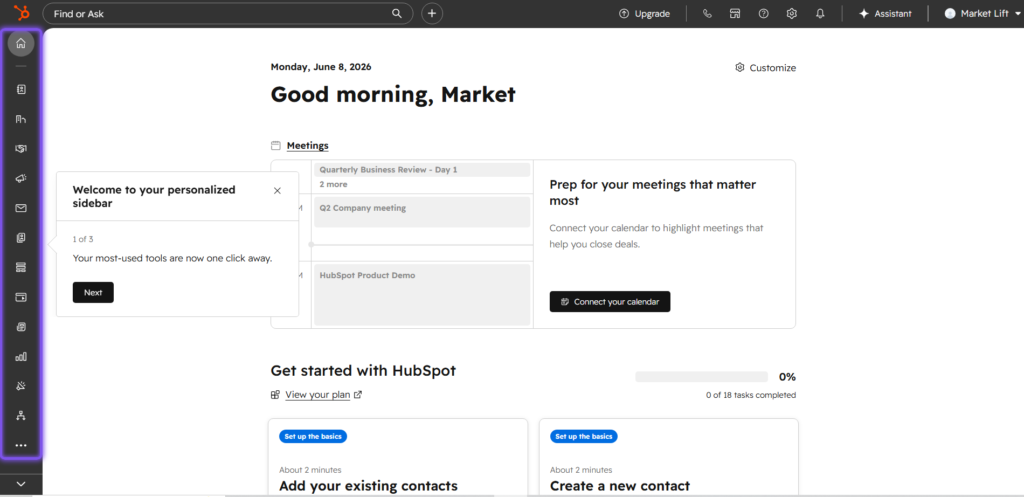
For businesses focused on sustainable growth, HubSpot offers a comprehensive ecosystem that helps attract leads, strengthen customer relationships, and convert opportunities into long-term success.
Features include:
- Lead management
- Marketing automation
- Customer tracking
- Analytics dashboards
- Email marketing
HubSpot helps businesses improve efficiency and customer relationships.
Zoho CRM
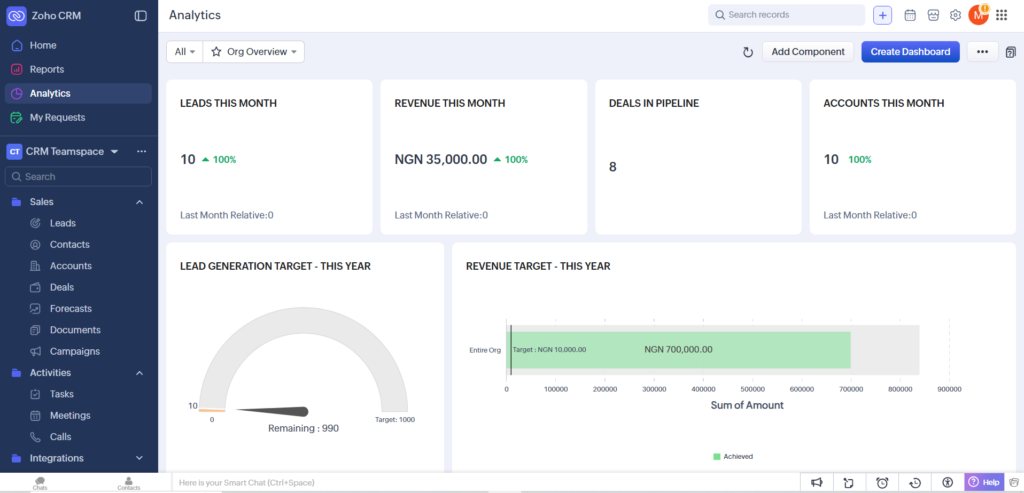
For businesses seeking a smarter way to manage customer relationships, Zoho CRM offers a flexible platform that helps teams track leads, improve communication, and turn opportunities into lasting customer connections.
Key features include:
- Workflow automation
- Customer segmentation
- Reporting tools
- Sales tracking
- CRM analytics
Zoho CRM supports an organized business development process.
Slack

Strong communication is the foundation of every successful team, and Slack helps organizations foster collaboration by keeping people connected, informed, and aligned on shared goals.
Benefits include:
- Real-time messaging
- Team organization
- File sharing
- Workflow integrations
- Remote collaboration
Strong communication improves operational efficiency.
Trello
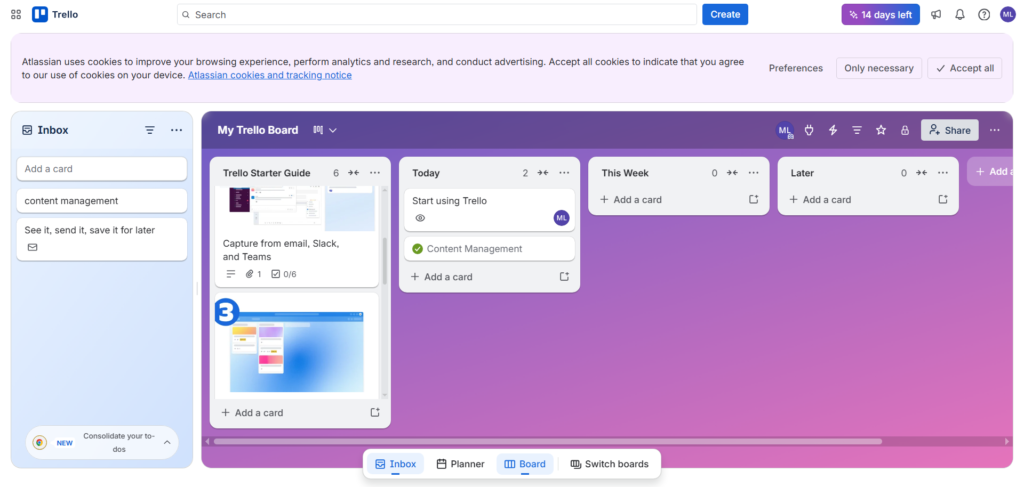
Successful projects depend on clear organization, and Trello helps teams stay on track by turning complex workflows into simple, easy-to-manage task boards.
Features include:
- Workflow management
- Team collaboration
- Task tracking
- Productivity organization
Project management tools improve team performance and accountability.
Frequently Asked Questions (FAQ)
What is the main purpose of business development?
The main purpose of business development is to create long-term growth opportunities through partnerships, customer acquisition, market expansion, and strategic planning.
What are the 4 stages of business development?
The four major stages include:
- Market research
- Lead generation
- Relationship building
Revenue growth and customer retention
Each stage supports a successful business development strategy.
Is business development the same as sales?
No. Sales focus on closing deals, while business development focuses on long-term growth opportunities, partnerships, market expansion, and relationship management.
What makes a successful business development strategy?
A successful business development strategy includes:
- Clear business goals
- Customer research
- Lead generation systems
- Strategic partnerships
- Strong branding
- AI integration
- Data analysis
How do startups approach business development?
Startups often focus on:
- Customer acquisition
- Market validation
- Rapid experimentation
- Networking
- Partnerships
What Makes a Business Development Strategy Unique?
The business landscape in 2026 is significantly different from what it was just a few years ago. Artificial intelligence, automation, data analytics, and changing customer expectations are reshaping how businesses attract customers, build partnerships, and generate revenue.
A modern business development strategy is no longer based solely on networking, sales outreach, and traditional marketing. Businesses now have access to advanced technologies that provide deeper customer insights, automate repetitive tasks, and improve decision-making.
To remain competitive, companies must embrace emerging trends that define business growth in 2026.
AI-Powered Customer Intelligence
One of the biggest changes in business development strategy in 2026 is the use of AI-powered customer intelligence.
Businesses now collect vast amounts of customer data from websites, social media platforms, email campaigns, customer support interactions, and purchasing behavior. AI can analyze this data in real time and uncover patterns that humans might miss.
How AI-Powered Customer Intelligence Works
AI tools can help businesses:
- Analyze customer behavior
- Identify buying patterns
- Track customer journeys
- Predict future purchases
- Personalize marketing campaigns
- Improve customer segmentation
Instead of making assumptions, businesses can use AI-generated insights to understand exactly what customers want.
Benefits for Business Development
AI-powered customer intelligence helps businesses:
- Improve customer targeting
- Increase conversion rates
- Personalize customer experiences
- Reduce marketing waste
- Identify new growth opportunities
Example
An e-commerce company can use AI to identify customers who frequently browse products but rarely purchase. The business can then create personalized offers that encourage those visitors to become customers.
As customer expectations continue to rise, AI-powered customer intelligence has become a critical component of a successful business development strategy.
Predictive Lead Scoring
Traditional lead generation often involves contacting large numbers of prospects without knowing which leads are most likely to convert.
Predictive lead scoring uses artificial intelligence and machine learning to evaluate potential customers based on their likelihood of making a purchase.
The system analyzes factors such as:
- Website activity
- Email engagement
- Content interactions
- Purchase history
- Demographic information
- Behavioral signals
Each lead receives a score indicating its conversion potential.
Example
A SaaS company may receive hundreds of leads each week. Instead of contacting every lead equally, predictive lead scoring identifies the prospects most likely to purchase, allowing the sales team to focus on high-priority opportunities.
Businesses using predictive lead scoring often achieve better sales performance and higher ROI.
Partnership Ecosystems
Partnerships have always been important, but in 2026, businesses are moving beyond individual partnerships and building complete partnership ecosystems.
A partnership ecosystem is a network of complementary businesses, service providers, technology vendors, affiliates, and strategic collaborators working together to create value.
Rather than relying on a single partnership, companies build interconnected relationships that support growth.
Types of Partnership Ecosystems
Businesses may collaborate with:
- Technology providers
- Marketing agencies
- Influencers
- Industry associations
- Software companies
- Resellers
- Affiliate partners
Example
A web hosting company might partner with website developers, SEO agencies, domain registrars, and digital marketing consultants. Together, they create a complete solution for customers while generating referrals for one another.
In 2026, successful businesses understand that growth often comes through collaboration rather than competition.
Community-Led Growth
Customers today want more than products and services. They want connection, belonging, and engagement.
This has led to the rise of community-led growth as a key element of modern business development strategy.
These communities may exist on:
- Facebook Groups
- LinkedIn Communities
- Discord Servers
- Slack Groups
- Online Forums
- Membership Platforms
The goal is to create a space where customers interact, share experiences, learn, and support one another.
Example
Many software companies build user communities where customers exchange ideas, solve problems, and learn best practices. These communities strengthen customer relationships while providing valuable feedback.
Community-led growth transforms customers into advocates, making it one of the most effective business development strategies in 2026.
AI-Enhanced Market Research
Market research remains a critical component of every business development strategy, but AI has dramatically improved how businesses gather and analyze information.
AI-enhanced market research uses advanced algorithms to quickly and accurately collect and analyze large amounts of market data.
AI can evaluate:
- Industry trends
- Customer sentiment
- Competitor activities
- Market opportunities
- Consumer preferences
- Emerging technologies
Benefits of AI-Enhanced Market Research
Businesses can:
- Identify opportunities faster
- Monitor competitors in real time
- Detect market changes early
- Improve product development
- Make data-driven decisions
Example
A startup entering a new market can use AI tools to analyze customer reviews, competitor pricing, and industry trends within hours rather than spending weeks conducting manual research.
Why It Matters in 2026
Markets are changing faster than ever. Businesses that rely on outdated information risk making poor decisions.
It enables organizations to stand agile and make smarter strategic decisions.
Key Takeaway
A winning business development strategy in 2026 goes beyond traditional sales and networking. Businesses must embrace:
- AI-Powered Customer Intelligence
- Predictive Lead Scoring
- Partnership Ecosystems
- Community-Led Growth
- AI-Enhanced Market Research
Companies that introduce these innovations into their business development strategy will be better positioned to attract customers, build stronger relationships, increase revenue, and achieve sustainable growth in an increasingly competitive digital economy.
Business Development Audit Checklist
✓ Clear revenue goals
✓ Defined ICP
✓ Lead generation system
✓ CRM implementation
✓ Partnership strategy
✓ KPI dashboard
✓ Retention strategy
✓ AI automation plan
Conclusion
To develop a successful business development strategy in 2026, businesses need to combine technology, customer experience, partnerships, strategic planning, and adaptability.
AI, automation, shifting consumer behavior, and digital transformation have transformed the fiercely competitive environment in which modern firms operate. Businesses that don’t innovate may find it difficult to continue growing and making money.
A strong growth strategy helps businesses:
- Increase revenue
- Improve customer retention
- Build strategic partnerships
- Expand market reach
- Improve operational efficiency
- Strengthen brand authority
Whether you run a startup, agency, ecommerce store, or SME, investing in the right Revenue Growth Strategy can create sustainable long-term growth.
Businesses that continuously optimize their business development process, embrace technology, and focus on customer relationships will remain competitive in 2026 and beyond.
Now is the perfect time to evaluate your current business development strategy, identify opportunities for improvement, and build a growth system designed for long-term success.