

Introduction
B2B lead generation has become one of the most important growth drivers for businesses that sell products or services to other businesses. Whether you are a startup, marketing agency, software company, consultant, manufacturer, or service provider, having a reliable B2B lead generation system is essential for attracting qualified prospects and converting them into long-term customers.
Many business owners believe they must spend thousands of dollars on Google Ads, LinkedIn Ads, or social media campaigns to achieve successful B2B lead generation. While paid advertising can deliver quick results, it is becoming increasingly expensive as competition grows. Rising cost-per-click (CPC), lower ad engagement, and tighter advertising policies have made it difficult for many companies to generate profitable returns.
By the end of this guide, you will have a practical blueprint for building a predictable flow of qualified B2B leads while keeping your marketing costs under control.
What Is B2B Lead Generation?
Definition
B2B lead generation is the process of identifying, attracting, engaging, and converting businesses that are interested in purchasing your products or services. Unlike consumer marketing, where companies sell directly to individuals, B2B lead generation focuses on building relationships with decision-makers inside organizations, such as business owners, executives, procurement managers, and department heads.
The primary objective of B2B lead generation is to fill your sales pipeline with businesses that match your ideal customer profile and are likely to become paying customers.
Successful business lead generation is not simply about collecting email addresses. It involves finding organizations with genuine needs, educating them through valuable content, building trust, nurturing relationships, and guiding them through the buying journey until they are ready to purchase.
Examples
Understanding B2B lead generation becomes easier when viewed through practical examples.
The software company that offers accounting software publishes detailed educational articles about financial management. Visitors download a free guide after entering their contact information, becoming potential B2B sales leads.
A digital marketing agency optimizes its website for search engines. Businesses searching for SEO services discover the agency through Google and request consultations.
The manufacturing company attends industry conferences and collects contact information from purchasing managers interested in its products.
A cybersecurity firm hosts free webinars explaining current security threats. Attendees later schedule product demonstrations after recognizing the firm’s expertise.
Each example illustrates a different path to organic B2B lead generation, in which valuable content and relationship-building encourage businesses to initiate conversations without relying heavily on paid advertising.
Difference Between B2B and B2C
Although both involve attracting customers, there are significant differences between B2B lead generation and business-to-consumer (B2C) marketing.
| B2B | B2C |
| Businesses sell to businesses | Businesses sell to individual consumers |
| Multiple decision-makers | Usually one buyer |
| Longer buying cycle | Short buying cycle |
| Larger transaction values | Smaller purchases |
| Logic and ROI drive decisions | Emotions often influence decisions |
| Relationship-focused | Convenience-focused |
Because of these differences, successful B2B marketing strategies require education, credibility, trust, and consistent communication rather than impulsive purchasing tactics.
Real-World Example
Imagine a cloud-based project management company targeting construction firms.
Instead of spending heavily on advertising, the company develops an organic B2B lead generation strategy.
The marketing team publishes in-depth articles on reducing project delays, improving collaboration, and managing construction schedules. They optimize every article for search engines, produce instructional videos, share success stories on LinkedIn, and offer free project planning templates.
When construction companies search for solutions online, they discover this valuable content. They subscribe to the company’s newsletter, attend webinars, request software demonstrations, and eventually become customers.
This example demonstrates how effective B2B lead generation creates a sustainable stream of prospects by solving real business problems before asking for a sale.
Types of B2B Leads
Not every prospect is ready to buy immediately. Understanding different lead categories helps businesses prioritize outreach, improve lead nurturing, and allocate sales resources more effectively.
Marketing Qualified Leads (MQL)
They are prospects who have shown interest in your business through marketing activities but are not yet ready for direct sales conversations.
Typical MQL behaviors include:
- Downloading eBooks
- Reading multiple blog posts
- Registering for webinars
- Subscribing to newsletters
- Downloading templates
These prospects have entered your B2B lead generation funnel and should receive educational content before sales outreach.
Sales Qualified Leads (SQL)
They have demonstrated clear buying intent.
They may have:
- Requested a product demonstration
- Asked for pricing
- Scheduled a consultation
- Contacted your sales team
- Requested a proposal
These are high-priority qualified B2B leads because they are actively evaluating purchasing decisions.
Product Qualified Leads (PQL)
They are common among SaaS businesses.
These prospects have already experienced your product through:
- Free trials
- Freemium accounts
- Limited feature access
- Interactive demos
Their product usage provides valuable insights into purchase readiness, making them excellent candidates for personalized follow-up.
Service Qualified Leads
They are existing users or customers who express interest in upgrading their current plans or purchasing additional services.
Examples include:
- Requesting premium support
- Asking about enterprise plans
- Seeking additional consulting services
- Expanding user licenses
These prospects already trust your company, making conversion easier.
Cold Leads
They have little or no prior interaction with your business.
Examples include:
- Purchased prospect lists (used cautiously and ethically)
- Businesses identified through research
- Companies found using B2B prospecting techniques
- Industry directories
Cold leads require personalized outreach, education, and patience before becoming customers.
Warm Leads
They have already interacted with your company in some way.
They may have:
- Visited your website multiple times
- Opened marketing emails
- Followed your LinkedIn page
- Downloaded resources
- Attended online events
Warm leads are significantly easier to convert because they already recognize your brand.
Hot Leads
They are ready to make purchasing decisions.
Common indicators include:
- Requesting contracts
- Comparing vendors
- Seeking implementation timelines
- Negotiating pricing
- Requesting references
These prospects deserve immediate attention because delays may result in lost opportunities.
Why Is B2B Lead Generation Important?
Effective B2B lead generation supports practically every area of business success. Without a steady flow of potential customers, even outstanding products struggle to succeed.
Revenue Growth
Consistent B2B lead generation fuels sustainable revenue by continuously introducing new opportunities into your sales pipeline. As more qualified prospects enter the pipeline, businesses have greater chances of increasing sales and achieving predictable growth.
Rather than relying solely on occasional referrals or repeat customers, companies with structured lead-generation systems maintain a healthier balance between existing and new business.
Better Customer Acquisition
One of the greatest advantages of strategic customer acquisition is targeting businesses that genuinely need your solution.
Instead of marketing to everyone, successful organizations define an ideal customer profile and focus their lead capture strategies on industries, company sizes, and decision-makers most likely to convert.
This targeted approach improves conversion rates and reduces wasted effort.
Lower Marketing Costs
Businesses often assume expensive advertising is the only way to generate leads. However, investing in organic B2B lead generation through SEO, content marketing, referrals, and partnerships can produce long-term results at a lower overall cost.
Although organic strategies require patience, they continue generating traffic and inquiries long after the initial investment.
Predictable Sales Pipeline
A structured B2B lead generation process helps businesses forecast revenue more accurately.
When new prospects consistently enter the funnel, marketing and sales teams can estimate:
- Monthly lead volume
- Conversion rates
- Average deal size
- Revenue projections
- Resource requirements
This predictability supports smarter planning and sustainable growth.
Brand Authority
Businesses are more likely to buy from companies they trust.
Publishing valuable content, sharing industry insights, participating in professional communities, and demonstrating expertise strengthen your reputation. Over time, effective B2B lead generation becomes easier because prospects already recognize your business as a credible solution provider.
Business Scalability
Companies that depend solely on referrals often experience inconsistent growth.
By implementing repeatable B2B lead generation strategies, organizations build systems that consistently attract new prospects, enabling them to expand into new markets, hire additional staff, and increase revenue without relying exclusively on paid advertising.
How to Do B2B Lead Generation Better Than Competitors

Generating leads is no longer enough. Nearly every business today invests in some form of B2B lead generation, whether through content marketing, cold outreach, social media, or advertising. The companies that consistently outperform their competitors are those that understand their buyers more deeply, communicate more effectively, and provide more value before asking for a sale.
If you want your B2B lead generation efforts to produce more qualified opportunities than your competitors’, focus on improving the quality of your strategy instead of simply increasing the number of prospects.
Understanding Buyer Intent
Every successful B2B lead generation campaign begins with understanding buyer intent.
Buyer intent refers to the reason someone searches for information or contacts your business. Some prospects are simply gathering information, while others are actively comparing vendors or preparing to make a purchasing decision.
There are generally three levels of buyer intent:
Informational Intent
The prospect wants to learn.
Examples include:
- How to improve inventory management
- Best CRM software
- Ways to reduce operating costs
These visitors are ideal candidates for educational blog posts and downloadable guides.
Commercial Intent
The prospect is comparing solutions.
Examples include:
- Best accounting software for small businesses
- CRM comparison
- Marketing automation tools
At this stage, detailed comparison articles, product reviews, and case studies work extremely well.
Transactional Intent
The prospect is ready to buy.
Examples include:
- Book a demo
- Request pricing
- Schedule consultation
These prospects should immediately enter your sales process.
Understanding buyer intent allows your B2B lead generation strategy to deliver the right content at the right time.
Creating a Unique Value Proposition
Thousands of companies offer similar products. Why should a prospect choose yours?
Your unique value proposition should clearly answer:
- What problem do you solve?
- Who do you help?
- Why are you different?
- What measurable results can customers expect?
Instead of saying: We provide digital marketing services.
Say: We help manufacturing companies generate qualified sales appointments through SEO and LinkedIn outreach without relying on expensive advertising.
Specificity significantly improves business lead generation because prospects immediately recognize whether your solution matches their needs.
Building Trust Before Selling
One of the biggest mistakes businesses make is trying to sell immediately.
Modern B2B lead generation is built on trust.
Decision-makers often research companies for weeks—or even months—before contacting sales teams.
Ways to build trust include:
- Publishing educational blog posts
- Sharing customer success stories
- Displaying testimonials
- Publishing industry research
- Offering free resources
- Answering frequently asked questions
- Being transparent about pricing and processes
Trust boosts conversion rates and reduces the sales cycle.
Solving Real Customer Problems
Businesses do not buy products. They buy solutions.
Before creating any content, ask:
- What keeps my customers awake at night?
- Which challenges cost them money?
- What tasks consume too much time?
- Which risks worry them most?
Every piece of content should solve one real problem.
When your website consistently provides practical solutions, B2B lead generation becomes much easier because prospects already associate your business with expertise.
Using Personalization
Generic outreach rarely succeeds. Decision-makers receive hundreds of emails every week. Personalization dramatically improves response rates.
Examples include:
- Mentioning the prospect’s company
- Referencing recent achievements
- Discussing industry-specific challenges
- Referring to LinkedIn posts
- Offering customized recommendations
Even small personalization efforts can significantly improve B2B prospecting results.
Following Up Consistently
Many businesses lose opportunities because they give up too early.
Most transactions require several touchpoints before a choice is made, research t repeatedly demonstrates.
A simple follow-up sequence might include:
- Initial email
- LinkedIn connection request
- Helpful follow-up article
- Case study
- Webinar invitation
- Consultation offer
Consistent follow-up is one of the most overlooked B2B lead generation strategies.
Tracking Performance Metrics
You cannot improve what you do not measure.
Monitor metrics such as:
- Website visitors
- Conversion rate
- Cost per lead
- Email open rate
- Response rate
- Meetings booked
- Sales-qualified leads
- Customer acquisition cost
- Customer lifetime value
Tracking these metrics helps identify which B2B lead generation activities deserve additional investment.
Leveraging AI for Research and Outreach
Artificial intelligence has transformed B2B lead generation.
AI can help businesses:
- Research industries
- Identify decision-makers
- Write personalized emails
- Generate blog content
- Create LinkedIn posts
- Analyze customer behavior
- Score leads
- Automate repetitive tasks
AI does not replace human relationships.
Instead, it allows teams to spend more time building relationships and closing deals.
How to Generate B2B Leads Without Expensive Ads

Contrary to popular belief, paid advertising is not the only path to consistent B2B lead generation.
Many successful companies generate thousands of qualified prospects every month through organic marketing strategies that continue to yield results long after the work is completed.
Search Engine Optimization (SEO)
SEO remains one of the most powerful long-term methods of B2B lead generation.
When businesses search Google for solutions, they often have strong buying intent.
Ranking for relevant keywords means your website can attract visitors every day without paying for each click.
SEO best practices include:
Keyword Research
Target phrases your ideal customers actually search for.
Examples include:
- CRM software
- Accounting software
- Manufacturing ERP
- HR consulting
- Business automation
Publish Helpful Content
Google rewards useful content.
Focus on:
- How-to guides
- Tutorials
- Industry reports
- Case studies
- Frequently asked questions
- Comparison articles
Quality content supports both inbound lead generation and long-term authority.
Optimize Technical SEO
Improve:
- Website speed
- Mobile responsiveness
- Internal linking
- Metadata
- Image optimization
- Structured data
Technology Enhancements aid in the crawling and ranking of your website.
Content Marketing
This is the foundation of modern organic B2B lead generation.
Instead of interrupting prospects with advertisements, valuable content can attract businesses naturally.
Effective content formats include:
Blog Articles
Answer common customer questions.
Long-form educational articles establish authority and improve search visibility.
Industry Reports
Original research generates backlinks, media coverage, and qualified traffic.
Templates
Businesses love practical resources.
Examples include:
- Budget templates
- Marketing plans
- Sales scripts
- Proposal templates
Templates often generate high conversion rates.
Checklists
Simple downloadable checklists work well as lead magnets.
White Papers
Detailed reports appeal to executives evaluating significant purchases.
LinkedIn Outreach
LinkedIn is one of the best platforms for B2B lead generation because business decision-makers actively use it.
Effective LinkedIn outreach includes:
- Optimizing your profile
- Publishing valuable content
- Commenting on industry discussions
- Connecting with decision-makers
- Sending personalized messages
- Sharing customer success stories
Avoid sending sales pitches immediately after connecting. Instead, focus on building relationships.
Cold Email Campaigns
It continues to deliver excellent ROI when done correctly.
Successful campaigns include:
Personalized Subject Lines
Avoid generic subjects.
Instead of: Business Opportunity
Try: Idea for reducing logistics costs at ABC Manufacturing
Short Emails
Busy executives appreciate concise communication.
Focus on:
- Problem
- Solution
- Social proof
- Clear call to action
Value First
Offer:
- Audit
- Checklist
- Resource
- Industry report
- Helpful recommendation
This approach improves the success of outbound lead generation.
Referral Marketing
Happy customers are your best salespeople.
Ask satisfied clients to introduce your business to:
- Suppliers
- Partners
- Colleagues
- Industry associations
Referral-generated qualified B2B leads often convert faster because trust already exists.
Strategic Partnerships
Partner with businesses that service the same audience but offer complementary services.
Examples:
- Web designers partnering with SEO agencies
- HR consultants partnering with payroll providers
- Accountants partnering with legal firms
Partnerships expand your reach without increasing advertising costs.
Guest Blogging
Publishing articles on respected industry websites provides multiple benefits:
- Increased authority
- High-quality backlinks
- Referral traffic
- Brand awareness
- Better SEO
Guest blogging remains an effective method for sustainable B2B lead generation.
Webinars
Educational webinars position your company as an expert.
Topics should address real business challenges rather than directly promote products.
Effective webinar structure:
- Industry problem
- Data
- Solutions
- Demonstration
- Questions and answers
Attendees often become highly engaged prospects.
Case Studies
Businesses trust evidence more than promises.
Strong case studies include:
- Customer background
- Initial challenge
- Solution implemented
- Measurable results
- Customer testimonial
Case studies significantly improve conversion rates by reducing uncertainty.
Lead Magnets
A lead magnet is a valuable offer made in exchange for contact information.
Examples include:
- eBooks
- Templates
- Checklists
- Free tools
- Industry reports
- Calculators
- Email courses
Lead magnets strengthen lead capture strategies while helping prospects solve immediate problems.
Free Tools
Interactive tools generate excellent engagement.
Examples include:
- ROI calculators
- Marketing budget calculators
- Website graders
- SEO audit tools
- Cost estimators
Businesses willingly provide contact information to access valuable tools, making this information a powerful asset for B2B lead generation.
Email Marketing
It remains one of the highest-return channels for B2B lead generation because it enables businesses to build relationships over time rather than relying on one-time interactions. While social media algorithms change and advertising costs fluctuate, an email list is an asset that your business owns.
To maximize results:
Segment Your Email List
Not every subscriber has the same interests. Divide your contacts based on:
- Industry
- Company size
- Job title
- Buying stage
- Previous interactions
Segmentation allows you to send more relevant content, improving engagement.
Provide Consistent Value
Avoid sending promotional emails every week. Instead, share:
- Industry insights
- Practical guides
- Case studies
- Product updates
- Customer success stories
- Educational newsletters
When subscribers consistently receive valuable information, they are more likely to trust your business when they are ready to buy.
Automate Lead Nurturing
Automation helps you maintain communication without having to send every email manually. A simple sequence might include:
- Welcome email
- Educational resource
- Helpful blog article
- Customer success story
- Free consultation invitation
- Product demonstration offer
This structured lead nurturing process gradually moves prospects toward a purchase decision.
Local Networking
Even in a digital-first world, face-to-face relationships remain valuable for B2B lead generation.
Attend:
- Industry conferences
- Business expos
- Chamber of commerce events
- Trade shows
- Professional association meetings
- Startup networking events
Networking provides opportunities to establish trust quickly, exchange ideas, and build long-term business relationships.
Instead of immediately promoting your services, ask thoughtful questions, understand business challenges, and follow up after the event with personalized messages.
Online Communities
Decision-makers actively participate in online communities where they discuss industry challenges and seek recommendations.
Examples include:
- LinkedIn Groups
- Professional Slack communities
- Industry forums
- Reddit business communities
- Facebook professional groups
Become a valuable contributor by answering questions, sharing insights, and offering practical solutions. Avoid excessive self-promotion, as it can reduce credibility.
Podcast Guesting
Appearing as a guest on industry podcasts is an effective way to establish authority and reach highly targeted audiences.
During interviews:
- Share actionable advice
- Tell real customer success stories
- Explain industry trends
- Discuss lessons learned
- Offer practical frameworks
Podcast listeners often become highly engaged prospects because they spend extended time learning from your expertise.
Video Marketing
Video content continues to grow in popularity and can strengthen B2B lead generation efforts.
Useful formats include:
- Educational tutorials
- Product demonstrations
- Customer testimonials
- Frequently asked questions
- Industry updates
- Behind-the-scenes videos
- Live Q&A sessions
Publish videos on your website, YouTube, LinkedIn, and other platforms to increase visibility and engagement.
Social Proof
Businesses trust businesses. Demonstrating that other companies have achieved measurable success with your products or services reduces uncertainty.
Examples of social proof include:
- Customer testimonials
- Success stories
- Client logos
- Awards
- Certifications
- Industry recognition
- Performance statistics
Displaying social proof throughout your website improves conversion rates and supports effective business lead acquisition.
Customer Reviews
Positive reviews influence purchasing decisions throughout the customer acquisition journey.
Encourage satisfied customers to leave reviews on relevant platforms and ask permission to feature testimonials on your website.
Strong reviews often answer concerns before prospects contact your sales team.
Organic Social Media
This complements B2B lead generation by increasing visibility and building credibility.
Focus on sharing:
- Educational posts
- Industry insights
- Short videos
- Infographics
- Customer stories
- Company updates
- Helpful tips
Consistency is more important than posting frequency. Regular, high-quality content keeps your business visible to potential customers.
AI Automation
Artificial intelligence helps businesses scale B2B lead generation while reducing repetitive work.
AI can assist with:
- Content creation
- Prospect research
- Email personalization
- Meeting scheduling
- CRM updates
- Chatbots
- Lead scoring
- Workflow automation
Although AI improves efficiency, human relationships remain essential for building trust and closing deals.
B2B Lead Generation Process and Strategies
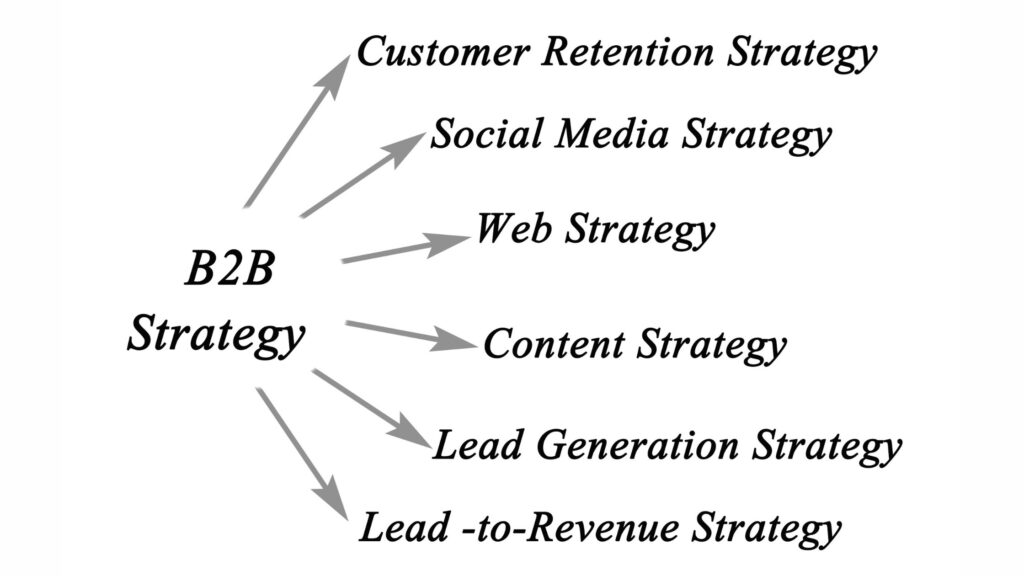
A structured B2B lead generation process helps businesses create predictable growth rather than relying on occasional opportunities.
Step 1: Identify Your Ideal Customer Profile (ICP)
Define your ideal customer based on:
- Industry
- Company size
- Annual revenue
- Geographic location
- Number of employees
- Decision-makers
- Business challenges
A well-defined ICP improves targeting and reduces wasted marketing efforts.
Step 2: Conduct Market Research
Research your target market to understand:
- Customer pain points
- Competitors
- Market trends
- Buying behavior
- Industry challenges
This information helps shape effective messaging and offers.
Step 3: Build a Prospect List
Develop a list of businesses that closely match your ideal customer profile.
Gather information such as:
- Company name
- Contact person
- Job title
- Email address
- Phone number
- LinkedIn profile
- Industry
A clean, organized prospect database supports successful outreach.
Step 4: Create an Irresistible Offer
Give prospects a compelling reason to engage.
Examples include:
- Free consultation
- Website audit
- Marketing assessment
- Strategy session
- Industry report
- Free trial
- ROI calculator
A valuable offer increases conversion rates and attracts qualified B2B leads.
Step 5: Choose Outreach Channels
Select communication channels based on your audience.
Common options include:
- SEO
- Content marketing
- Webinars
- Networking
- Referrals
- Video marketing
Using multiple channels improves visibility and response rates.
Step 6: Nurture Prospects
Not every lead is ready to buy immediately.
Continue providing value through:
- Email newsletters
- Educational content
- Case studies
- Webinars
- Product updates
Consistent lead nurturing builds trust over time.
Step 7: Book Meetings
When prospects show buying intent, invite them to schedule:
- Discovery calls
- Strategy sessions
- Product demonstrations
- Consultations
Ensure meetings focus on solving business problems rather than delivering generic sales presentations.
Step 8: Close Deals
Understand customer needs before recommending solutions.
Successful sales conversations should:
- Address challenges
- Demonstrate value
- Provide evidence
- Handle objections
- Explain implementation
- Clarify pricing
Focus on helping customers achieve measurable business outcomes.
Step 9: Follow Up
Many deals are won through consistent follow-up.
Continue communication by:
- Answering questions
- Providing additional resources
- Sharing testimonials
- Sending proposals
- Checking in periodically
Professional persistence often separates successful businesses from their competitors.
Step 10: Measure and Optimize
Evaluate your results regularly.
Key performance indicators include:
- Website traffic
- Conversion rates
- Cost per lead
- Email engagement
- Meetings booked
- Sales closed
- Customer lifetime value
- Revenue generated
Continuous optimization improves long-term performance.
Best Free Tools for B2B Lead Generation
The right tools can simplify your workflow and improve productivity.
Customer Relationship Management (CRM)
A CRM helps organize contacts, track interactions, and manage opportunities throughout the sales cycle.
Popular free CRM platforms include HubSpot CRM and Zoho CRM.
Email Finding Tools
They help identify verified business contacts for outreach campaigns.
Email Verification Tools
Before you launch a campaign, verify email addresses to reduce bounce rates and improve your sender reputation.
SEO Tools
SEO platforms help businesses:
- Research keywords
- Analyze competitors
- Monitor rankings
- Identify optimization opportunities
Even free versions provide valuable insights for organic B2B lead generation.
Scheduling Software
Scheduling tools eliminate unnecessary back-and-forth emails by allowing prospects to book meetings directly from your calendar.
Analytics Tools
Website analytics reveal:
- Visitor behavior
- Traffic sources
- Popular pages
- Conversion paths
- Bounce rates
These insights help improve marketing performance.
AI Writing Assistants
This can assist with:
- Blog outlines
- Email drafts
- Social media content
- Landing page copy
- Content ideas
Use AI to improve productivity while ensuring final content reflects your brand voice and expertise.
Common B2B Lead Generation Mistakes
Avoid these common errors that reduce results.
Buying Email Lists
Purchased lists often contain outdated contacts, low engagement, and compliance risks.
Poor Targeting
Marketing to everyone usually results in lower conversion rates.
Sending Generic Cold Emails
Personalized outreach consistently outperforms mass messaging.
No Follow-Up Sequence
Many prospects require several touchpoints before responding.
Weak Landing Pages
Confusing messaging and unclear calls to action reduce conversions.
Ignoring SEO
Without search visibility, businesses miss valuable long-term opportunities.
No Lead Nurturing
Not every prospect is ready to buy immediately. Continue providing value until they are.
Tracking Vanity Metrics Instead of Conversions
High website traffic means little if it does not produce meetings, customers, and revenue.
Frequently Asked Questions
What is B2B lead generation?
B2B lead generation is the process of acquiring and turning businesses into clients for your products or services.
How can I generate B2B leads for free?
Use SEO, content marketing, referrals, networking, LinkedIn outreach, guest blogging, webinars, and email marketing.
Is SEO better than paid ads for B2B?
SEO generally delivers better long-term ROI, while paid ads provide faster short-term visibility. Many businesses benefit from combining both approaches.
How long does organic lead generation take?
Many businesses begin seeing measurable results within three to six months, while competitive industries may require more time.
What is the best B2B lead generation strategy?
There is no single best strategy. Combining SEO, content marketing, LinkedIn outreach, referrals, and email marketing often produces the strongest results.
How many touchpoints are needed before a prospect responds?
Response rates vary, but multiple personalized touchpoints typically outperform single-contact campaigns.
Which industries benefit most from B2B lead generation?
Technology, manufacturing, healthcare, consulting, finance, logistics, construction, education, and professional services all benefit from structured lead generation.
How do I qualify B2B leads?
Evaluate factors such as company fit, budget, authority, need, timing, and buying intent.
What tools help automate B2B lead generation?
CRM systems, email automation platforms, AI writing assistants, scheduling software, analytics tools, and chatbot platforms all support automation.
How do I measure lead generation success?
Track qualified leads, conversion rates, meetings booked, revenue generated, customer acquisition cost, and return on investment.
Conclusion
The size of your advertising budget does not determine the success of B2B lead generation. It is determined by how well you understand your target audience, communicate your value, and build trust over time. Businesses that invest in high-quality content, search engine optimization, personalized outreach, relationship building, and consistent follow-up often generate stronger long-term results than those that rely exclusively on expensive advertising.
By implementing the B2B lead generation strategies covered in this guide—from defining your ideal customer profile and creating valuable content to leveraging AI, nurturing prospects, and measuring performance—you can build a predictable system for attracting qualified business customers. Focus on solving real problems, continuously refining your process, and delivering genuine value at every stage of the buyer’s journey. Over time, your B2B lead generation efforts will create a sustainable pipeline of opportunities, strengthen your brand authority, and support consistent business growth without excessive advertising spend.